nnozomi: (Default)
Mostly an ordinary post, I didn’t mean to make it the last one of the year. I am very grateful to all my DW friends for companionship and interaction over this year as well; wishing everyone good health and good fortune all the way around in 2026, with much love.

Jiang Dunhao song of the post: 少女, a cover in Chinese of an OST song from a slice-of-life Korean drama called Reply 1988, new to me but apparently very good. The song itself is sweet and gentle and sits really nicely in his voice.

Tickled that there’s a Chinese song called 夏日漱石; it took me much longer than it should have to figure out that it’s not actually named after the venerated Japanese author (whose name is 夏目漱石; spot the difference). Cheeky!

Listening to the Dvorak 8th Symphony, an old favorite which I have played more than once and listened to a zillion times. This one conductor mentioned in passing once that the development of the fourth movement feels like a war, and ever since there has been a detailed story in my head for it (timestamps for this recording, which has a score). The movement begins at 26:14, with a trumpet fanfare hinting at martial events to come; at 26:40 is the pastoral cello melody, the innocent young shepherd from the village. Happy village life continues until 29:12, when you can hear the army on the march, and from there the war begins, with more and more violent clashes until the victorious brass sounds at 30:37. At 31:08 the original cello melody returns, but it’s more wistful now, looking back on what was before things changed, especially so from 32:30 and 33:39. At 33:58 there’s a kind of coming to terms with how things are now. In the coda at 34:30 the village is happy again, but it never feels quite genuine again, especially with the frenzied trombone slide in the last few bars reminding us of what the brass can mean. …I’m sure Dvorak had nothing of the sort in mind, I don’t know where any of this comes from, it just works that way in my head!

I have slightly fallen for this Japanese professor called Ito Tsukusu (or Tsukushi, except I think that was an error, or Jinn) whom I’ve never met and probably never will; he supervised the various elvish languages for the Japanese subtitles on all the Lord of the Rings movies, and studies philology and Norse sagas and other things Tolkien would have approved of, and talks (in this very long and fascinating National Geographic article, which I won’t link here because it’s in Japanese) about getting a C.S. Lewis-esque sense of “Northernness” from the Grieg Piano Concerto as a child, and reading the Anne of Green Gables series in the original English as a sixth-grader with limited English skills and being fascinated by the language as much as the story (quoting from Anne of Ingleside, “’Transubstantiationalist,’ said Jem proudly. ‘Walter found it in the dictionary last week...you know he likes great big full words, Susan...’”) and then becoming devoted to everything Tolkien-related (and spending a year in Iceland to learn Icelandic: “…when I came back to Japan I was speaking English with an Icelandic accent and Icelandic grammar”), and now researching how Norse myths show up in manga and anime, as well as the triangulations of Tolkien in WWI with Wagner’s Ring in Japan and…I’m tempted to write to him just because.

I was rereading some of the Chalet School books online, as one does, and ran across a character quoting from their idea of a quaint old book, called Barbara Bellamy, Schoolgirl; out of curiosity I looked it up and it exists and is certainly quaint. May Baldwin, the author, wrote many other things including A Schoolgirl of Moscow, which I found on openlibrary.org and adored. Published in 1911, it describes Nina Hamilton’s eventful few months living in Russia with her businessman father, her aunt Penelope, and her maid Anna. It only kind of has a plot, which is enough to make it clear that even in 1911 it was possible to see 1917 coming on the horizon; in between conspiracies (the conspirators are young and attractive if rather obsessive), there are bits reminiscent of those interwar children’s books where Jane and Jim tour somewhere in Europe with their erudite Uncle David and learn all about the relevant history and geography (I will say that the description of Russian Orthodox Easter is genuinely moving). I like it that Nina (who starts out speaking French with all her classmates because she doesn’t know Russian and they don’t know English) takes the language seriously and learns fast (…Nina protesting against an alphabet which contained thirty-six letters and three ways of writing them, and the ‘class-lady’ insisting that it was not so bad as a word spelt one way and pronounced in two different ways, acccording to meaning, such as ‘tear,’ or spelt different ways and pronounced the same, such as ‘way,’ ‘weigh,’ ‘wae.’ I’m not sure what “wae” is doing in there.) Anna is the comic relief but also has a lot of interesting points to make for herself (demanding to have her profession changed on her passport from “maid” to “gouvernante”), and Aunt Penelope is a triumph, a classic maiden aunt but also one with her own unique opinions and, when she decides to take action, remarkable boldness and originality. “I like a woman who is ready to die for her country!” announced Miss Hamilton.

Reading Pericles with yaaurens and company; typically I got distracted by a character who literally never appears on stage and is mentioned about twice, Philoten, the daughter of hapless Cleon and villainous Dionyza, who constitutes an excuse for her foster sister Marina to be murdered because she’s not as pretty or as good at anything as Marina is. Now I want to know what Philoten thought about the whole thing! I want an AU where she and Marina get wind of Dionyza’s plans and run away together like Celia and Rosalind!

I saw a signboard the other day offering “Gee Pie hot sandwiches” and only got it when I read the extra text saying “Taiwanese-style fried chicken!” Gee Pie i.e. 鸡排 i.e. jīpái, duh. A-Pei thought this was hilarious. I tested her on the classic Japanese “G-pan” and “Y-shatsu” and confused her completely: she came back with “G胖 [G-páng/G-fat]? Y虾子 [Y-xiāzi/Y-shrimp]???” G-pan are in fact jeans (ジーンズ・パンツ [jeans pants] to ジーパン jiipan to G-pan; Y-shatsu are men’s dress shirts, ワイトシャツ [white shirt] to ワイシャツ waishatsu to Y-shatsu (and you can have a Y-shirt in any color, the “white” is no longer a meaningful descriptor). A-Pei and I decided that G胖 are the jeans we buy when we need to go up a size!

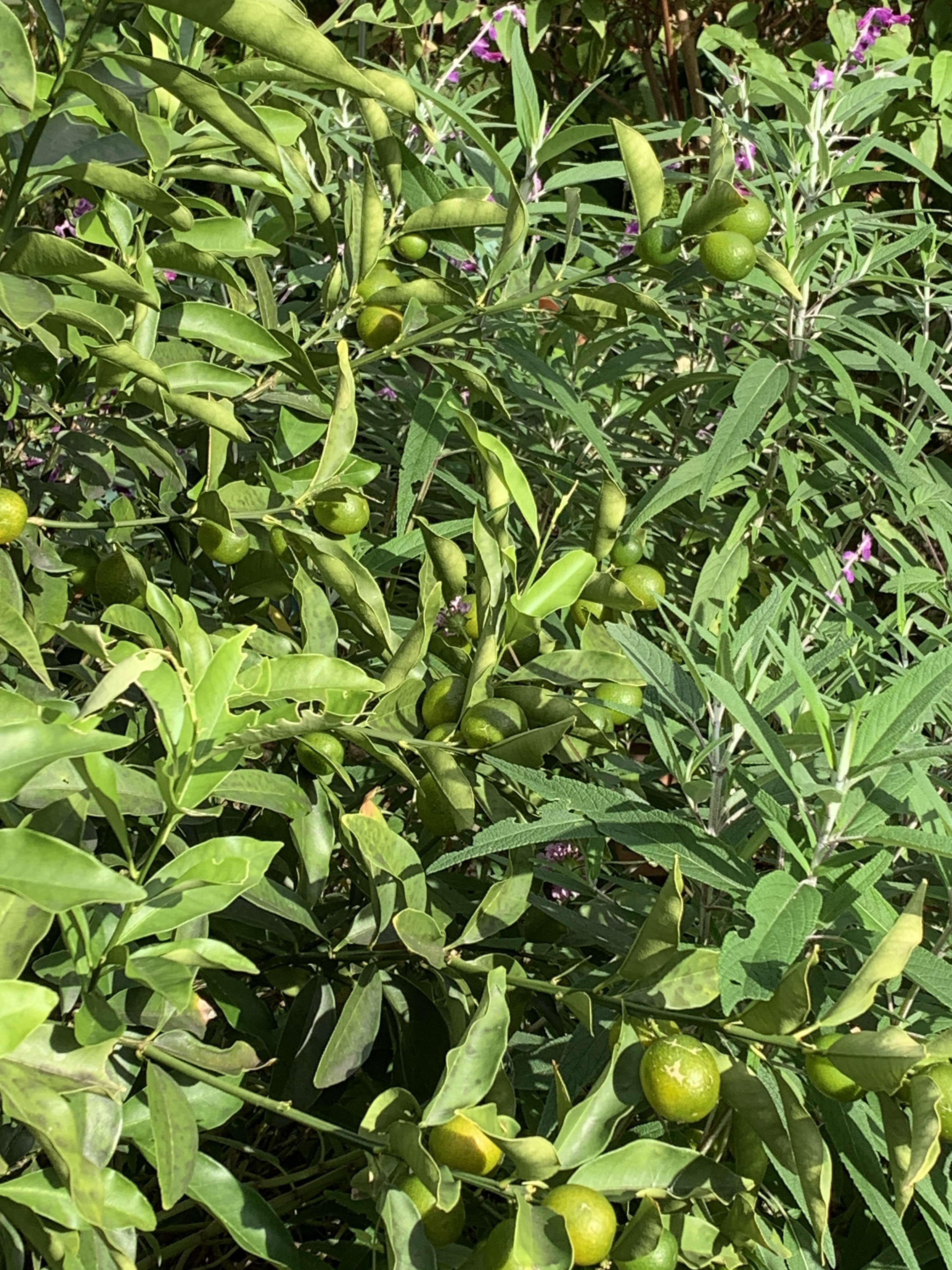
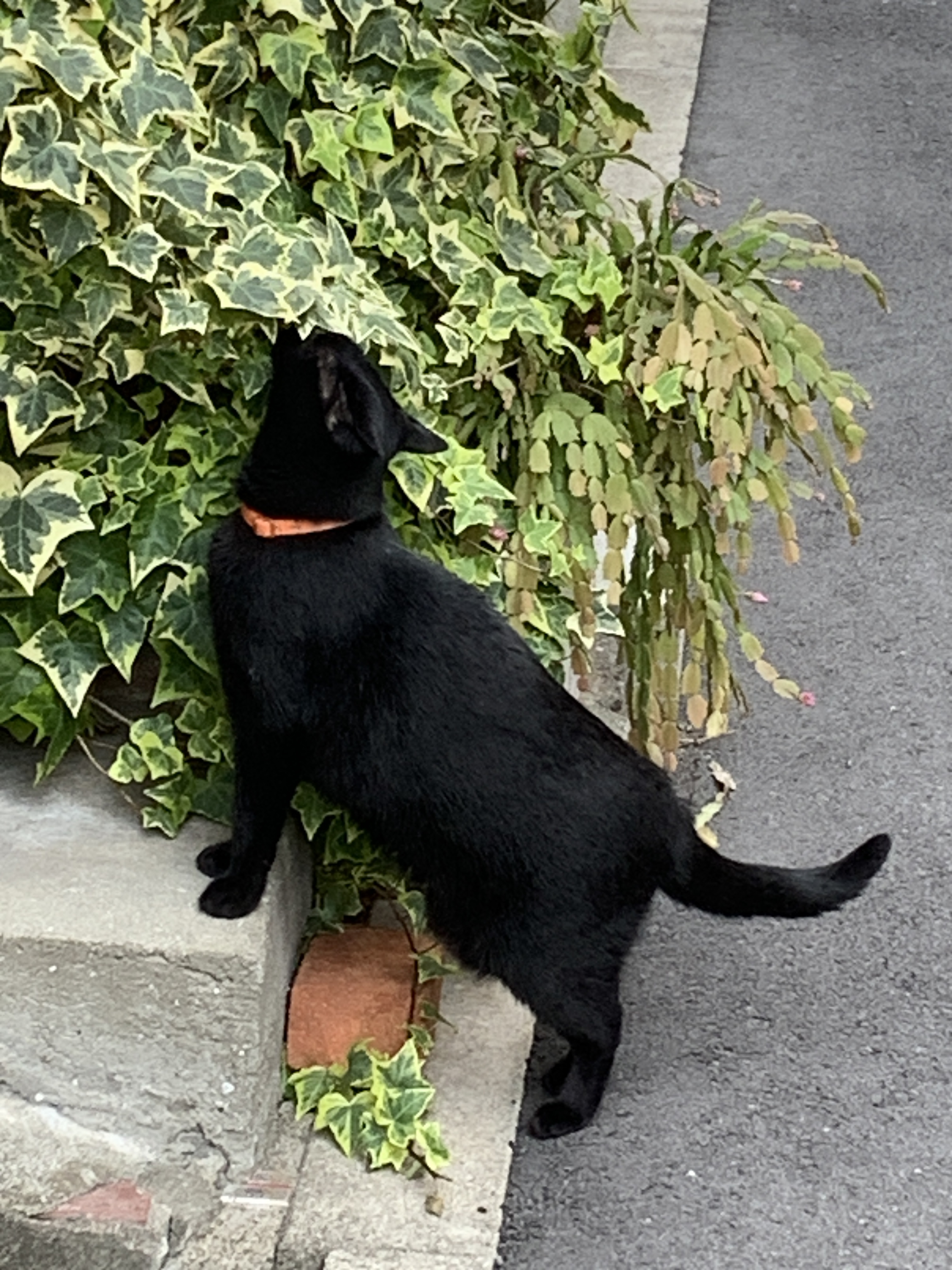
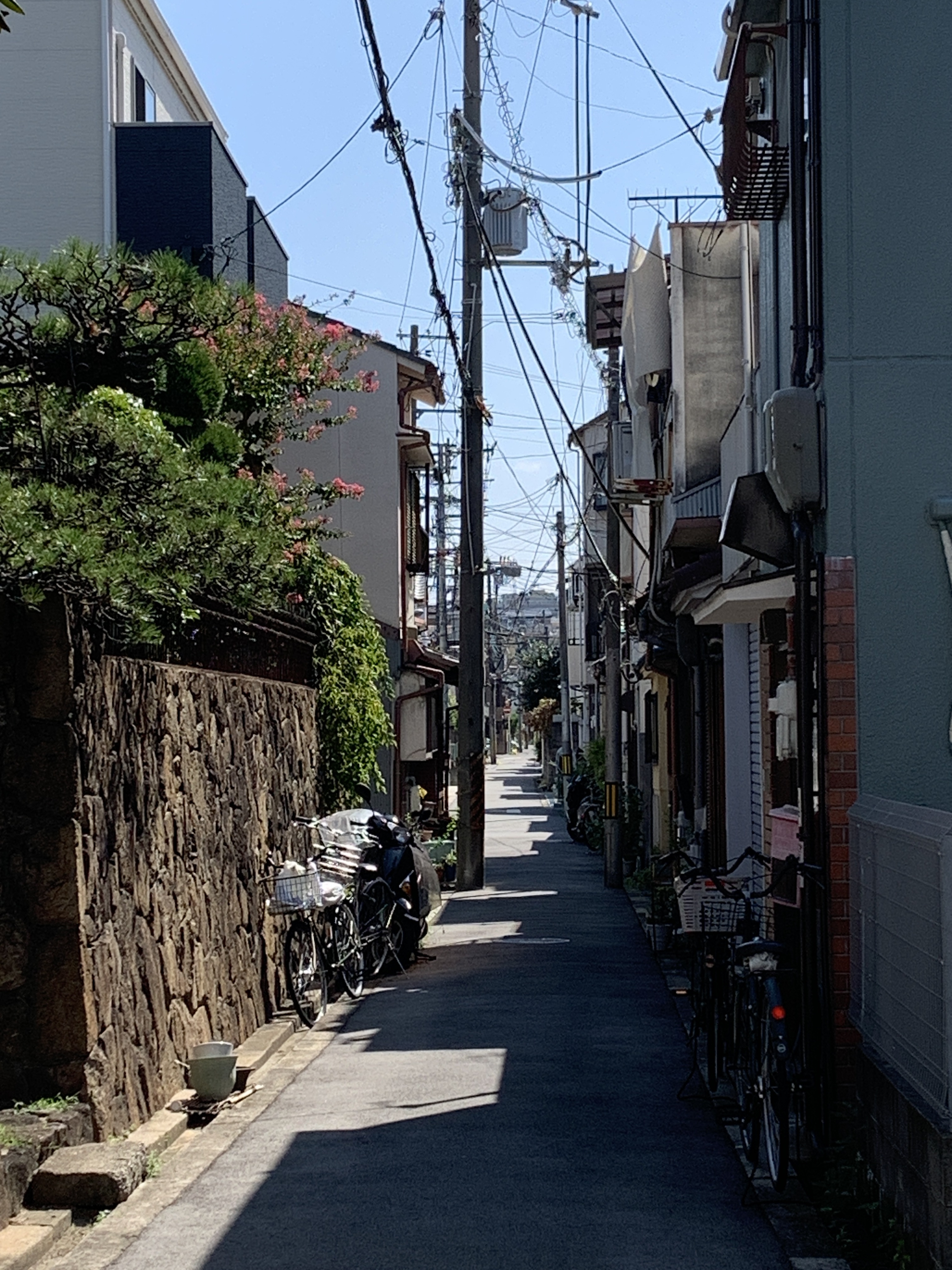
Photos: Bionic cat (no, just me being a bad photographer), kumquats and…grapefruits? pomelos? in various stages of ripening, canal trees, and seasonal reds.


Be safe and well.
nnozomi: (Default)
Good wishes and hugs as wanted to people on my f-list (and others too!) who are having a hard time right now; a lot of people seem to be sick and stressed, even aside from the usual global issues.

More adventures with Kuro-chan the cat, no photo this time: I went past the park gates one evening to find Kuro-chan curled up on the wall outside, so naturally I stopped to say hello. Me: aw, your fur is so cold, 小冷猫猫, let me pick you up-- Kuro-chan: [hiss, growl, snap] Me: okay okay, I get it! Kuro-chan: [looks around, stretches, jumps off the wall to suri-suri around my ankles] Mrrowr? Me: …okay, if you say so? Kuro-chan [contentedly settles into my arms to relax langorously throughout the very short trip across the street to their putative actual home, while being stroked and crooned at in whatever language came into my head]. Cats.

I was thinking about what my family always called “household words” meaning phrases either from books/movies/etc. or heard in real life which we started using on a regular basis. Five cents, please (courtesy of Lucy van Pelt the psychiatrist, also allowing me to link my favorite Peanuts strip of all time here); long time no interface, I have no idea where this one came from or if anyone else says it, but I use it with online friends often; that’s life on a crocodile isle (from T.S. Eliot, sometimes used in full with “You see this egg? You see this egg?” too, I say it to myself when frying eggs); Study now, dance later. Plato AD 61, a graffito my mom saw once, which we use as shorthand for “get down to it”; after the opera—my dad ran a semi-professional opera company in his spare time, and was always exceptionally busy with rehearsals in the last few weeks before a performance, so that any normal household duties would be postponed until “after the opera,” a time sooner but not much more definite than the twelfth of never. What do you guys have of this kind?

I posted my Yuletide fic, considerably later than I’d planned but well before the deadline; it could still use (and will hopefully get) a brisk edit, but I think it hangs together. Big relief! Knock wood I will manage to write a couple of short treats before the 25th, we’ll see.

Jiang Dunhao song of the post: a couple of new ones from a music program, 好盆与 and 小孩与我, not all that exciting musically but fun to watch and listen to, the former in particular has a couple of really lovely vocal moments.

It’s the season when vending machines in Japan offer hot drinks of all kinds; many varieties of coffee and tea, to begin with. I’m not much of a coffee drinker except when very sleep-deprived, so I favor 焙じ茶 or roasted green tea (I also like to make it from teabags at home and soak dried fruit in it as a late-night snack). Corn tea is also much rarer but delicious (I was wondering if cornsilk tea, known in both Korean and Japanese as “corn beard tea,” is correspondingly 玉米胡茬茶 in Chinese…). I love hot chocolate, but vending machine cocoa is usually repulsive, basically hot brown water full of sugar and chemicals. Other standards include corn soup (with corn kernels in), お汁粉 hot sweet red-bean porridge, and Hot Lemon (just what it sounds like, hot flat lemon soda with honey, stickily sweet but very satisfying on a cold day). The less standard offerings are getting weirder and weirder every year, this year I took some notes: miso soup with clams, yukkejang soup with rice, sundubu soup with tofu, extra-fancy corn soup scented with truffles (at an extra-fancy price), Starbucks caramel macchiatos, and “milkshakes,” which as far as I can tell are hot sweet slightly thickened milk with caramel?

The download problem never ends! cobalt.tools was so great and now it’s not; it doesn’t do YouTube any more, which is YouTube’s fault, of course (and I’m still not sure of a decent YouTube downloader, none of them seem actually safe?) and now cobalt.tools won’t recognize bilibili URLs any more either, although it says it should work. And you can’t ask for support help with error messages without signing up to a github account, and… (Yes, it’s a free service! I would be happy to pay them some money and get some support in the normal way!) oh dear.

Rereading Melissa Scott’s Dreaming Metal, the second volume of her Dreamships SF duology (the eponymous first volume is also very good). I really love these, they are far and away my favorites of anything Melissa Scott has written. They are about, among other things, AI but not in the way we think of AI right now (although the first volume bears a little more resemblance). The worldbuilding is wonderful—everything is in there, technology and language and clothes and entertainment and politics and ethnic groups and class issues and public transit and food and jobs and religion and family structures and God knows what else, but it’s not infodumpy, you just get to live in the world for three hundred pages or so and see it all there. Spoilery thoughts on the central conceit of the book: where it’s also amazing is the ideas about what kind of music an AI musician might want to make, how it would be derived and what it would sound like, and the way human musicians might react to it and work with it—in a way that’s both plausible and sounds like something exciting that I actually want to hear.

Reading another book of essays by a Taiwan-born writer who lives in Japan and writes in Japanese; unlike Li Kotomi|李琴峰, who grew up in Taiwan, taught herself Japanese, and came to Japan as an adult, 温又柔 came to Japan with her parents at age three and has lived here ever since (she’s Wen Yourou in the Chinese reading and On Yuju in Japanese; her romanized name on the copyright page splits the difference and uses “Wen Yuju.” I’ll settle for the latter for convenience. She also comments on how much her real name sounds like a pen name). I’ve only read one of her novels, 祝宴, which is about a middle-aged Taiwanese businessman, resident in Japan for many years, and his family—he’s 外省人 and his wife is 本省人, their younger daughter is marrying a Japanese man and their older daughter has a girlfriend. Very little actually happens but it was affecting and hopeful without veering into melodrama or Japan Sentimental. I found a lot to resonate with in her essays (reminded also that for me, with no original connections to Japan or Taiwan or anywhere else in Asia at all, studying/writing in Japanese or Chinese can be a much less fraught matter for good or ill). Like me Wen Yuju was fascinated by Lee Yangji’s short story Yuhee—she’s the editor of a Lee Yangji collection, which she says drew her some criticism from Korean-Japanese readers who argued that a Taiwanese-Japanese woman shouldn’t be doing it, another complex issue.
In some ways she covers a lot of familiar ground—growing up as a first- or 1.5-generation immigrant, more comfortable with the new country’s language than her parents’, sometimes accepted and sometimes dealing with microaggressions and blank majority ignorance, struggling with identity and complicated relationships with her parents’ country and family, and so on. It occurs to me that though there are so many anglophone novels, both YA and adult, now that go into this—just from a quick look through my shelves right now, Elizabeth Acevedo, Bernadine Evaristo, Tanuja Desai Hidier, Jean Little, Melina Marchetta, Naomi Shihab Nye, Chaim Potok, Nina Mingya Powles, Isabel Quintero, Joyce Lee Wong, Lois Ann Yamanaka, and that’s just a tiny sample—and still so, so few in Japanese, so that Wen Yuju and just a few others are reinventing the wheel because they have to. It’s not like the “monoethnic Japan” myth was ever true, I wonder when this will change.

Photos: Seasonal leaves, flowers, and skies; Koron-chan, who doesn’t seem to feel the cold and maybe I wouldn’t either if I were that nicely rounded; a bakery with an interesting tagline; kumquat jam made by Y from the produce of his father’s kumquat bush, which was as delicious as it was beautiful, although the photo isn’t very good. I’ll take a better one next time.


Be safe and well.
nnozomi: (Default)
To my relief, the stray cats didn’t forget me over my summer elsewhere; my morning run is now reliably interrupted by a belly-patting session with Miké-chan in the park, and one of the green-eyed cats near the nighttime junior high came immediately over to say hi when I went past, winding in and out of the fence and bonking its forehead into my hand.

How does everybody save (non-work-related) files as a rule? As with so many things I am old-school and inefficient; at the end of the month, the latest version of everything I want to save goes onto a couple of USBs, stored in different places. If it’s the middle of the month and I want to be sure to save something, I email it to myself. I never use GoogleDocs etc., everything is on my hard drive + memory sticks.

Work: Someone in a translation I was editing had come up with “adversary management,” which confused the hell out of me until I realized the intended meaning was “adversity management.” Presumably “adversary management” is a little more active…

I found a decent, simple recipe for limeade and have made it twice with very good results. Actually the first time, I couldn’t find limes in the supermarket and had to make sudachi-ade instead; even more of a pain to squeeze (it takes three or four sudachi to make up one lime), but just as good taste-wise. Lovely tart pale-green summer drink, and the kitchen smells deliciously limey as a bonus.

My mom reminded me of a piece of graffiti seen years and years ago which became a family joke: “I love grils. / [Different handwriting] You mean girls. / [Different handwriting again] Hey, what about us grils?”

Courtesy of the farmboys as usual, I learned the Chinese word for post-its (便利贴, convenient stickers) and duct tape (大力胶, really strong tape). Also 心急吃不了热豆腐, you can’t eat hot tofu when you’re fretting, roughly equivalent to “hold your horses, calm down.”
Earlier this year the actor Zhang Zixian was among the farmboys’ visitors; he’s the one whose nuanced performance as Wang Shi’an in The Rebel absolutely blew me away, and it was mind-blowing in another way to see him out of character: cheerful, comic, laid-back, with a bit of a stammer, obviously very likeable but coming off nothing like either poor screwed-up evil Wang Shi’an or one of the most gifted actors in the business, for all that’s what he is. Performers are something else.

Speaking of performance, Y and I went to Takarazuka a couple of weeks ago because they were reviving their production of Guys and Dolls, which has been one of my favorite musicals all my life. It was very disappointing on one front: the Japanese book and lyrics, dating from the 1980s, are limp and awkward and miss the point entirely more often than not, an extra shame because the original English ones are so sharp. (I know it’s a tall order to turn good English lyrics into good Japanese lyrics which are also singable and mean the same thing, but it has been done! The Japanese lyrics for the latter-day Gershwin musical Crazy For You are a masterpiece.) Also the audience was very subdued, hardly rippling with laughter even at the punchlines that survived into Japanese (“Tell him I never want to speak to him again! And tell him to call me here”), although Y figured this was just a cultural thing. Still, the dancing was very good (including the traditional Takarazuka Grand Staircase at the end), and the singing was a lot of fun: you get used very fast to the “men,” ie women playing otokoyaku, singing contralto instead of tenor/bass, and the second act in particular was riveting. This is from a much earlier production, but the staging doesn’t ever seem to change, and it gives you a good idea of what the otokoyaku sound like (Shibuki Jun as Sky Masterson singing Luck Be A Lady). Parenthetically, it amuses me that Takarazuka is obviously much stricter about policing YouTube than about B站. Also, we killed some time wandering through the theater shop looking at the vast quantity of performer headshots etc., reflecting that the gorgeously androgynous otokoyaku overlap interestingly with the occasional gorgeous androgyny of male C-pop (and J-pop and K-pop) singers, approaching from the opposite side as it were. I imagine there have already been papers written about this as a cultural/sexual/sociological phenomenon.

Music: I’ve probably posted it before, but Beethoven’s Sonata No. 32 devolves (or rather sublimates) into jazz in the middle of the second movement, which I can never resist. I’ve linked it with a timestamp here (Mitsuko Uchida’s recording, with notes on YT by the astute Ashish Xiangyi Kumar), but listen to the whole thing if you have a chance.
Also, Jiang Dunhao song of the post (because I can): his own 铁皮火车不停开, sung live sometime last year, which I find very comforting.

In purely personal stuff, I’m depressed and annoyed with myself for taking no steps AT ALL toward ever getting anything I’ve written or translated published, in spite of helpful suggestions on all sides. I’m struggling with the pessimistic feeling that it’s all pointless: I’m terrible at promoting myself (either to agents/publishers or to would-be readers), I’m probably not writing anything that would suit the publishing zeitgeist, I don’t have connections who would do the promoting for me and nobody will take on a writer cold at this point in time, I don’t know the ins and outs of the process of getting translation rights etc., I can’t bring myself to try to get a novel published through what now seems to be the typical route of short stories*, and so on and so forth. Obviously the solution is to get off my ass and at least TRY, and if I fail disastrously in terms of original writing, then to look into self-publishing, but it’s very hard to get rid of the WHY BOTHER YOU WILL FAIL (and probably poison the waters by doing it wrong the first time around) dark cloud.
*Short stories. I think I’ve said so before, but my mind just seems to work in novel lengths? I never can think of anything I want to write as a short story. I have written lots of short story-length fics, but by virtue of being fanfic they’re all kind of…within novel-length [or drama-length, you know, long-form] continuities, not completely freestanding. I don’t know. Ideas for doing something to deal with this?

Photos: Very few, because it’s been too damn hot and humid to be motivated to photograph anything. My limeade and some flowers and the balcony with sudare at sunset, Koron-chan taking her ease, and also WARNING for people who don’t like creepy-crawlies, a very elegant centipede. I thought it was a lot like Oliver Melendy’s encounter …something which looked like a tiny, elaborate trolley car. It was perched on a leaf, standing firmly on ten blunt little round feet that could have been wheels… The whole creature was a rich cinnamon brown color, and along each of its velvety sides was arranged an ornamental row of creamy scrolls., but if you are more Mona than Oliver, maybe don’t click.


Be safe and well.

麻吉で

May. 18th, 2025 08:00 pm
nnozomi: (Default)
Today is just assorted bits of Chinese-related things and photos.

Courtesy of A-Pei who likes to bake in her free time, I learned much to my disappointment that the Chinese word for “brownies” is 布朗尼 (bùlǎngní); I think it should be either 小褐蛋糕 (little brown cakes) or 巧克力正方形 (chocolate squares).

Also from A-Pei, the Taiwanese slang 麻吉 (májí), from English “match,” used to mean “close, getting along well” etc. (Not to be confused with Japanese slang マジ (maji), coming (I think) from 真面目 (majime) and used to mean “serious, for real.” There is a train station called 馬路 (Maji) where you can take pictures and caption them マジで, either “at Maji” or “for true.”)

And one more from A-Pei, the Taiwanese word for avocado, 酪梨 or “cheese pear”—I’m not sure which is weirder, that one or the mainland 牛油果, “lard/butter fruit.” On the other hand, when you think of the root word of avocado, English can’t talk either.

嘛 (ma) is a sentence-ending particle which just means something like “y’know,” “right” as far as I can tell; for phonetic reasons I’m always tempted to translate it as “man” (in the interjection rather than literal sense).

At the Saturday juku I was practicing English vocabulary with eighth-grade Yuki, who is bright and knows it and has no hesitation about arguing his corner when he thinks he’s right; it took me quite a while to convince him that the difference between “success” and “succeed” was grammatically significant. It occurred to me later on that while this is easy enough to explain in Japanese (成功 vs 成功する, with a verb ending on the latter), it would be much harder in Chinese, where 成功 alone does double duty.

逆苏 (nìsū, also written 泥塑) is a Chinese fanword I ran across which was new to me; originally from “reverse Mary Sue,” believe it or not (the sū part is phonetic), referring in general to “feminizing” your idol (I am not wild about this term but it’s the shortest explanation I can find). I’ve definitely seen comments on Weibo etc. along the lines of 爱你老婆 and so on, from female fans to male celebrities, which seem to count as an example.

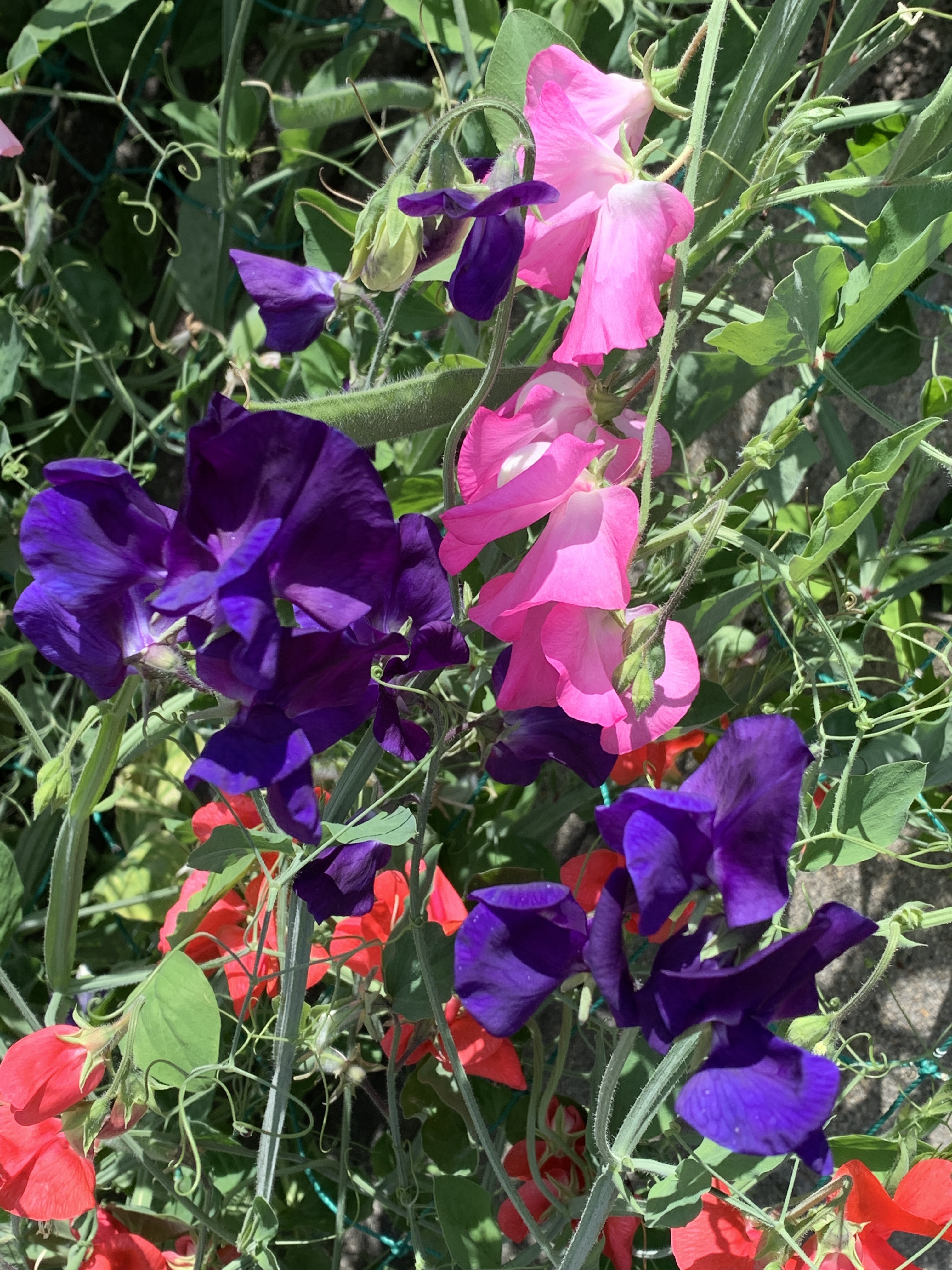
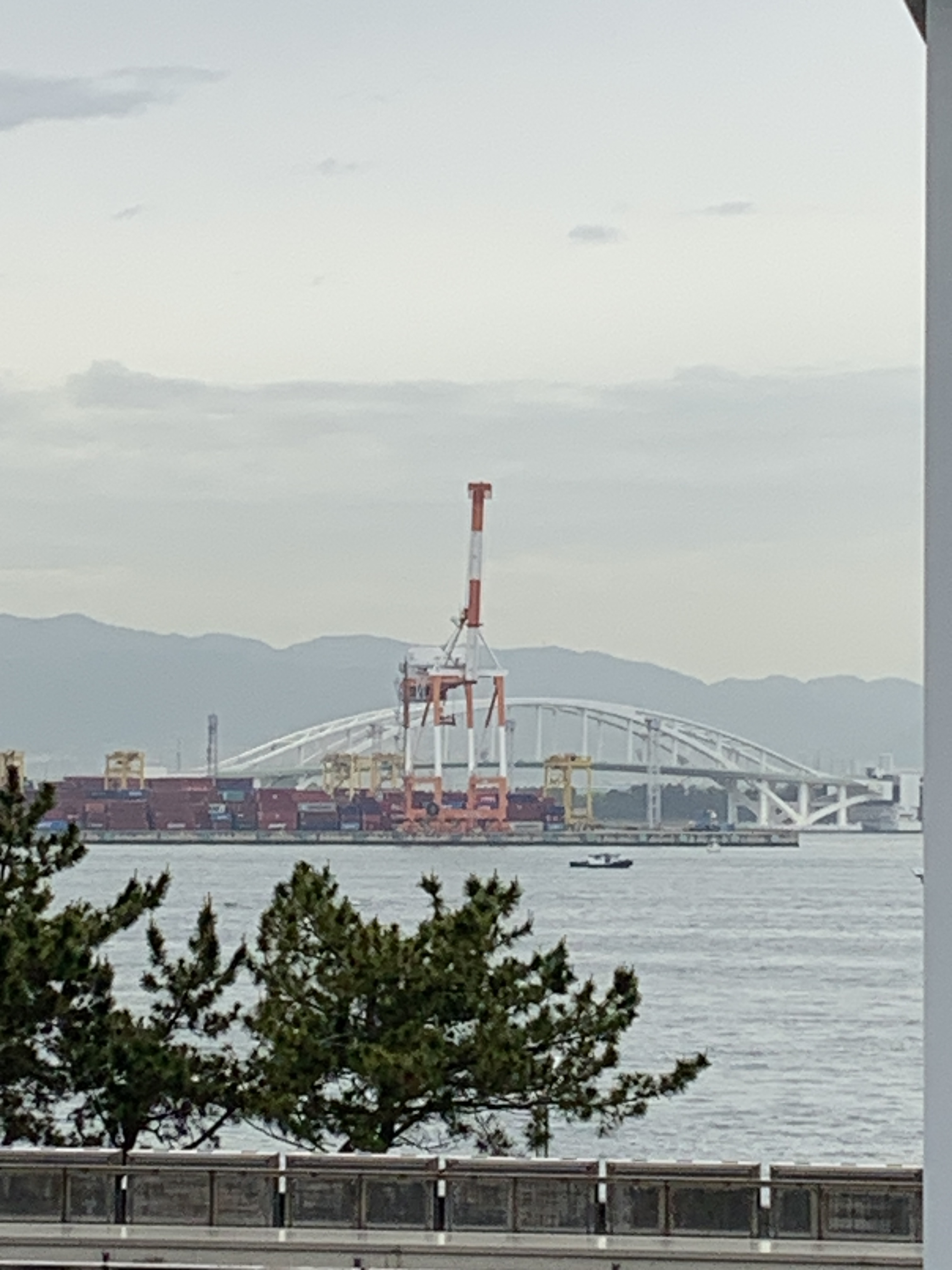
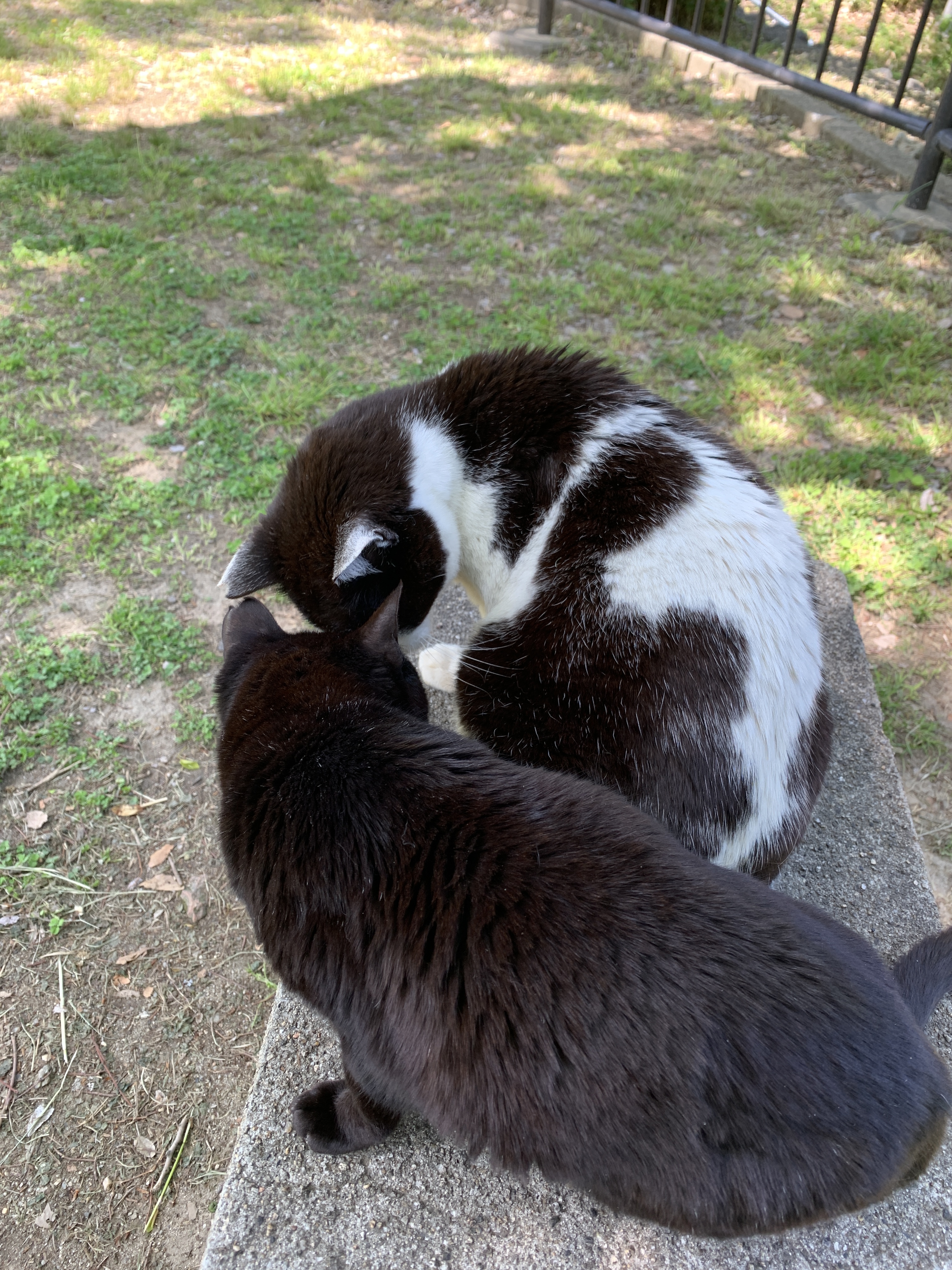
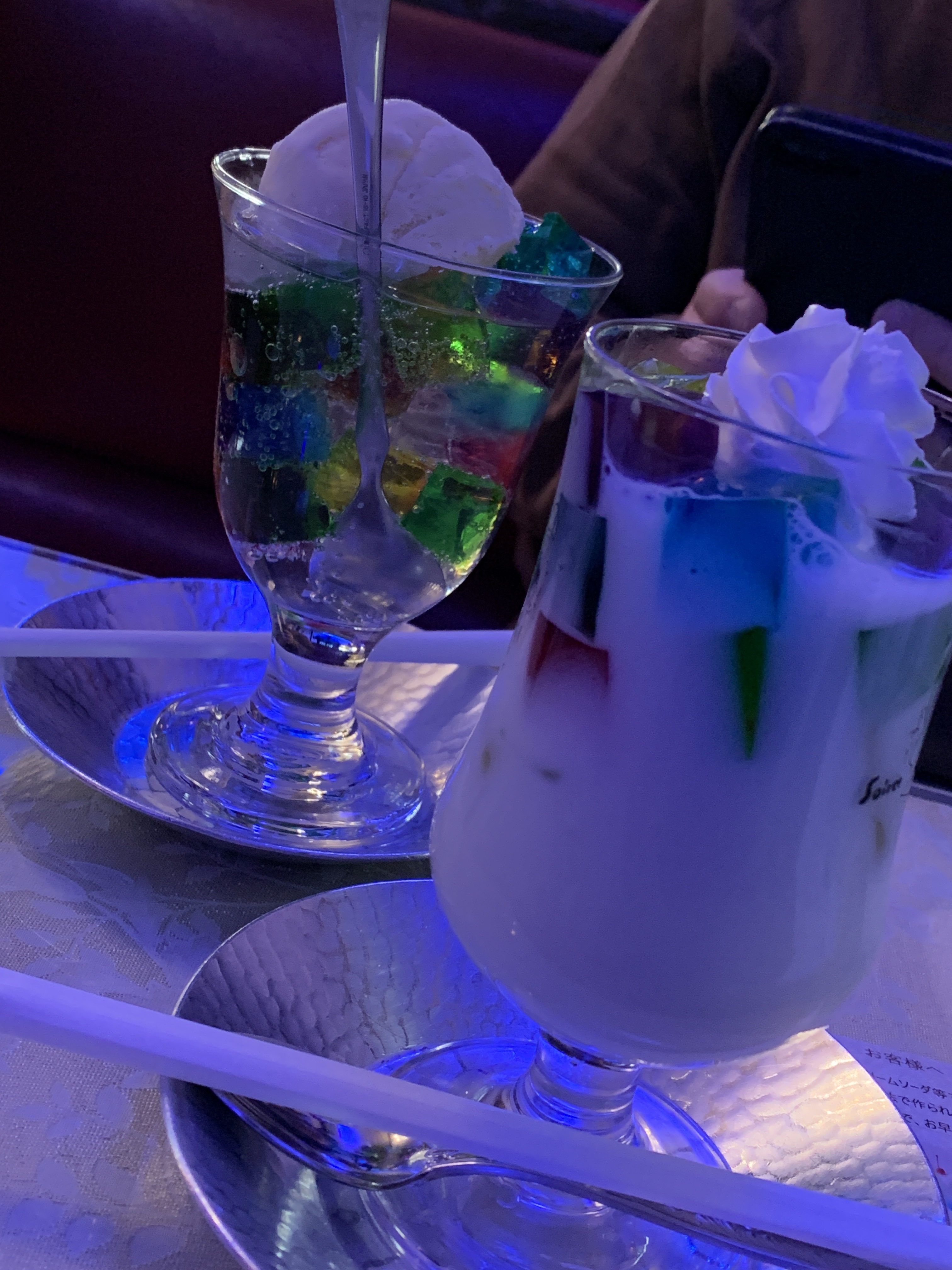
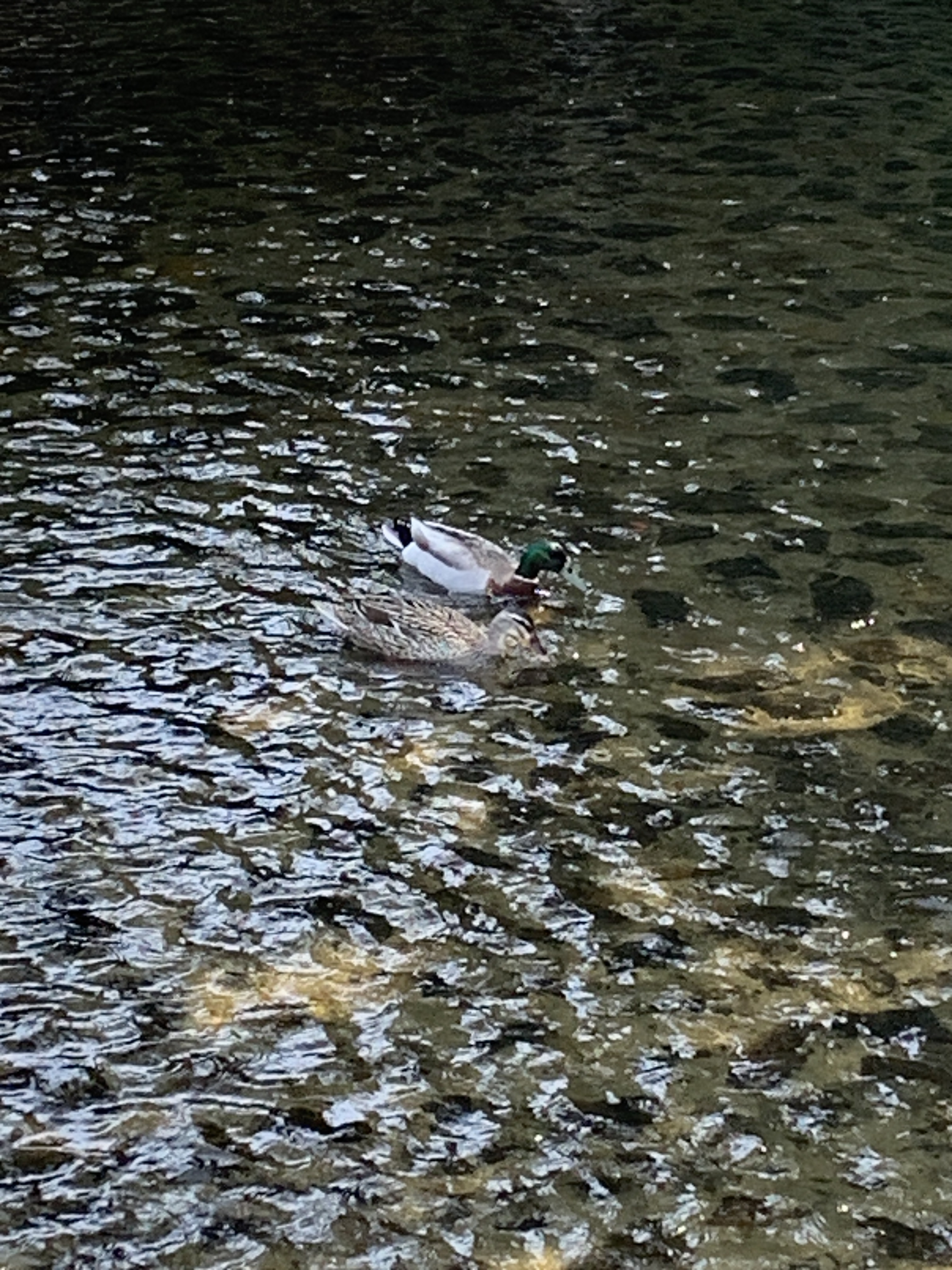
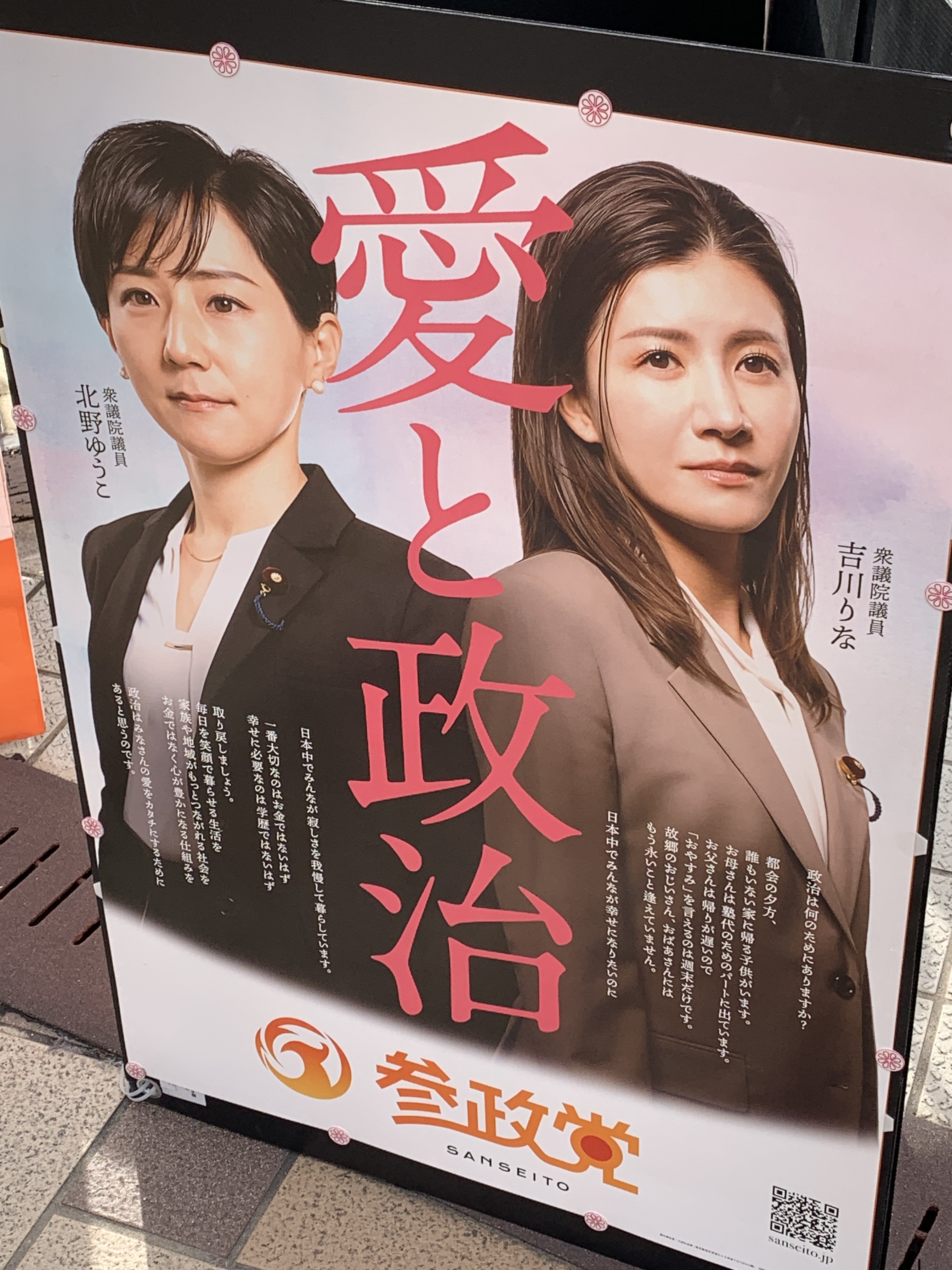
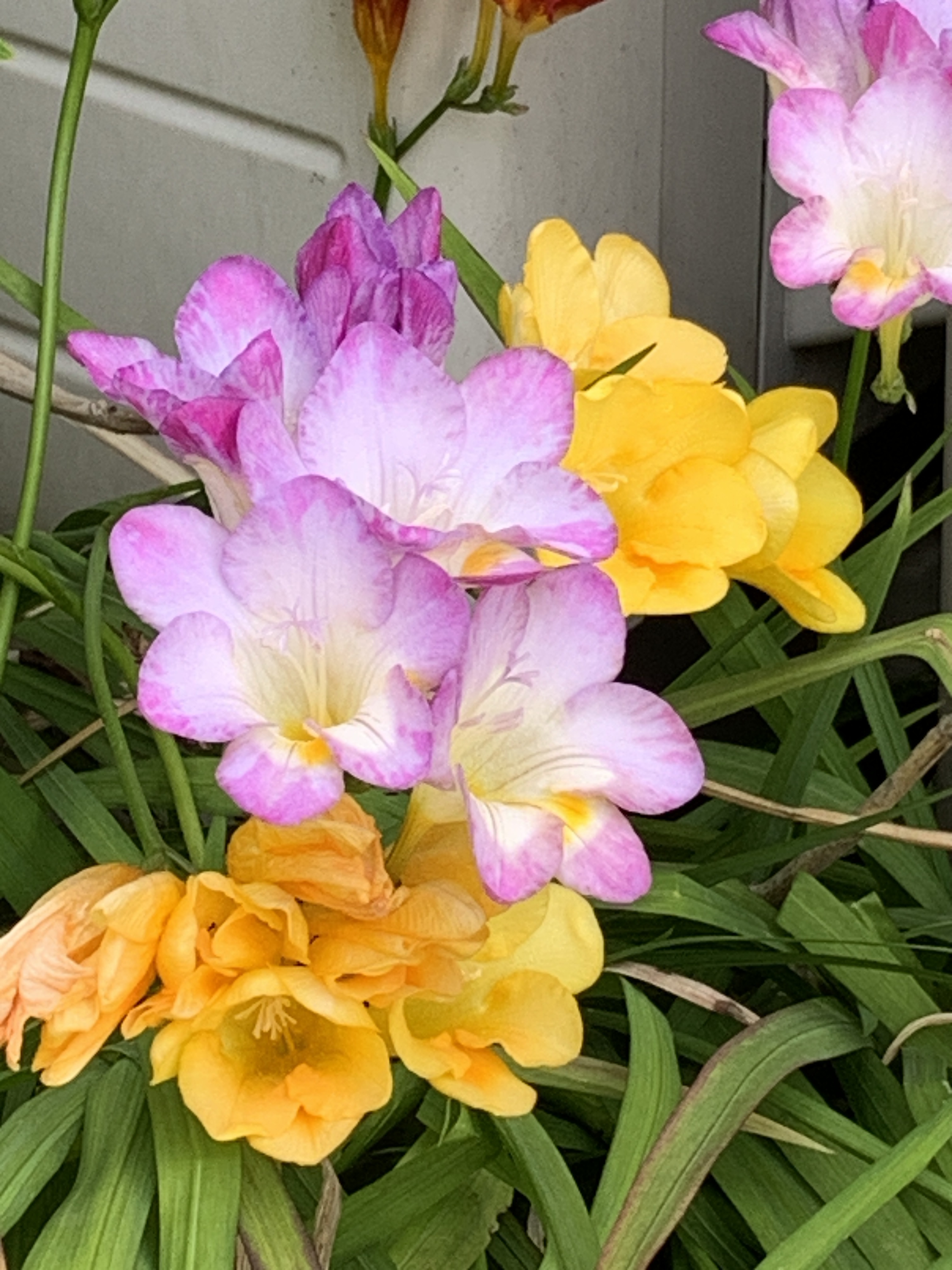
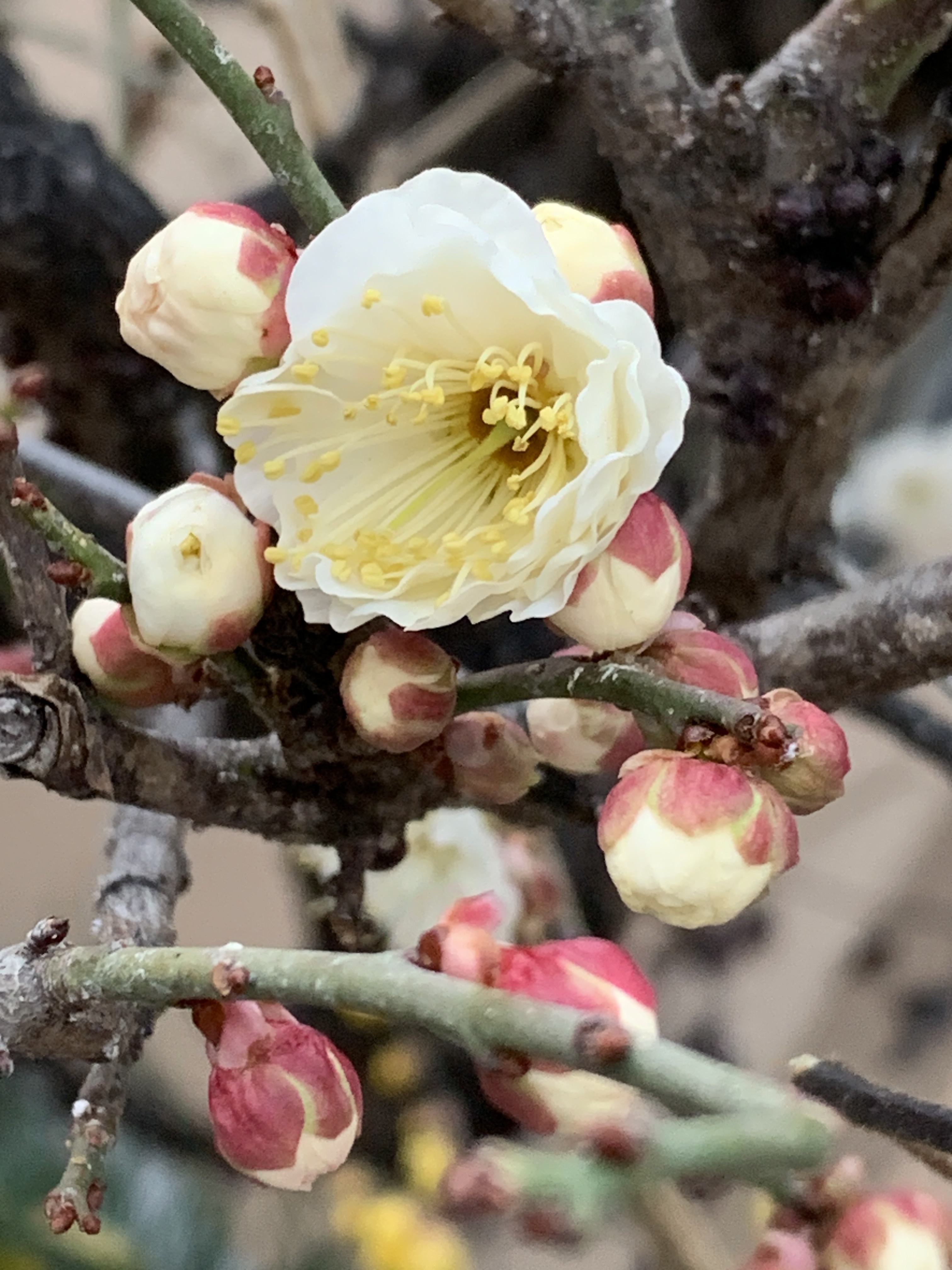
Photos: Assorted flowers, a container port with bonus mountains, chibi-chans on the march (you have to look closely to see them in their little pink hats, for obvious reasons I refrained from photographing unknown small children close up), Kuro-chan from the park and their friend Ushi-chan, fancy desserts in a fancy blue-lit café, a duck couple camouflaged by sunlight, a poster that cracked me up (it’s just a political poster for one of the rightwing asshole parties, but especially since the text down the middle reads “Love and Politics,” all I could think of was “this is an ad for a movie about two women politicians from opposing parties who fall in love during their campaigns”), and one of my farmboys who slipped in there somehow.


Be safe and well.
nnozomi: (Default)
this is mostly just self-satisfactionI passed HSK6! Well, technically apparently you don’t actually pass or fail levels 5 and 6, you just get a numerical score, but the pass/fail line for the other levels is around 60% and I ended up with 76%, so I feel okay about saying I passed. The listening test was a bitch, pardon my French; listening is so hard without context, plus my mind tends to wander…but I scored just about the same as I’d been doing on practice tests, so at least not worse. For some reason my score on the reading/grammar part was MUCH higher than on any practice test, thanks Xi-laoshi for going over the awful grammar questions with me a million times (I hate this section, you have to choose which of four long sentences contains a grammatical error). The writing section (where you have to read a passage and then summarize it from memory) was all about Liu Ying, a charisma train conductor from Changchun, who is a fun person to know about. Incidentally this was the online test; I would never pass the version where you have to write an essay by hand, thank God (or rather 谢天谢地) for computers and smartphones. (The test itself was a bit odd—I was expecting, from the strict rules, a huge auditorium, lockers for belongings, etc., but it was a little battered classroom with a couple dozen people spread across HSK2, 4, and 6, presided over by a middle-aged Chinese lady speaking Japanese with a heavy local accent—“your bag? oh, just put it under your desk.” It was nice to think about absolutely nothing but the content of the test for two hours or so.)

I’ve been reflecting on how different my Chinese study experience has been from studying Japanese. I had four years of classroom Japanese in college, including six months as an exchange student and a summer at Middlebury; I also watched some anime with friends, started reading Japanese books as soon as I was up to it, went through a period when I was watching all the Toyokawa Etsushi dramas I could get my hands on…but definitely laid my groundwork in the classroom, where I was fortunate enough to have good teachers. For Chinese I haven’t done any formal study at all, unless you count a weekly hour of conversation with Yu-jie and then Xi-laoshi; otherwise I’ve had Duolingo (not good, but not bad practice for a beginner), teaching myself from the lifesaving Chinese Grammar Wiki (and the Anki deck made from it), more Anki decks (HSK vocabulary and my homemade vocab one), A-Pei and our text-chats, the lovely people who kindly hang out at [community profile] guardian_learning, and of course incomparable teachers in the form of Zhu Yilong (in part via the blessed Wenella), Bai Yu, Liu Chang, Jiang Dunhao and his fellow farmboys, and their various c-ent colleagues. I think I got extremely lucky with Chinese study, in terms of a) having the time available to spend, which many people do not, and b) getting born on third base by knowing the characters already from Japanese.
Oh dear, that got long. Anyway, unfortunately passing the HSK does not magically confer fluency, but it’s a nice milestone to hit and hopefully motivation to keep going.


Other random Chinese-related stuff. Gu Lin Ruei-Yang is a pitcher for one of the Japanese baseball teams, a Tayal indigenous Taiwanese guy from Taichung who uses two family names (his mother’s and father’s), an interesting collection of characteristics; the history of indigenous Taiwanese success in baseball goes back to the legendary prewar Jiayi Agricultural High School team.
Silkworms are called 蚕宝宝, a word which adorably contains an affectionate diminutive (a lot cuter than silkworms are to look at, appreciate their work without googling them).
Listening to an interview with my favorite singer in which, doing a little self-PR, he says 我不挑活儿,可盐可甜. I was very pleased with myself (sorry, more bragging) for hearing and understanding this; 我不挑活儿 just means “I’ll take any work that’s going,” but uses more colloquial phrasing than the classroom words 选择 and 工作. 可盐可甜 I had to look up, but got the general sense of: it’s literally “I can do both salty and sweet,” and figuratively “I can be hardcore or soft and cute,” roughly. A fun phrase.
Also Zhu Yilong’s birthday vlog, in which some inspired person got him to go to a park and have a barbecue; he looks gorgeous and seems to be genuinely enjoying himself, singing along to the car radio, relaxing in nature, and earnestly cooking noodles. <3

Music: João Gilberto’s Disse Alguem, which is “All of Me” with Portuguese lyrics, and William Bolcom’s Graceful Ghost Rag, an old favorite of my dad’s and also of mine (the link is to Yeol Eum Son’s performance, which is one of the closer ones to my father’s).

Translating a table of chemicals, some of which cracked me up. “Glacial acetic acid” sounds like what happens when you put vinegar in the freezer; “methyl cellosolve” should be the brandname for a luthier’s tool (do you think they offer violinsolve and violasolve too?). And I certainly don’t plan to go anywhere near “fuming nitric acid” until it calms down. Also, this particular source text confounded me for a LONG time with 息化, breathification, which wouldn’t turn up anywhere, until I realized it was a visual typo for 臭化, literally stinkyfication and chemically bromide.

Random other things: I rediscovered cobalt.tools and am delighted to find that it downloads not only YouTube but also bilibili; now how long will it take me to download my huge backlog of bookmarked B站 videos? and will my computer have enough storage space? (I’m grabby about things I like online, whether music or fics etc.; I want to download everything, just because you never know when someone will see fit to delete it.)
For writing purposes a few days ago, I honestly genuinely found myself googling “why is the sky blue.”
So there’s a recent commercial on Japanese TV (I see CMs when I’m watching baseball games, I can’t help it) in which a giant, besuited salaryman is fighting off a monster amid a Japanese cityscape, Godzilla-style, while his wife and teenage daughter watch from their apartment window: “Oh dear, it’s your dad again. I hope he won’t knock down the supermarket this time.” “My boyfriend asked me if I can turn giant-sized too…” with a look of teenage angst. I’m entertained by the possibilities for stories here. (I don’t think this commercial has fulfilled its original mandate, on account of I don’t actually know what it’s advertising for, but it’s fun.)

Photos: Seasonal azaleas, irises, maple leaves, and other flowers I don’t know by name, as well as some carp flags and interesting machinery.


Be safe and well.
nnozomi: (Default)
More on my Li Kotomi translation project: she has an essay describing some of the details of the process of her translation of one of her own novels from Japanese to Chinese, with examples, which not surprisingly is hard to deal with (especially because for the Japanese reader, most of the quotations from the Chinese translation will be at least semi-comprehensible from the characters without needing additional explanation, but the same does NOT go for English). I enjoy her extended metaphor of Japanese and Chinese as “two independent machines” (although I’m not sure I agree with all of it).
For me … Japanese and Chinese are like two independent machines. … In almost all cases, the quality of the products produced by the two machines is similar, but one of them—the machine marked “Japanese”—is a little unstable in its operation and occasionally produces defects, so that its parts require more frequent inspection, refilling with raw ingredients, and lubrication.
Although the two machines are independent, they run off current from the same outlet. The amount of current is limited ... . When I am writing a novel or an essay in Japanese, I turn off the Chinese machine entirely and direct all the current to the Japanese machine in order to ensure its products’ quality. Conversely, when I write in Chinese I stop the Japanese machine. … [W]hen translating from Japanese to Chinese, I have to use about 30% of the current for the Japanese machine and 70% for the Chinese one, and the other way around when translating from Chinese to Japanese. However, since the products have been produced on 70% current, they must be inspected more carefully and thoroughly than usual. …
Each of the two machines has its own specialized production field, with unique functions the other does not possess. The Japanese machine includes special functions like hiragana, katakana, kanji, and ruby text, and excels in the production of fluid sentences and thoroughly variegated text. Because hiragana and katakana are capable of expressing sounds alone, effacing meaning, they have high affinity with other languages, meaning that various different languages can be used to supplement the raw materials. The kanji function has various additional options such as onyomi and kunyomi readings, which can be cleverly used in combination with the ruby function to weave a florescent world like the pattern on a kimono.
Elsewhere, the Chinese machine basically has a single hanzi function, but because this function combines overlapping aspects of sound and meaning, it enables the generation of more rhythmical, more formally beautiful couplets than in Japanese. Because each individual character takes up its own definite space, this function does not lend itself to flowing, variegated sentences, but excels at regular, definite text as well as sentences of silvan density. Also, because hanzi are highly neological, new words can be created even more freely and improvisationally than in Japanese. Further, the Chinese machine has a secret time-machine function which enables free connection to the many poems and chengyu sayings created over four thousand years of Chinese literature. This feature is not included with the Japanese machine.


Reading Measure for Measure with yaaurens and company, and finding it interesting for many reasons (also I need to go back and reread a_t_rain’s excellent epilogue fic. My brain in silly mode suddenly related it to The Mikado, with Angelo as Koko, guilty of the sex-related crime he’s cutting off other people’s heads for; which would make the Duke the Mikado, I guess, and Mariana Katisha. The plays certainly don’t map one on one, not to speak of the differences in tone, but they would make a fantastic theatrical double bill.

okay, so listen to the melody line of 祝我幸福 (Wu Qingfeng) and then of Meditaçao ; cross-cultural pentatonic scale friends. (As my dad used to remind me, there are only twelve notes, and the major pentatonic scale happens all over, see also Chinese dizi flutes etc., so it’s just a common and garden coincidence, but I still like the resemblance.)

I’m still playing the bassoon and still in a local amateur orchestra, for the moment (*circumstances unrelated to anything here may interfere). I’m also still very bad at it, but not as bad as I was. (I will never be more than a mediocre amateur as a performing musician, because I can never find the technical fingers/lips/tongue etc. parts of playing an instrument interesting at all. I like music because of melody and harmony and rhythm and timbre, not because I remembered to move my left hand just the right way or adjusted my embouchure just so! What does the one have to do with the other? I suppose it’s people who can find both interesting who become the real performers, good for them. Anyway, I kind of wish I’d taken up the bassoon years ago, because I enjoy it more than I ever liked playing the cello—I like having a part all to myself, I like the way breath vibrates into sound and the way it’s an instrument nobody notices but also penetrating and exciting. The other day we had our first rehearsal with a contrabassoon and sitting right next to the contrabassoonist was SO NEAT, I want to try playing one SO MUCH, it’s like a dinosaur that can sing in tune.

No new farmboy words today, although I did make a wrap-up post about watching the series (so far) here. Unrelatedly, A-Pei taught me a Chinese phrase for “the grass is always greener”: 外国的月亮比较圆, the moon is rounder abroad.

Discovered via YouTube, the architect Hamaguchi Miho’s Nakamura House. Unfortunately for my purposes she was too late for [community profile] senzenwomen, active after the war, but very interesting, and the house looks gorgeous on the inside (although Y rightly compared it to an elementary school gym on the outside, I have to say)—look at the high ceilings and the teal glass tiles and the light, and the wall of bookshelves (scroll down for some before/after renovation pictures). Both pretty and actually livable, which is far to seek.

Photos: the usual, including an ex-bicycle and a castle.
plumsbark plumswall stray
castletrain notbike yukiyanagi


Be safe and well.
nnozomi: (Default)
Thanks to osprey-archer’s reread, I’ve been rereading the Joan Aiken Dido books for the first time in years and years (bless openlibrary and its ilk), including some I never managed to read before at all, for one reason or another. I have to keep stopping or skimming now and then because the tension is SO MUCH, they’re thrillers really, but full of the most bizarre and wonderful (and horrific) flights of imagination. Captain Hughes breaking out of jail by designing the flying craft he's always been obsessed with, Dr. Talisman (whom I kept picturing as Wen Xiaoliu the whole time), the frightening witch antagonists drifting suddenly into wistful, genuinely poignant raptures about going home to the Caribbean, the Birthday League, Dido entranced by her scoundrel father's compositions...and I’ve still got like half a dozen books to go. In particular it occurs to me that Aiken makes Dido immensely brave, clever, funny, resourceful, and caring—heroic, as Captain Hughes says—without ever making the reader draw away from her as they would from a worse written Mary Sue-type.

If you have been blue lately, as which of us hasn’t, and could use a momentary burst of sheer elation, go listen to the ending of this Kapustin piano sonata—the timestamp should take you right there but really the whole thing is a lot of fun. Exhilarating.

I was infuriated and amused by a client comment on the math workbook I had to translate recently: the original question was about averages, “if you have five ミカン (mikan) of the following weights, what is their average weight?” or something along those lines. I translated mikan in the normal way as “tangerines,” and the client commented “The weights given would be too heavy for tangerines, so we should make this ‘oranges’ instead.” First, if they’re too heavy for tangerines they’re too heavy for mikan too! The words are synonyms! What did you want me to do, make it “clementines” like my dad used to call them? Second, who goes and LOOKS UP the average weight of a tangerine? (And where do you even look that up?)

Also vaguely on the same theme: for some reason the English textbook they use at the nighttime junior high, which I think is originally designed for sixth-graders, happened to have Boy A saying “I like math!” and Girl B saying “I don’t!” and I could not stop myself pointing out “you know, that’s not a very good stereotype,” before remembering that the half-dozen Korean-Japanese ladies who make up the class were undoubtedly familiar with sexism in much more straightforward and intimate ways (to start with, among the reasons they had to wait forty to sixty years to attend junior high). Oh dear. They saw the point, though.

I ran across Aoyama Akira in a work project the other day and I just thought he was neat; he was a prewar civil engineer who was the only Japanese surveyor involved with the Panama Canal, and then went back to Japan and built a bunch of drainage canals which prevented deadly flooding. Also he has the rare distinction of looking pretty good with a mustache (in his 1928 Wikipedia photo, at least). He seems to have been a gentleman of integrity: during the massacre of Koreans after the 1923 earthquake, he sheltered Korean laborers from his current construction project in his own home, and when asked by the government during WWII what would be a good way to demolish the Panama Canal, said “I know how to build it but not how to destroy it.” He also enjoyed poetry and Esperanto, gave his daughter a dagger when she got married, and believed women should have technical skills.

For all my ongoing farming show obsession I still remain loyal to Liu Chang and his livestreams as low-key background listening; in one recent one he streams himself playing a video game called What Remains of Edith Finch (I’m not a game person, I had to look it up; it‘s a bit dark for me but very interesting). Not the first game I would have expected to get a Chinese release, but why not? In language-learning terms it’s extremely fun to watch him play. His version of the game has the original English voiceover plus very artistically inserted on-screen Chinese text, and his English is good enough that he picks up the phrases in the voiceover from time to time and responds—“…but I had no idea what was behind that door.” “我也没有 idea!” and so on. Also he reads on-screen English text out loud in English with dates/numbers in Chinese, which seems to be a universal first-language constant (I still count rests in English, for instance). Plus, while he himself is not subtitled, it’s much easier to follow what he’s saying by ear when the visual context of the game is right there.

Latest farmboy words: 卖萌, to act cute (lit. to sell cuteness); 交卷, to hand in a completed test (interesting because it uses 卷, a scroll, although I don’t think many people are taking tests on scrolled paper these days); 刷刷的, smoothly, a breeze; 虎头蛇尾, starting strong and finishing weak (lit. tiger’s head and snake’s tail); 无籽, seedless, as in grapes; 弄巧成拙, to try to do something clever and end up the worse off for it (very roughly, “do smart end stupid”)

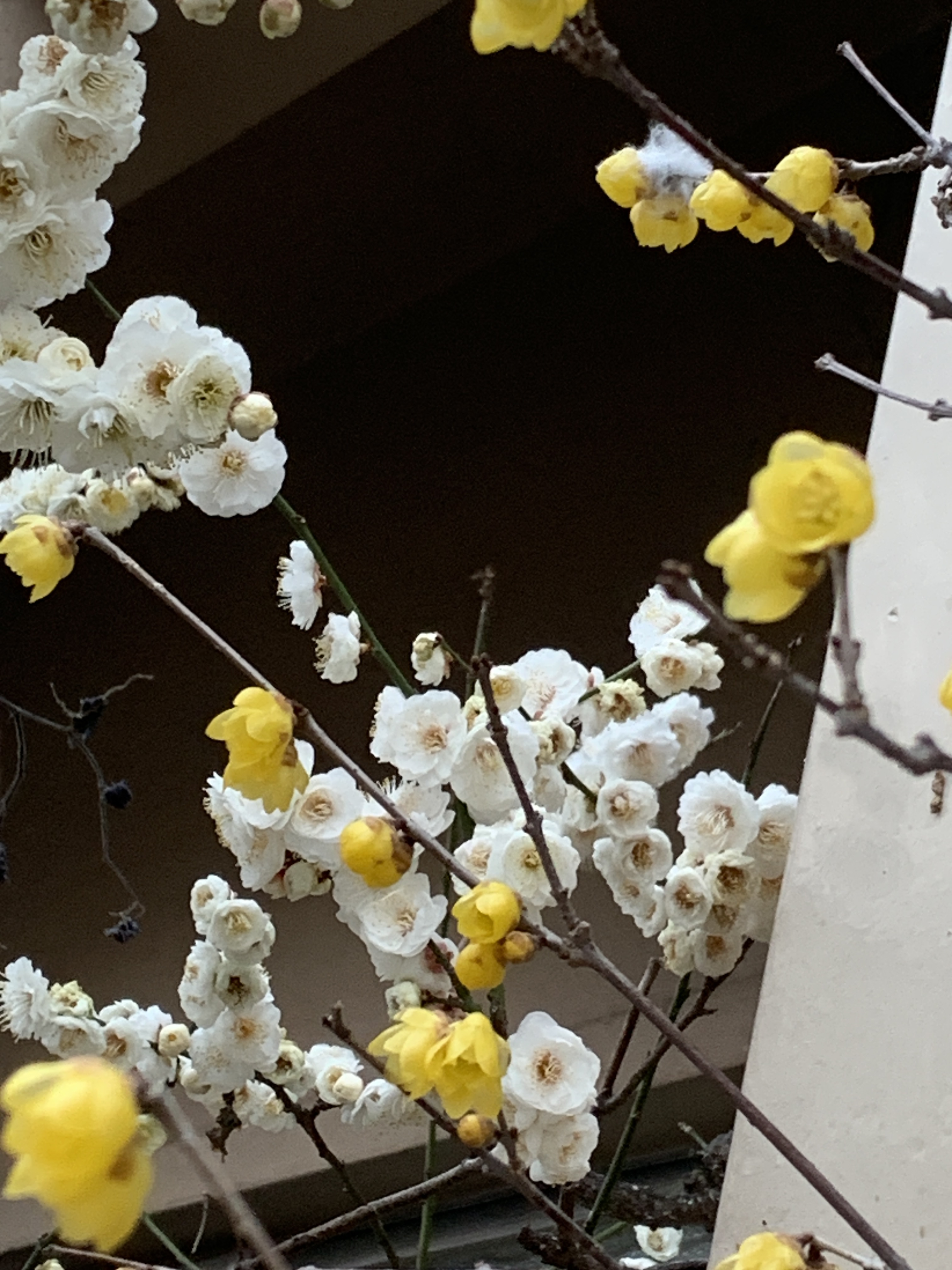
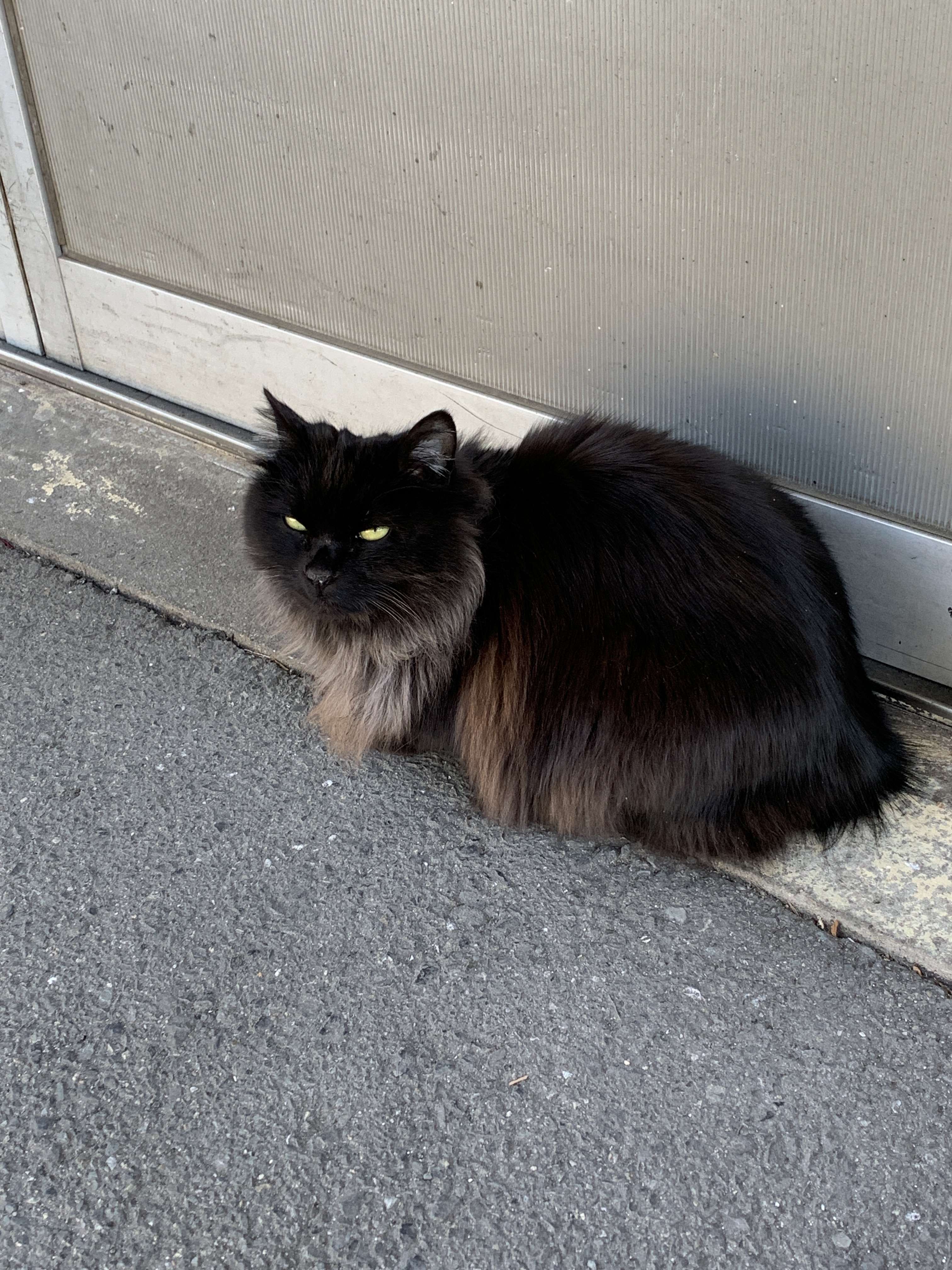
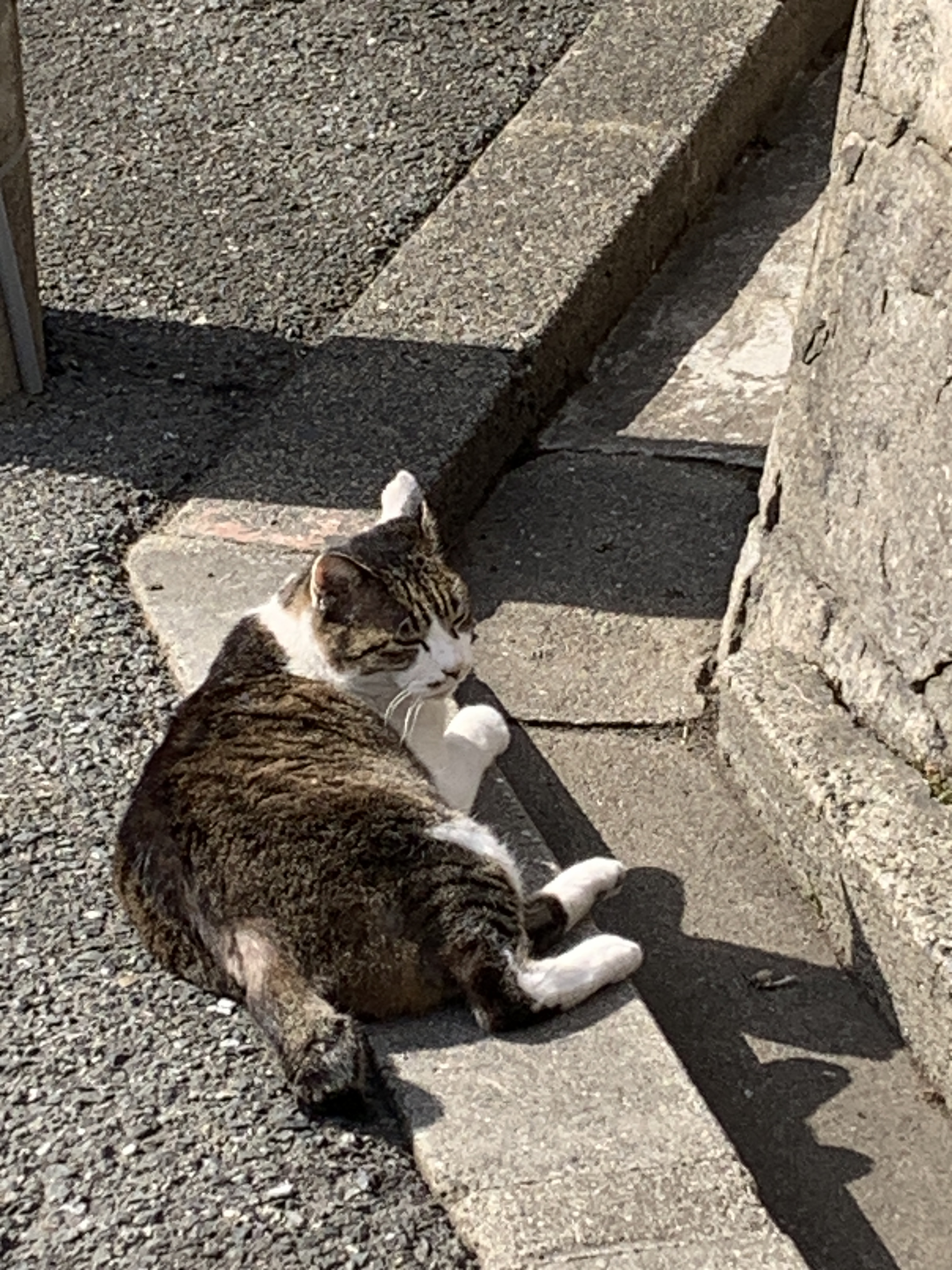
Photos: Lots of plum blossoms and assorted local cats. The matched pair live near the nighttime junior high and will let me pet them only at very irregular intervals, I never know when they’ll be in the mood, but the day I took the photo was a lucky one and I ended up with both of them bonking their foreheads into my knees and alternating purrs and meows. The other three I often see (and sometimes get close to) on my morning runs; Kuro-chan senior, a free-range pet (note the extravagantly long fur) who must be quite an elderly gentleman or lady judging by the brown tint; Kuro-chan junior, much younger and sleeker and more skittish; and Miké-chan, usually friendly and amenable (except occasionally when preempted by another cat).
ume6 ume1 ume3
ume4 ume2 ima2
kuro1 kuro2 mike1


Be safe and well.
nnozomi: (Default)
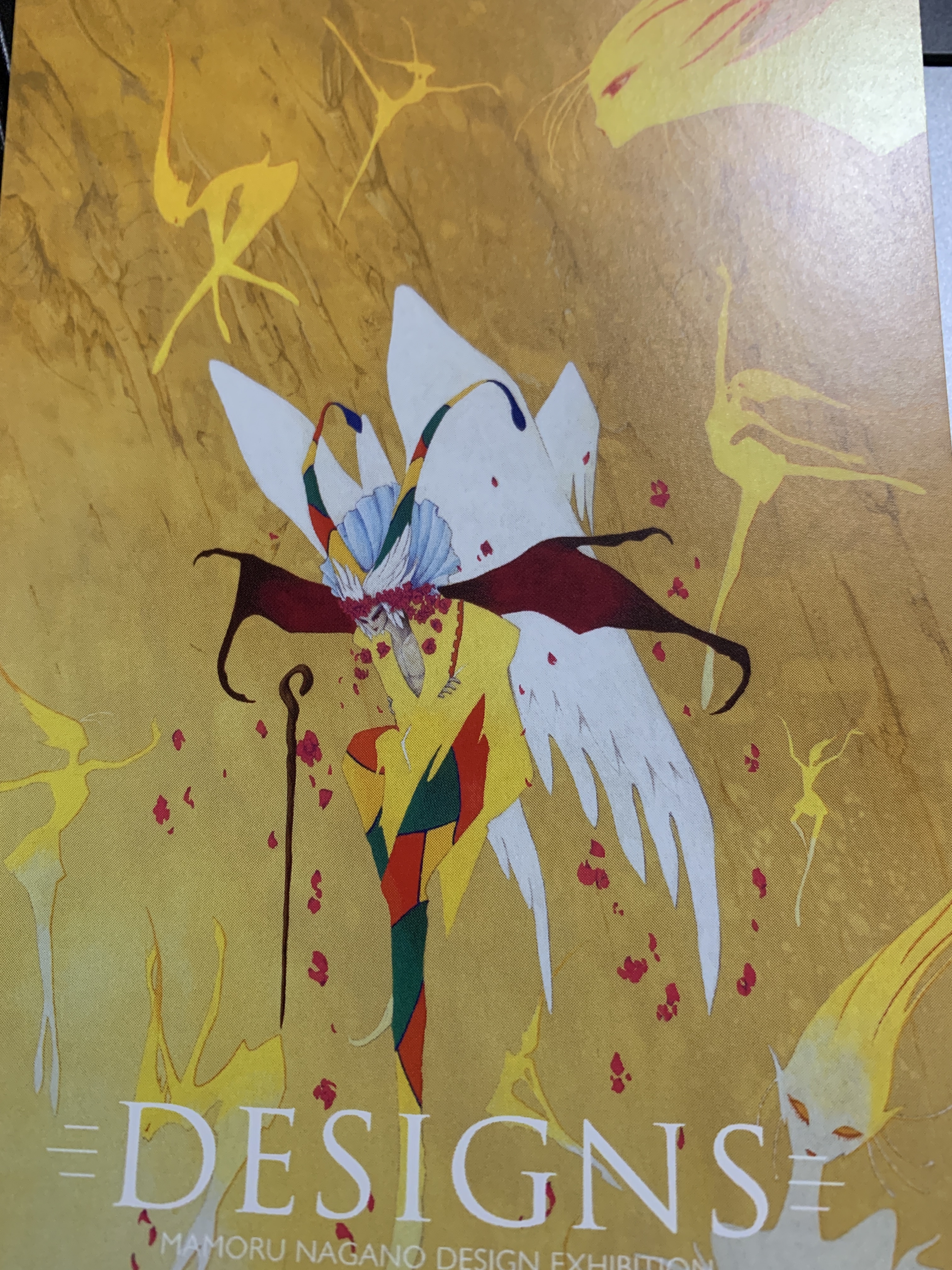
Assorted little things. I’m way too pleased with myself for translating “立flag” as “famous last words”; not universally applicable, but idiomatically pretty good, if I do say it myself. / For work purposes I recently discovered an academic institution called the Center for Research and Education of Natural Hazards; it’s important work and I shouldn’t get silly about the name, but man, I wish it were possible to educate natural hazards to be less hazardous! / The other day Y took me to an exhibition of Nagano Mamoru’s work; I couldn’t help grumbling about the short skirts, but I was blown away by the fantastic level of detail and also the little notes throughout the sketches, just someone who’s not only extremely good at his job but also consistently has enormous fun with it. See also the pictures below—photos of postcards, sorry, but the paintings are absolutely gorgeous.

Latest farmboy words. 土土的: unsophisticated, uncouth, down-home (lit. earthy); 蔓越莓, cranberries (“vine berries”); 豆沙, red bean paste (this one is weird to me because in Japanese it would be 馅子 (in the unlikely event of being written in characters), a word which in Chinese, as far as I know, refers to any edible paste, such as the middle of dumplings); 怒发冲冠, seething with anger (lit. so angry your hair stands up and knocks your hat off); 巴拉巴拉, blah blah blah (phonetically bālābālā); 嘎嘣嘎嘣, crisp (as in a clear voice or a delicious pie crust).

More of my favorites from my C-songs playlist, part 2 of 3. 一格格 as sung by Janice Vidal and Jay Fung, when they both come in on 难以想象 with the VI chord on the raised tonic that’s such a harmonic shock, and then the sudden switch from ballad to delightful bouncy silliness in the chorus. Bai Yu in 小幸运 singing 一尘不染的真心 with a real ache in his voice; Zhu Yilong on the second time through the bridge in 太阳, filling 还有我站在这里 with passion. 小城回忆 is not a very memorable song overall (and Zhao Yibo, bless him, is an actor who sings a bit rather than a serious singer), but the high II above the tonic on 已飞了数万里, right near the end, is gorgeously bright and warm and open. 我成为我的同时 gets me with the leap up to 要往明天去 and the way it hovers on V there, plus the switch at the very end from ten voices in chorus, fast and loud, to one soft slow solo. 梦开始的地方, where Zhu Yilong actually gets to sing in his natural baritone range for once in his life; (okay, I would have to like this one regardless [see username] but I do anyway), where the key change and the float up to Zhou Shen’s high range on 绕啊绕 always stun me; 心酸, a decent song rendered mesmerizing by Wu Qingfeng’s voice, especially the repeated drift up to the vii note. 以后, where Jiang Dunhao combines spat-out-crisp enunciation with delicious syncopation and sweetness; 甘暑么 with the two vocalists perfectly matched, and the happy chorus with the sad lyrics.

Photos, well, not really: three of Nagano Mamoru’s paintings as noted above.


Be safe and well.
nnozomi: (Default)
Belated happy New Year! Just a few things I’ve been enjoying lately.

There’s a Korean place nearby that serves big bowls of dried-radish-stem soup, which sounds dubious and is, with rice on the side, a delicious satisfying winter meal. In Korean it’s shiraegi soup, a word I unfortunately tend to confuse with sseuregi, garbage, and even less explicably with tieosseugi, the grammatical/notational rule for where you put spaces between words. One of these days I’m going to end up asking for a bowl of tieosseugi soup and the poor ajumma is going to be very confused. If there’s alphabet pasta, is there hangul pasta too? I would absolutely eat soup with little edible hangul floating around in it.

Recent farmboy vocabulary:
三脚猫: an amateur, a dilettante (literally a three-legged cat)
麦片: oatmeal (“wheat pieces” are oatmeal, but “potato pieces” are potato chips/crisps; not very consistent in what size the pieces are!)
烂梗: a dumb joke, what Japanese would call a dad joke
拐弯抹角: roundabout, zig-zagging, the long way around (literal or figurative)
齁: added to a flavor (sweet, salty, etc.) to indicate that it’s too much so and tastes bad
太甜了, 我的天! 舔一舔: not a new word in itself, just a comment about honey that doubles as tone practice: “it’s so sweet, oh my god, have a lick,” in which the syllable tian gets used three times in one breath with three different tones (tián sweet, tiān heaven, tiǎn lick)

I tend to (try to) be strict with myself about how often I’m allowed to read/listen to things I really like (books, fanfic, music), because otherwise I’ll go back to them over and over and over again and the bloom will come off a little, not that I like them any less, just that I end up knowing them so well. (Case in point; I haven’t reread Anne McCaffrey’s Dragonflight and Dragonquest in many years, even though I still think of them as favorite books, on account of having read them almost literally to the point of memorization in my childhood/early teens. When I do read them every line is already printed on my brain, and although that’s a nice thing in its own way, with my current favorites I still want to keep some of the shock of delight.) With regard to music, as I’ve mentioned I have a couple of playlists of favorites (one for classical/jazz/Brazilian/miscellaneous, one for C-songs), and I listen to them a little bit at a time, mostly while I’m writing my original thing (self-bribe).
Long 前置き, but lately I’ve been working through my C-song playlist, and man, some of them are just so good. sodagreen’s 无眠—as a song I’m only moderately in favor, but Wu Qingfeng has so much voice. (It’s so strange in a way that people have compared him to Zhou Shen—I get that they’re both singers with androgynous voices, but their, mm, density? affect? is so different.) Zhou Shen himself covering 敢爱敢做 in Cantonese—he’s justly famous for his high range but the low note he hits around 3:18-ish is STUNNING. Jiang Dunhao covering 就是爱你, singing 像绿洲给了沙漠 with a husky sweetness that does me in every time. Zhou Shen again, in 借过一下, where the contrast with his normal gentle floaty image works to enhance the punch when he spits out 你是你,我是我. A-Mei with her throat wide open on the title line of 也许明天. The wistful syncopations on 谁为我留下… from 如燕 (it’s good whoever sings it, from Olivia Ong’s original on, but I like this short a cappella cover). Zhu Yilong belting out 没人懂! in 谢谢侬. Li Hao, ballad-sweet and playful, promising 在晴天雨天白天旁晚为你守候 in 骗你是小狗. Zhou Shen again in 也很值得, giving me chills and thrills every single time on 你是那个人.
…and that’s just excerpts from the first half of my playlist! Part two coming at some point.

Photos: just a few I thought would be auspicious for the New Year, some citrus, some goldfish (?), a shrine camphor tree (this is from the shrine we always go to on New Year’s, a little old-fashioned one on its own little hill, and the sacred tree always reminds me of the Father Tree from Elfquest), a station at sunset
kankitsu kingyo kusu koganeeki


Be safe and well.
nnozomi: (Default)
I’m gonna have to start off yet again with “I’m way behind on comments but if you’ve posted something I’ve read it and been thinking of you,” which, though true, I feel should only hold a limited number of times. End-of-year busy, away for a night or two, sick for a while, winter hibernating tendencies, no genuine excuses. Posting right now a bunch of accumulated paragraphs because I have too much work to do and I don’t want to do it, so I am pretending I have time to do this… .

New Year’s cards not sent yet; expect them, well, in the New Year. (As noted in my last entry, if you’ve gotten one from me before expect one again unless you notify me otherwise; if you haven’t and you want one, let me know a name/address to use.)

More math workbook translation—there are numerous problems in which two brothers (or occasionally two sisters) leave the house at the same time and proceed at different paces toward the library or the station, and I can’t help wondering why they’re all on such bad terms, why not just walk or bicycle together and get there together? And are the younger brothers(/sisters) old enough to be left to walk on their own? Also, there are problems like “express the relationship of these line segments etc. using symbols,” which always make me want to respond with “AB❤️C” or similar. I mean, it’s asking me about relationships!

A very old friend from college emailed me for the first time in something like twenty-five years to let me know he and his wife were visiting Japan and could we get together for lunch or something, so we did. We had a kind of difficult friendship in college (also I was, I think, unusual among his friends of any gender because I didn’t ever go to bed with him), but we were close and it was really nice to sit down together and catch up on the last few decades, finding out that each of us is doing okay, knock wood, with some shared interests and many new experiences.

I’m still not 100% (I always get sick around New Year’s anyway, it’s just a thing, I’ve decided) but a definite improving factor was a big pot of lentil soup made from, I think, trobadora’s recipe; I don’t know if it was the lentils or the paprika or the feta, but now I’m craving more of it. Also today a bowl of o-jiya for lunch; I like this very simple meal so much I put the recipe into a fic at some point, it’s just rice, tofu, egg, soup base, and sesame oil but so good.

Yuletide fic safely posted before deadline; needs a little tweaking (and a new title and summary) before reveals, but holds together (although for anyone who knows me it might as well have my name signed all over it). I think this is going to be the first year when I just do my assignment and no treats or pinch hits, for the reasons above along with just generally drifting away from fic writing (though not giving it up altogether!). Still, looking forward to all the good reading.
Most Saturdays I go to the free Saturday juku a couple towns over to spend three hours with junior high schoolers and their English homework, which is sometimes fun and often frustrating (mostly not the kids’ fault, they’re all nice kids if wildly varying in ability and effort). Sometimes there’s a gap of time while they’re doing test/workbook questions on their own, and I use it to write in longhand; I got about half my Yuletide fic this year done that way, along with a lot of what I wrote for the Guardian wishlist, and today—with no remaining fic obligations—about 300 words of my original thing, which felt very satisfying. I hate longhand, but maybe I should do it more often. (For the record, my handwriting is so terrible that it serves as an effective cipher no matter who might look over my shoulder.)

Rereading Helen Thorpe’s The Newcomers, an account of a year spent in an ESL classroom at a Colorado high school, with kids from the DRC, Burma, El Salvador, Mexico, Iraq, and various other countries, which is a lovely piece of writing (Thorpe is a terrific nonfiction writer in general), somewhat similar to another favorite, Brooke Hauser’s The New Kids, about a Manhattan high school serving similar immigrants. So many individual stories worth knowing about. Also makes me think of the nighttime junior high near here, where I hang out in two classes; English for Class E, mostly Korean-born ladies with an average age somewhere in the sixties, many of them Japanese-Korean bilingual, some of them obviously very bright and deserving of the education they didn’t get to have (also one man of similar age with a Japanese name, who may be one of the people born roughly before 1965 with a physical disability who missed out on the special education schools first established in 1977). Also Japanese for Class B, three Nepali teenagers, a Chinese-Japanese kid from Guangdong, and two recently arrived older Korean ladies, none of them fluent in Japanese yet. The Nepali kids in particular (one boy with a bright grin and a mustache, three girls with long hair and little high light voices) are all on the ball and quick to learn, I don’t know if that’s a culturally acquired habit or if they’re just a particularly with-it random selection. Everyone makes the same mistakes we did when I was first studying Japanese, よんがつ for 4月, はいてください for 入ってください。

Not enough farmboy Chinese words accumulated yet to list here, but I was thinking how lucky it is for learning purposes that Chinese isn’t as gendered/socially inflected as Japanese. There are certainly some words the farmboys use that I (as a semi-respectable middle-aged lady) would probably not, but compared to their Japanese counterparts…look, let me give you a couple examples. (Vaguely sociolinguistic waffling follows)
I probably wouldn’t say 贼 as an intensifier or 不 alone as a tag question on the whole (although I could most likely get away with them in casual chat with A-Pei, for instance, it’s not like she hasn’t heard me say 特么 and other minced oaths anyway), but most of the language the farmboys use is something I could use too. Whether it’s me or Farmboy A, we can both get away (I think) with saying something like 我饿死了,吃饭吧 (I’m hungry, let’s eat) without drawing a second glance. On the other hand, Imaginary Japanese Farmboy A, talking to his peers, is probably going to say something like 腹へった、飯食おうぜ (hara hetta, meshi kuō ze) in that context, where I would say お腹空いた、ご飯食べようよ (onaka suita, gohan tabeyō yo). You will notice that although Imaginary Japanese Guy A and I are saying the same thing in the same language, there isn’t one word pronounced the same (kind of an extreme example, but then again I didn’t even put in any pronouns). This is one of the fun things about Japanese in its way, but I’m kind of glad for practical purposes the same does not apply (much) to Chinese… (Or am I wrong? Correct me if so!)


Photos: Seasonal.
momiji1 momiji2 momiji3
sazanka1 sazanka2 itaminight


Be safe and well.
nnozomi: (Default)
Oh damn, I knew there was something! ETA: it's about time to start thinking of New Year's cards. You guys know the drill; if I've sent you a card before and your name/address has changed or you'd rather not get one this time, let me know via DM etc.; likewise, if I haven't sent you one before and you would like one, let me know similarly what name/address to use.

My work computer recently started bulging around the battery, and I decided it was time for a new one, enter Mado-chan #2 (my computers get very unimaginative names, Mado-chan for the Windows laptop and Rin[go]-chan for the Mac one; I have no idea what generation of Rin-chan I’m on). Getting it set up was a pain in the ass as always, but it’s doing well so far, except that the latest version of the CAT software I need for work has a horrible bug in it that is driving me crazy. Why does everything always get worse?
I’m using it at the moment for more math workbook translation stuff, which is producing various unmathematical associations—it’s tempting, of course, when writing about the four operations, to throw in the Lewis Carroll versions. Also I can’t type “solve the simultaneous…” without thinking of Ginty Marlow, and the word “quadrilateral” always makes me think of Steffie from Alemeth struggling to pronounce “quadrilateral symmetry.”

Latest farmboy Chinese:
开挂, to cheat at a game
诈, to trick or swindle someone
这才哪跟哪 (also 这才哪到哪), this is just the beginning, we’ve hardly started
挂念, to worry, be concerned
磨磨唧唧, to dilly-dally, dither, beat around the bush
落汤鸡, wet as a drowned rat, soaked through; literally, a chicken that fell into the soup

Good things: I ordered myself a batch of accumulated books-I-want and have been slowly and happily working through them; book reviews to come when I’m all done. The weather is finally sort of wintery and it’s been weakening my resistance to good things to eat; I made a huge pot of pink chili last week, three days’ lunch and well worth it, and succumbed to roast chestnuts from the supermarket. So tempting.

Twelfth Night with the Shakespeare Zoom people; I always end up feeling terribly sorry for Malvolio. He’s so happy when he thinks Olivia is in love with him, and he gets such a miserable comeuppance. Like Wang Shi’an from The Rebel, unquestionably an unlikeable, unpleasant person but also one with feelings and vulnerabilities of their own.

Y and I were watching a strange-real-estate thing on YouTube the other day and found this abandoned tenement down south (be sure to click through the various photos, and don’t miss the second abandoned tenement, entirely cloaked in vines), which is now being rented out flat by flat at negligible prices, except you have to do the remodeling from scratch… It looks like a fascinating nightmare, but one that could also turn out really lovely given enough time and money.

Listening for the nth time to Elis Regina’s tour de force Amor até o fim—when I was about ten, my dad discovered this song and played it over and over for weeks like a teenager, and it really is just that good. I wrote my senior thesis on it. Also Stevie Wonder singing Don’t You Worry ‘Bout A Thing, another favorite of my father’s—he liked the suspensions in the middle, as do I, and God knows we can all use some reassurance at this point; also I like the line “but you’re the only one to see the changes you take yourself through.”

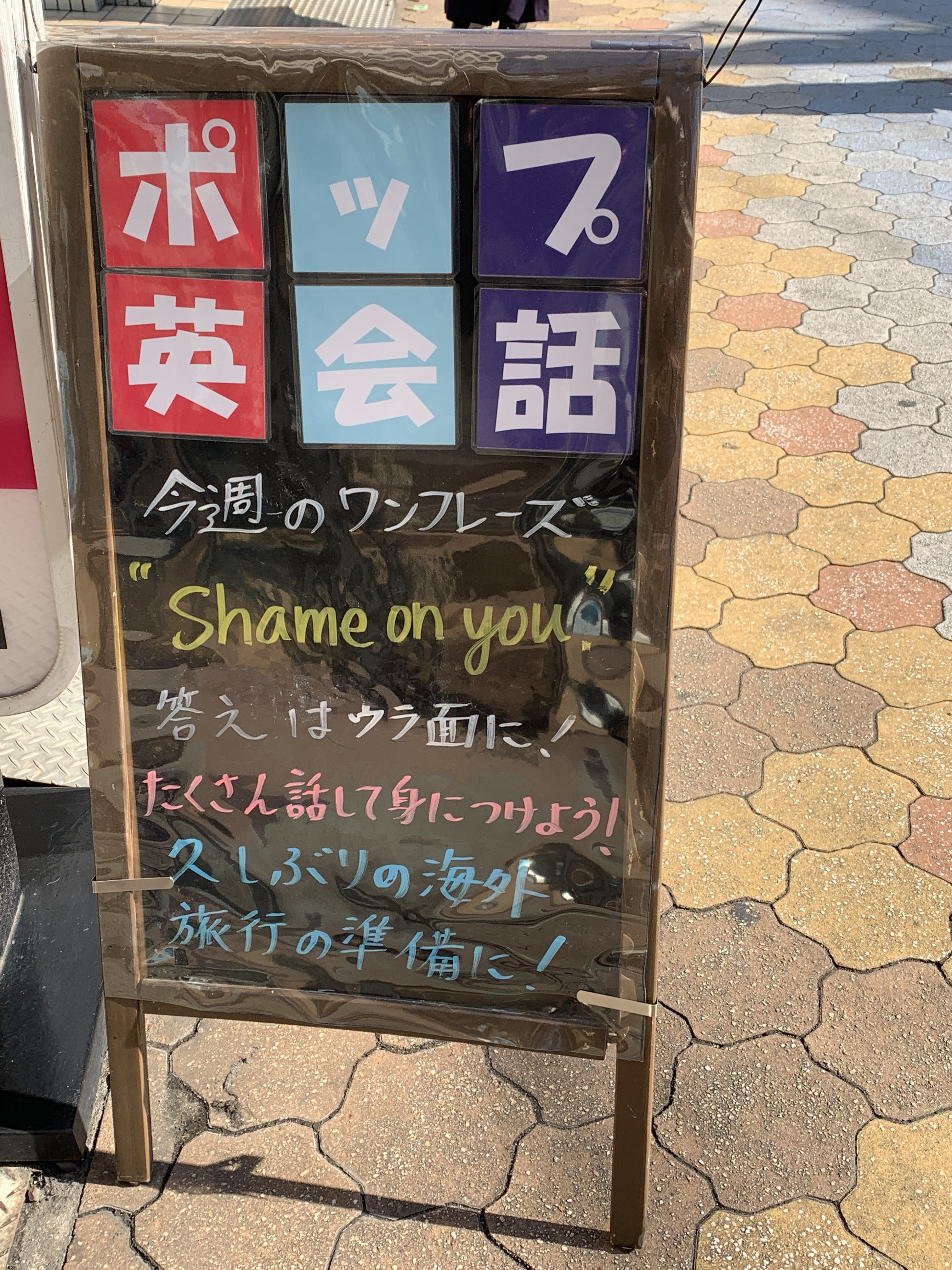
Photos, not very exciting: a couple of views of pink roses (not a conscious reference to the Elis song, but now that you mention it), a field of sudachi or similar citrus, Jiji-chan on business of some kind, and two signs that amused me. The blackboard advertises the English saying of the week—“so useful for your travel abroad!”.
rose1 rose2 sudachi
jiji3 fate shame


Be safe and well.

完了不

Sep. 8th, 2024 11:26 am
nnozomi: (Default)
Two neat links from my f-list: Article via Amedia on a version of Star Wars dubbed into Ojibwe. The guy who voices Han Solo says he “felt he knew his character intimately, having portrayed him ‘every day in the backyard … But nothing like this had ever crossed my mind as a possibility. So it's a dream come true,’ he said. ‘I hope there's more opportunities like this … for Indigenous people who want to work and practise their languages.’" Also a couple of songs via geraineon from a band that does Indonesian folk songs in old-fashioned jazz styles, Kisah Mencari Seorang Raja and Teman Seperjuangan.

Chinese stuff: No farmboy words today, on account of I’m watching season 2 very slowly and haven’t accumulated enough yet, but some other bits of things. False friends and true (?) ones: I was using one of those automatic supermarket checkout machines, and it told me “if you are finished, please press 完了,” and I looked at it for a moment going “but nothing’s wrong, why would I press 完了…?”. Confusion. Japanese 完了 kanryō just means “finished, complete,” while Chinese 完了 wánle is slang for “had it, done for, messed up”… . Elsewhere, I’m finding it irresistible to translate 脾气 píqì “bad temper” as “pique” for obvious reasons. Finally, since I can’t leave the farmboys completely out of a post, a scene (about 30 seconds' worth) in which one of them not very patiently explains Chinese measure words to another one (“I swear I’ve told you this eight hundred times”), reassuring to see native speakers struggling with these things too! (also it’s funny).

My mother, who tends to go to the ballet and other events where they look into your purse as you enter, says she sometimes asks the security guards if they dream about their jobs (I don’t know how she comes up with these things, or indeed gets away with them). At least one of them told her that yup, he does, and in dreams he sometimes finds things like kryptonite in people’s bags. (I wonder how his dreaming self handles these situations?) Thanks to this friendly guard, my mother, who is over eighty, has now researched kryptonite for the first time in her life!

For reasons I’ve been writing by hand a bit lately, and finding it almost impossible to write legibly (my handwriting has always been appalling, even seven years as a teacher didn’t help, I’ve been told it looks like Arabic). Took me back to the long period when I kept a handwritten diary. A friend showed me how she did it in seventh grade (B5-ish ruled spiral-bound notebook, write as much or as little as you want per day) and it stuck, lasting in various quantities until grad school when most of my RL was taking place in Japanese and it was easier to write about it in Japanese, except I never have learned to handwrite Japanese easily, so I switched from the notebooks to a computer document. Which is what I still use, although it’s a lot more fragmented lately. Embarrassingly, I have to say that the core of my diary-keeping has always had to do with whoever I’ve had a crush on at the given moment (sometimes reciprocated, more often not), and now that I’m comfortably married to Y my diary tends to be mostly fannish (fortunately Y is entertained by my fannish passions and has no objection to sharing my heart with various versions of Zhu Yilong, etc. etc.). Who else keeps a diary, and what is it like? If you feel like sharing.

Original thing: Why are some characters SO MUCH EASIER to write than others? Such a relief to get out of K’s viewpoint and into R’s, no shade on K; maybe it’s just because he’s in his head right now about a lot of things and I find it claustrophobic, but oh dear. Once again I am struggling with my decision to use ONLY these three points of view, I know why I did it and I think it’s right (even though I’m cheating a little in this one with some epistolary flashbacks), but it doesn’t play to my strengths and it’s HARD. (Sorry about all the capitals!)

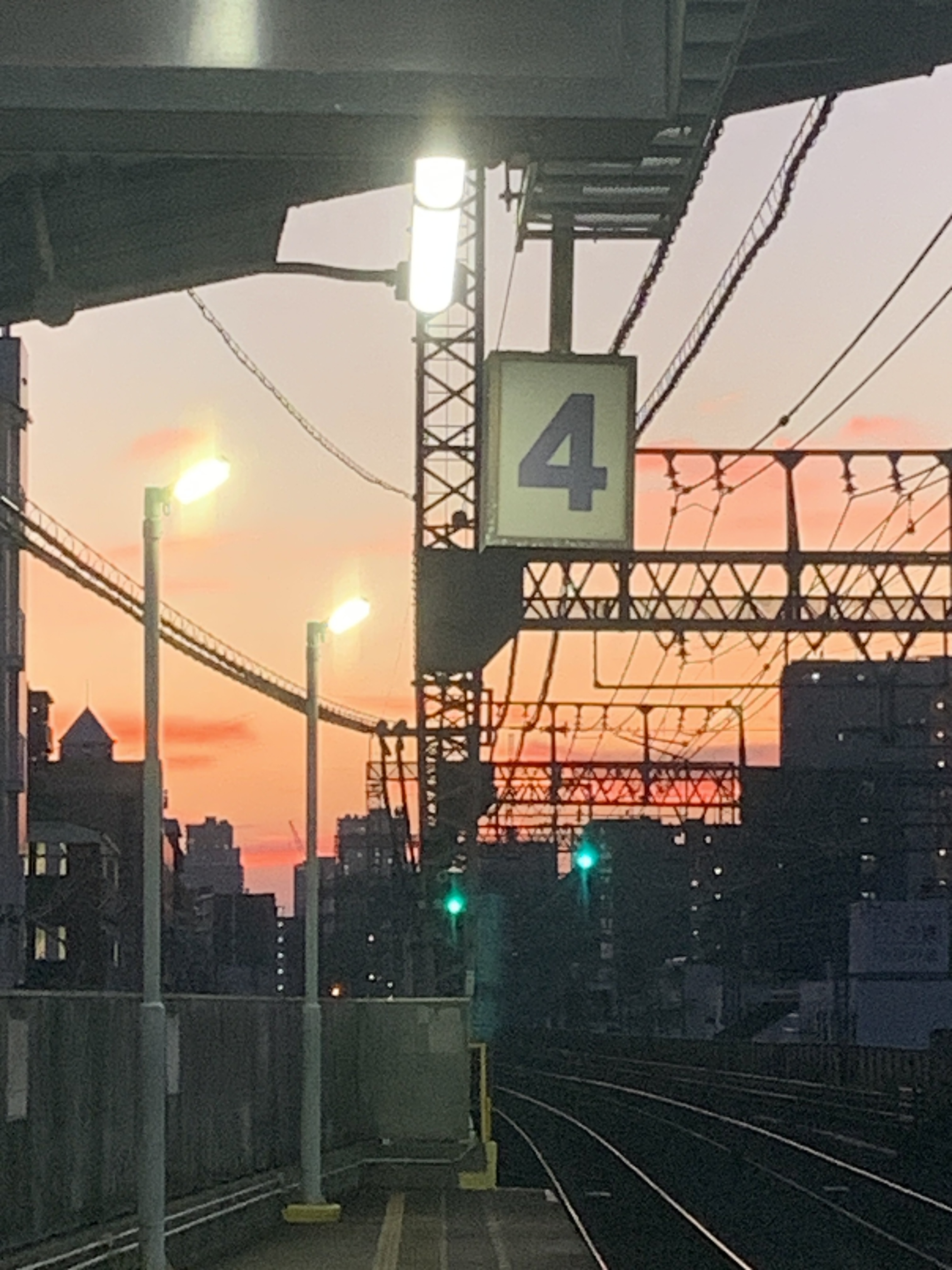
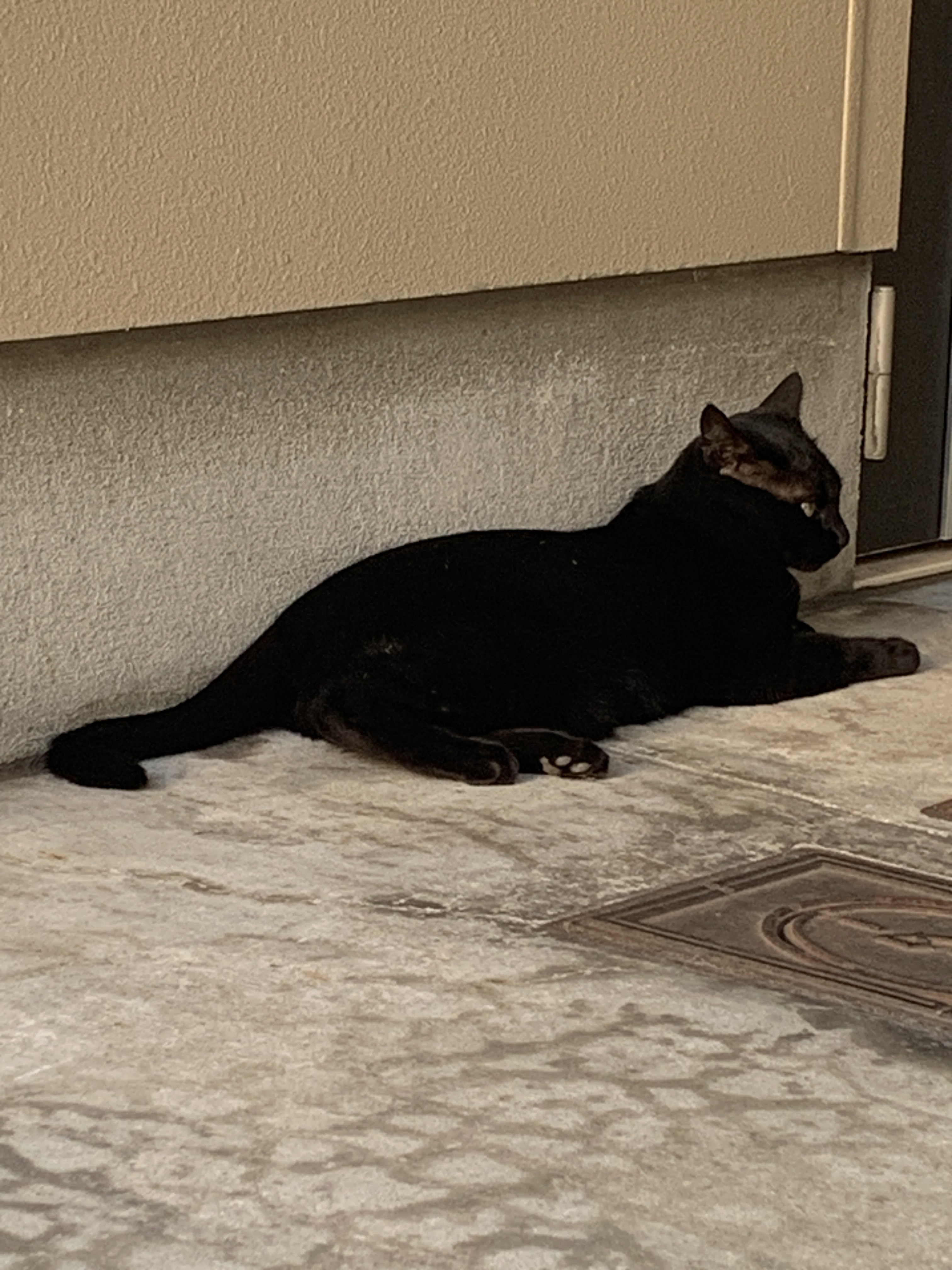
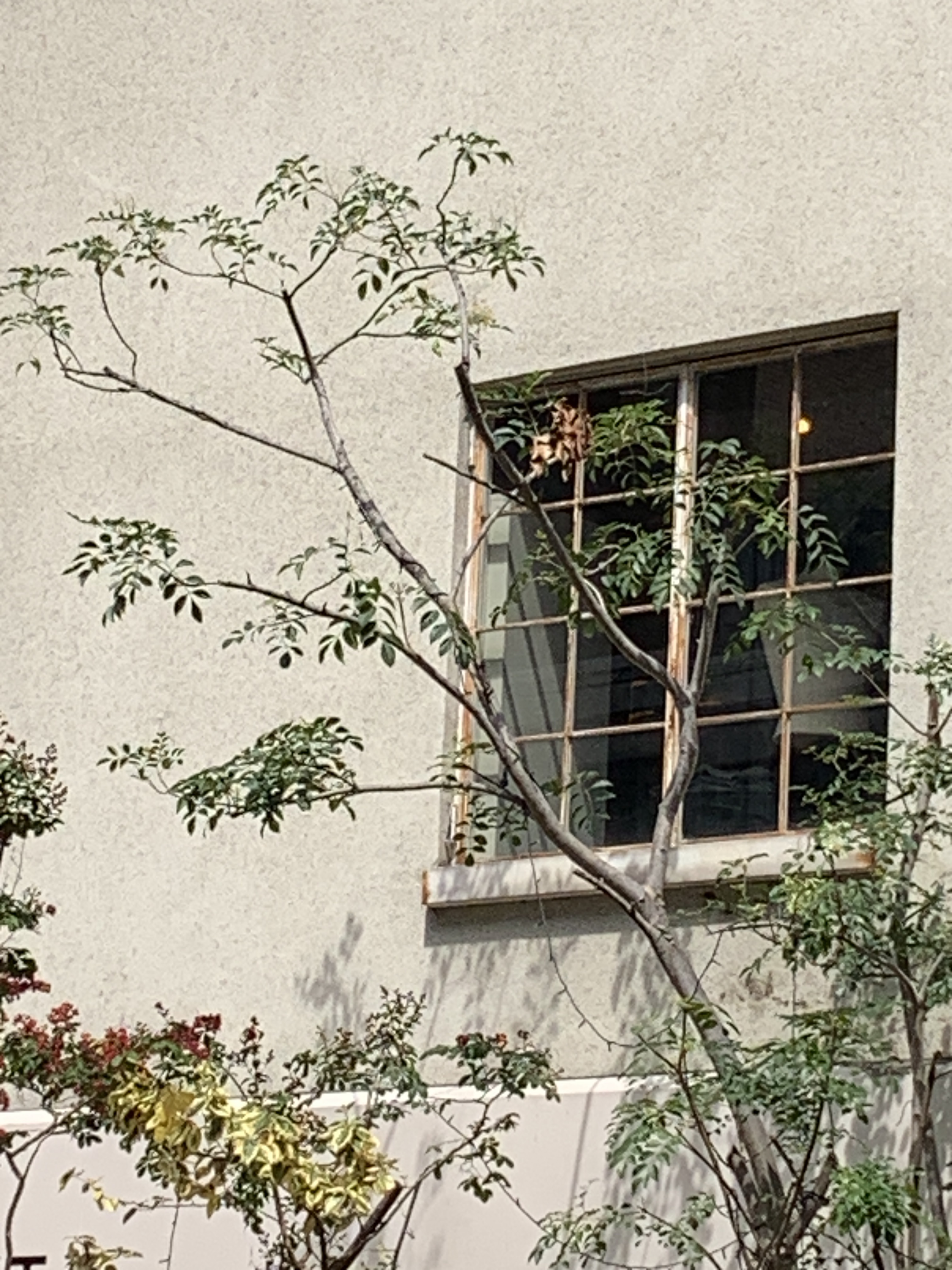
Photos: Some new morning glories, an alley, two views of a sunset from a train platform, a melting cat, and two window views I liked (nice old building).
asagao13 asagao14 asagao12
alley1 yugure2 yugure1
meltingcat window2 window2


Be safe and well.
nnozomi: (Default)
All-purpose post. (Almost all-purpose; I still haven’t quite finished reading all my new books, so book reviews to follow next time.)
業務連絡 to start with. 1) A few posts ago I promised I’d comment on at least one work linked by everyone who commented there; I think I have done so, but if I missed you out somehow, or didn’t comment on the one thing you really wanted attention to, let me know. Also feel free to leave a comment if you didn’t see the original post, the offer is still good; the comments are an excellent ongoing rec list too!
2) It’s about time I sent out a round of postcards. If I’ve sent you one before and you have a different address etc., or would rather not get one this time, DM me let me know; likewise if I haven’t sent you one in the past but you would like one.

Music: A video a few years old of Seong-Jin Cho rehearsing for a recital; notable for his concentration and if you’re curious about how a world-class pianist practices. (Also, shallowly, he’s cute. A reviewer who probably is not well up in K-pop (any more than I am) once described him as “handsome as a K-pop star”; I would not say that’s his style at all, but he’s got good Korean cheekbones and nice low-key good looks.)
Also some of the Kapustin piano sonatas, which sound like a serious jazz pianist improvising, and are in fact written out note for note and rhythm for rhythm; very invigorating.

Chinese: Still absorbed in the silly farming show (you can expect to be hearing about this one for a while; between the two seasons so far there are over a hundred episodes and counting, many of them up to 90 minutes long). Slang and other useful expressions I’ve picked up so far include the following.
・牛, their highest term of praise, which literally means “cow” (nothing to do with farming) but is used to express “awesome” or similar, sometimes slurred to 六 instead (nearly as laudatory is 帅, literally “handsome” but applied by the farmboys to pieces of machinery/technology they approve of)
・巨, literally “gigantic” but used as a “very”-type intensifier, sometimes leading to odd constructions like 巨小, super tiny
・治愈, meaning “healing” and used to convey “relaxing, restful, soothing”
・玩呢, pronounced with a hard 儿 sound in the middle and meaning, as far as I can tell, “you have to be kidding,” “gimme a break,” “well, fuck” or similar
・吓我一跳, literally “you made me jump,” basically “you scared me,” “you startled me”
・真的假的, sometimes shortened to just 真假, “no kidding?” “for real?”


Taiwan! Y and I took a very short trip there and back, 2.5 days and two nights, and loved it. My short writeup below turned out to be ninety percent about food, but what can I say, everything was good. See the photos further below for less appetite-oriented reactions.
Y and I have very different traveling styles—he makes reservations in advance and plans everything out, I just get hold of a map and hope for the best. His plans meant that we had to do a lot of hastening through unfamiliar places to get to our destinations on time (man, Taiwanese train stations are huge, you could get a day’s exercise just transferring on the subway), but also that we got to see a lot of things I never would have gotten to on my own. (It really works out very well; he deals with all the macro-level stuff that I stumble over, while I’m better at “okay, we need to take this subway line and change here” as well as handling the languages.)
Notably the old-fashioned coast town of Jiufen: long, long winding arcades lined with food and trinket shops, very touristy but at the same time very pleasant. Korean and Japanese audible everywhere among the other visitors. Milk with grass jelly, noodle soup with chicken oil, pork on rice, taro balls with sweet beans over ice, grapefruit-juice tea with a half grapefruit squeezed into it. The model for the Sen to Chihiro bathhouse (I forget the English name), swamped with waves of Japanese tourists. Breathtaking views out over the sea, a huge temple flaunting innumerable gold-trimmed dragons in all colors, a triangle-faced pregnant cat sunning on the roof, narrow steep stairways.
On day two we went down to Taichung where my friend A-Pei lives. I was a little nervous because, although she and I have been close friends for, what, seven or eight years at least?, we’ve only met in person maybe half a dozen times if that, we do almost all our interaction on Skype. She and her husband (a laid-back Brit, four nationalities among the four of us) made it easy for us, though, and it all went well. They treated us to the best mooncakes I’ve ever had, with salted egg yolks and purple taro (?) paste and soft flaky pastry, plus mango for Y, and then lunch at a local restaurant where everything was good—tofu pitan with pork floss (a big hit with Y), bamboo shoots, fried tofu, sweet Taiwanese sausage with allspice, you name it. We ended up at the old Miyahara Eye Clinic, an exquisite colonial-era building which is now a very fancy sweetshop, and also paid a call on the well-preserved old Taichung Station where A-Pei used to commute to high school; the lobby is full of old ticket machines and hot-lead slugs for printing, containing complex characters in absurdly tiny fonts.
Evening back in Taipei—a walk along a back street with beautiful older apartment buildings, plus one of the night markets, guarded by an enormous temple with people moving around inside as if it were their living room, offerings of flowers and food and joss paper laid on tables. All kinds of food stalls along with trinkets and cheap clothing and so on. Roujiamo—God damn but that was good, the best thing among three days of tasty things—some mysterious sweetbread things which Y figured were worth a try, douhua with peanuts and sweet beans and tapioca, plain sausage and rice sausage with garlic, hujiaobing with a delicious crackly outside.
Morning walk around the hotel before heading to the airport—more nice little apartment houses of wood or green tile or plain concrete, wood and metal window lattices, trees and flowers everywhere, fruit markets full of unfamiliar tropical fruits, breakfast from a crowded little neighborhood stall—hot doujiang, youtiao, gaoli danbing.
That was one of my more successful Chinese attempts, managing to order for us and to indicate that Y and I were together and that he would like sugar in his doujiang and I wanted spicy sauce on my danbing. On the whole I found that I could say most things and make myself understood in general, but the problem was that I couldn’t understand the answers! How is my listening still so terrible and what do I do about it?


Photos, all from Taiwan: sea views, dragons, decorated walls and a hopeful wall poster in Jiufen; Miyahara Ganka, a nighttime street, and a protective talisman (?); three views from around the park where we ate our delicious breakfast.
jiufenafternoon jiufensunset mingtian
dragon1 dragon2 engraving
miyahara fuxing1 hufu
gongyuan1 gongyuan2 gongyuan3


Be safe and well.
nnozomi: (Default)
Graduation at the nearby elementary school, eleven-year-olds in unaccustomed finery: clusters of chattering girls in colorful haori-hakama with fancy artificial flowers in their hair, groups of uneasy-looking boys in suits (some with their school-issue yellow baseball caps still on) and a few like refugees from costume dramas in sober mon-tsuki hakama.

Going through the Guardian script again in search of chengyu, and getting stuck on one of Shen Wei’s lines in his opening lecture: 我在这里请大家先放弃掉我们是无所不知的这种想法, here I ask everyone to abandon the idea that we know everything there is to know. I love it that the show, which has so much to say about gaining new perspectives and learning, begins by stating its theme this way in Shen Wei’s voice. (Unrelatedly, how much do I love it that Da Qing’s cuss word is 喵的!)

Request for New Zealanders: if you were moving to New Zealand to start a business, what would you want to know? I have an ex-student who is thinking of doing this. He’s up to date on actual visa issues etc. etc., but has in mind questions about what city, what kind of neighborhood to settle in, what are day-to-day NZ things a new resident would want to know, etc.

Music: Clara Schumann’s G minor piano trio, which is great. (I usually do not seek out composers new to me, not that Clara Schumann is new exactly, just because they’re women or Jewish or Black or whatever, but it’s an added bonus when a composer from an underrepresented group writes something I really like.) Also Jacob Koller playing energy flow, my favorite Sakamoto Ryuichi piece, among many other things.

Chinese: I continue to be addicted to the Zhongwen Firefox extension in my Chinese fic reading, having belatedly discovered that not only can you look up words on the spot, you can instantly save the words you look up to a list. This means that (if I can remember how to go from Excel to Anki) I can make myself a big new Anki deck full of the new words I’m acquiring. (There are also some I’m not planning to acquire: I have to say I could use a little more fade-to-black instead of extended sex scenes in this fic, I’ve already learned two euphemisms I could’ve lived without knowing…).

Watching: my progress with Parallel World is very slow, at least partly because I’m enjoying it and I don’t want to use it up too fast. Also continuing to watch 你安全吗|Are You Safe with elen, one of Tan Jianci’s modern ones, and amused that…it’s certainly not a BL, but all the romantic contexts for the main character (candlelit dinners, declarations of 有我在 and so on) are either with his best friend (male, with girlfriend) or his teenage apprentice (also male). The latter is played by Rong Zishan who does amazing work for a sixteen-year-old, I’m really curious to see what he’s going to be doing in ten or fifteen years. He and Tan Jianci have excellent chemistry in a sort of not-exactly realm—not quite friends, not quite brothers, not quite mentor/student, not quite boss/employee, not quite romantic.

Japanese reading: a diary by a sociologist I know very slightly (in this diary-heavy culture, it’s not uncommon to have prominent academics, etc. etc. write “diary” columns in magazines, which are later published as books). It’s thought-provoking and a lot of fun when read in little bits at a time (the way I usually read Japanese books, which are my train-reading), ideas and concerns about oral histories and Okinawa and local communities mixed up with adoring accounts of the household and local cats, a lot of drinking in good company, strolls around the city with “O-Sai-sensei” (his wife), and assorted general grumbling and silliness.

Writing: making shamefully little progress, along the lines of daily alibi sentences. I do kind of wonder why, in original fiction where I can literally write anything I want to (it’s not as if it was likely to be published in any case), I have deliberately steered myself away from, in fandom terms, what’s most iddy to me. I think this may be a sound decision, because otherwise the id parts would take over the story, but it sure calls for a lot more thinking and discipline and less just pouring words out.

Photos: assorted flowers and rain-flowers, an old temple tucked into an urban alley.


Be safe and well.
nnozomi: (Default)
Four things vaguely related to writing
I had to translate a document including the periodic table recently, a nice easy task, although there are some elements that didn’t have names the last time I took chemistry. Meitnerium is a nice one to have; oganesson looks like a place name from Le Guin, but I looked up Yuri Oganessian, the scientist honored, and found that his name is a variation of what would be Johnson in English, the more you know. Dysprosium was, I think, around the last time I checked; it always sounds to me like an SF word for writer’s block.

I was thinking about the tin soldiers in Charmed Life. When Julia and Roger play with them, they imbue them with magic to move and fight on their own. When Cat joins in, he doesn’t have (access to) his own magic, so he has to move his soldiers by hand, not surprisingly losing the battle to Roger’s forces. Roger begs Julia to help Cat out, which she does, reluctantly (she is busy reading, knitting, and eating sweets all at once, a state of being I approve of), but all the soldiers run away at the first sign of combat (“Because it’s just what I would do,” said Julia. “I can’t think why all soldiers don’t.”). Finally, after fending off Gwendolen’s attempt to snatch Cat away, Julia is fired up enough to “[fill the soldiers’] hearts with courage.” Although it doesn’t really hold up to close examination, I was thinking about this as an analogy for writing characters—sometimes they feel flat and empty and as if you have to move them clumsily around the plot by hand, sometimes they become an extension of the self, and sometimes you can make them do things you seemingly never would have managed on your own. Sadly it’s not as easy as tying a knot in a handkerchief!

I’ve been watching Parallel World and enjoying it, though I’m only a few episodes in; I have no clue what’s going on, but Bai Yu and Ni Ni are wonderful.
It must be so weird to be a scriptwriter and see the characters you create defined in ways you can’t control. I was thinking that there’s a definite Bai Yu-ness about Chang Dong in Parallel World, a warmth and wryness; if Zhu Yilong were playing the role it might be a little darker-toned and more vulnerable, Tan Jianci and so on different again. A very different experience for the writer from just creating a character in text. (I’m sure this has been discussed in depth elsewhere, it was just on my mind.) And then of course there’s NPSS who has a whole cornucopia of different realizations of his characters to choose among…

From my latest entry on senzenwomen I learned about the Republic of Ezo, a short-lived 1869 attempt at setting up an independent country in Hokkaido in semi-rebellion against the Meiji Restoration; now very tempted, if I ever finish my current original thing, to write something set in an alternate history where Hokkaido remained independent of the rest of Japan (what would have happened with Sakhalin? What about during the war? etc. etc.).


Quite a lot of new Seong-Jin Cho (new on YouTube, anyway); here he’s playing the Mozart A Major Concerto, my favorite of the classical piano concertos. Technically it’s so easy that I spent time learning the first movement myself in college, indifferent pianist that I was; SJC’s rendition is incredibly charming. Also, in a very different mood, the Ravel Concerto for the Left Hand, and Jörg Widmann’s cute little Sonatina, not quite as classical as it sounds. And while I’m at it, not a new recording, the Liszt B minor sonata—I heard someone else’s version on the radio which didn’t begin to match SJC’s fireworks and grand scale, so I had to go listen to his performance again.

A friend from grad school had a baby and I sent them my standard care package, a little stuffed animal and some picture books: the Very Hungry Caterpillar, Where the Wild Things Are (which I still love, the last line always makes me tear up), and Horton Hatches an Egg, mostly because it was the only Dr. Seuss on the shelf in Japanese. Not my favorite one—that would be a competition among Red Fish, Blue Fish, The King’s Stilts, Wocket in my Pocket, The Sleep Book, Green Eggs and Ham and so on—but I like the hatchling. Also the title seems to contain an inadvertent pun in Japanese—ホートンたまごをかえす, which is a literal translation of the English title but, written phonetically as it is, could also mean “Horton gives the egg back,” relevant to the plot in an ironic way.

Photos: Mostly flowers, the plums have already started to bloom; also a boss cat taking up its fair share of space at the end of an alley where the cats had clearly taken possession, and Koron-chan doing her 見返り美人 (beauty looking over her shoulder) thing.
plum3 alleycat mikaeri
plum2 plum4 plum1
febrose febrose2 daffodils


Be safe and well.
nnozomi: (Default)
·I think most people on my f-list have seen this by now, I’m late to post, but the latest regarding the OTW, generally from [personal profile] synonymous, specifically from [personal profile] dhobikikutti, both much appreciated and referencing among other important things a gracious, eloquent, and brave statement by the Board candidate Zixin, which she shouldn’t have had to make in the first place.
I am still in hopes of a less reprehensible future for the OTW/AO3 (knock wood, I’m hopeful about the new Board candidates at least); I am not clear right now on what people who are not OTW volunteers can do, after the new election, in terms of concrete action to support change (hopefully, in a framework of coalition). I’m going to be hypocritical enough to say that I don’t want to get into extended discussion of this here, for me it makes more sense to keep an eye on information sources elsewhere, but if anyone has links/related information helpful to this end please do feel free to drop them.

·In the spirit of extremely fucked-up situations, have a performance of Kurka’s The Good Soldier Schweik Suite.

·Am I the only one who feels that this July has lasted about six months so far? I was traveling among other things and have fallen way behind on DW socializing, but I’ve been reading everyone’s posts and thinking of you.

·Three days in Hokkaido, a work trip to do some interpreting for a lecture given by Song Mingwei, a scholar of Chinese science fiction among other things, and the reason I was reading about Qing-dynasty SF.
Very long Hokkaido story
The job started off with a delightful serendipity. I got lost trying to find my way into the enormous Hokkaido University campus, and resorted to asking a student-type coming the other way if I could get into the campus up ahead. “Sorry, I don’t speak Japanese, I’m from Taiwan,” he said blankly, so I thought, well, I can work with that, and tried repeating the question in Chinese (thanks to the Guardian script I knew the word for “college campus”!). He was delighted, answered promptly and saw me to the building I needed to go to, while we chatted in Chinese along the way about the relative difficulty of the three languages (he kept saying jingyu was difficult in Japanese, which I couldn’t convert mentally to 敬語 until he said something about 长辈: ohhhh, honorifics, now I get it). Clearly a good omen.
You’ll be better off googling Professor Song Mingwei than me trying to summarize him here, but I think a lot of cdrama people, and SF people in general, will find his work extremely interesting. Here is a place to start. I had spent the week before translating his lecture text from English to Japanese, with the help of a grad school friend to edit my decidedly non-native Japanese; all about Lu Xun and Liu Cixin and related personages. In the event his lecture, delivered in English, was lively and fascinating and skimmed all over the place; as far as the actual lecture text, handed out to all the attendees in two languages, was concerned, I would say it fitted where it touched and not much more, so that the non-English speakers must have been wondering what the hell he was talking about a lot of the time, but it was extremely interesting.
Finally there was a short question-and-answer session, which was where I actually had to interpret; I would not say it was a long enough time to make it worth paying for me to come all the way up to Hokkaido, but who am I to complain? Topics mentioned, drawing on the lecture, included Marko Vovchok and Xue Shaohui, “why didn’t SF in China develop more in the 20th century,” using SF to bring the world home to China, effects of the West and Japan and the USSR, late-1990s Chinese SF’s similarity (in terms of the nerd/otaku social class) to the mid-20th-c SF scene in the US, how Lu Xun’s mother didn’t like his work and preferred to read romances, translations of science by Yan Fu and classic literature by Lin Shu [no, not that one], “unfaithful translation,” and Max Planck. It went much better than I’d feared; there was one questioner who had an unfamiliar accent, mumbled, and spoke very fast, so I had to ask him to repeat the second half of his question, but otherwise it all came across pretty clearly, mostly English into Japanese. Exhilarating. I took notes on paper and kept my phone out so I could do some very fast Googling as needed, on topics like the characters to write Mo Yan (so I would know how to pronounce the name in Japanese) and the Japanese word for relativity, which I had forgotten.
Afterward I got treated like a celebrity (look, the white lady speaks more than one language! and she has a West Japan accent!), which was kind but embarrassing. As with all Japanese events, there was a dinner party at a little neighborhood restaurant afterward; walking to the restaurant I had a chance to talk (in English) in a leisurely way with Professor Song, who was very friendly. I asked him about the story mentioned in my previous post with the Chinese colonists and Black and Jewish refugees, and he said it might have been a free translation/rewriting from a story originally in English of some kind, but that there wasn’t much research on it that he knew of. I also took the chance to ask him what he thought about the Chengdu Worldcon, and he was uncomplimentary: the organizers had been very hopeful, but the city had basically taken it over, the anti-LGBTQ rules weren’t good and it didn’t make sense to put a lot of Chinese-language texts on the ballot when so many voters wouldn’t be able to read them. Finally we talked about dramas and language learning—I didn’t quite dare mention Guardian by name, but I mentioned DMBJ which he knew, and talked about Under the Skin a little (sadly unable to remember its Chinese name) because he said he liked crime dramas. I really liked him, very bright, very widely concerned, and also extremely low-key and nice.
I talked a little with a handful of Chinese girls at the restaurant, students at Hokudai; they all gave their hometowns in Japanese pronunciation, which they must be used to doing, and I couldn’t follow at all. We talked fannish stuff and one said she’d been a fan of the DMBJ books in middle school. I confessed to being a Zhu Yilong fan and they all knew the name—“Ooh!” and one asked me if I’d seen Guardian—“you know, that BL science fiction one?”.
After that I had a day to myself and spent it mostly wandering around Otaru, see photos below. I love the city I live in, but oh my God it was lovely to be up north where it’s not in the high 30s every single day.


·Photos from Hokkaido, mostly Otaru. The usual flowers, including hydrangeas, blooming more than a month later than they do where I live. Also some fruit things I can’t place at all: if I didn’t know better I would say (pace Ivan Vorpatril) they were squid growing on a bush, after all Otaru is a fishing town… . The canal, the coast, a disused railway line, a carving outside a long-defunct shop, some views of Otaru overall with stone warehouses and mountains, and the inside of the Stained Glass Museum. Also, just for amusement, a page from my interpreting notes.
too many photosotaruroses otarutachiaoi otaruajisai
ikabana otarucanal2 otarucanal1
harbor senro carving
otaruhill kura stainedglass
notebook


Be safe and well. <3
nnozomi: (Default)
·I think most people on my f-list have seen it by now, but chestnut_pod has an extremely thoughtful and constructive post up about what to do with the OTW, including a huge discussion in the comments (mind the content warnings added).

·Last week I went up to Fukushima to play in a concert of 500 cellists, amateur and professional, in memory of the earthquake. Y tagged along and we did some sightseeing in advance, see the suspension-bridge pictures below. Dreamlike, gorgeous, all green and stone, like wandering into an ink painting. It was raining and cold, and we went into a souvenir shop where the lady cannily served plum-and-chili-pepper tea, and I bought a bag of teabags… . Lunch at a traditional noodle place where he ate soba with a huge leek, and I ordered tempura and took a bite of what looked like a shiitake mushroom, which turned out to be a red bean bun…shock. But tasty.
The concert was kind of an experience one is glad to have had, but not hugely satisfying for me in musical terms—partly because all the music was boring and partly because five hundred people is just too many, you can’t hear or see properly what’s going on. I was glad to be there, though.

·I am struggling lately with Chinese; not working as hard as I should on the Anki etc. I already have, not figuring out how to get further. I really don’t want to take an in-person class, but I’m not sure what the next step is. Among the latest Zhu Yilong videos posted by the blessed Wenella, I watched the same 10-minute interview three times in a row, once with no subtitles, once with C-subs (and then once with English), understanding going from 5% to about 75%. Listening is impossible.
(Relatedly, a drinking game for anyone who wants to get drunk: take a sip every time Zhu Yilong says 还挺 when he’s being interviewed. It just means “quite,” but he’s very fond of it.)

·I have one more scene to go in book 2 of my original thing, an epilogue really, and I’m very stuck; in terms of personal issues, all three protagonists are very much in a To Be Continued status, I’m not sure how to wrap it up in a way that feels like the ending of a book even if not the ending of a series. Also I have provided myself with sixty zillion assorted plot lines that have to be touched on in some way. I think at this point I might should just start writing and let it happen. When/if I do finish I have so much revision to do, aaargh.

Photos: Suspension bridge environs as above. A couple of nice roses and a somewhat less hidden koi. Turtles sharing rock space, and the "turtle rock" in Y's hometown, of which it's said that if it ever changes the direction it's facing, trouble will follow. Many cello cases all lined up. A very fortunate cat which lives in a stall next to the butcher's.
hetsuri1 hetsuri2 hetsuri3
hiddenkoi2 sunsetrose dewrose
kameishi2 kameishi 500cellos catfeeding


Be safe and well.
nnozomi: (Default)
…wow, it’s been a while. I was traveling and then…I don’t know…and I haven’t commented anywhere in such a long time either, I apologize, but if you’re on my f-list I’ve been reading your posts and thinking of you.
Lots to write up.

·Working very hard on the climax of book 2 of my original thing; just hit 78K with five scenes still to go, so my best guess at the moment is somewhere between 85 and 90K final. No idea if it's good or not but I'm enjoying watching everything fall into place so much. I really want to finish it, but at the same time when I do finish, I get to plunge into revision hell... .

·Work notes: a couple of months back I was working on papers about rural Laotians’ patterns of migration/出稼ぎ to Vientiane and Bangkok, and now I’m working on 1940s statistics about rural Koreans’ patterns of migration to Japan. It hardly needs saying that the viewpoint is not the same (respectful sociologists vs. at-best-paternalistic colonial suzerains), but man, the more things change. (Less seriously, among the rarer occupations listed in the statistics, I spent a long time staring at 牛乳詐取業 and wondering how you could exploit milk for a living, until I realized that it was a harmless reference to getting the milk out of the cow.)

·Still working on the Guardian script, going back to fill in some of the earlier episodes. The university’s big sign says “Dragon City University,” but Lin Jing’s locator program in episode three says “University of Longcheng.” My fussy proofreader/translator-brain takes exception to this.
Oh dear, episode 4, when Zhao Yunlan asks about the Wei character, Shen Wei’s whole face: does he remember? is this when--? no, no he doesn’t, oh I miss him so much. Oh right, I still have to play the innocent professor—and you can see the effort it’s costing him to answer calmly and easily. And Zhao Yunlan doesn’t know what’s going on but he can see he’s really gotten to Shen Wei somehow, and he offers a mention of his mother in return.
And a little later, Zhao Yunlan starts bawling Shen Wei out for pricking his finger and stops halfway when Shen Wei gives him big innocent eyes; and then starts in with “Don’t you know that could give you tetanus?” and Shen Wei actually cracks up.

·Thanks to YouTube, I discovered another unknown composer I like, Robert Kahn. I am totally fascinated by his “Tagebuch in Tönen,” little short pieces which he wrote as a musical diary over fifteen years, in Germany and then in exile in the UK, coming to over one thousand of them. (Nobody has recorded them as a set that I know of, but you can hear them here.) I’m not even halfway through yet. Bits of Bach and Schumann and Brahms in inspiration, and some straight-up 20th-c. stuff too.

·Weird minor news items. In early April, a missing iguana from the extremely wealthy suburb of Ashiya (“I just looked around and his cage was open!”) with twelve (12) police officers searching for it (and video of them strolling around admiring the cherry blossoms). Also a stolen statue from a Nagano temple, one of the wooden ones that you stroke for healing, which returned home in record time thanks to random people videoing the culprits. Also something my mom found in the news, a lady in a historical district of Edinburgh who was censured by the city council for painting her front door pale pink. I’d like to send the city council a box of copies of The Big Orange Splot.

·Books bought while traveling, some more successful picks than others (this gets long).

Books to give away again Ryka Aoki, Light from Uncommon Stars. The music parts should have worked for me, but…it seemed to combine cheerful children’s-book level silliness (the donut aliens just reminded me of Gregory Maguire’s Fixipuddlings) with sustained main character misery/whump, and I gave up partway through; Uli Beutter Cohen, Between the Lines, a collection of chats with people on the subway based on what books they were reading. A fun read! Nothing wrong with it! Just that reading it once was enough; Jhumpa Lahiri, Translating Myself and Others, essays about her shift to writing in Italian, which again should have been my thing, but…I don’t know…I think I wanted more about her process, more grammar and vocabulary and less philosophy? My brain is not abstract enough.
Books to keep in storage somewhere Paul Clements, Jan Morris, a perfectly serviceable and very flat biography. I like Morris’ essays and I think she was probably the first trans person I ever heard of (my reaction at age 10 or so: oh, that’s a thing you can do? huh), but this isn’t an exciting book; Hao Jingfang, Vagabonds, a novel translated from the Chinese (by Ken Liu) which I really wanted to like, but…what it’s doing with political and economic and philosophical allegories I’m not smart enough for, and the characters and setting never come to life. (In terms of plot it is just barely similar to John M. Ford’s Growing Up Weightless, a book I love, but Matt and his parents and his friends are so much realer compared to Luoying and her surroundings.) It’s entirely possible that this is deliberate. Also, its future society is very, very sexist and heterosexist, and no one in the book ever raises this as a problem, and while I can’t imagine the author is not doing that deliberately, it’s not much fun to read.
Books to reread now and then Freya Marske, A Restless Light, second in her fantasy trilogy; somewhat lighter-hearted than the first one, fun, relatively unmemorable. The sex scenes would work better in fic when we already know the characters; Virginia Nicholson, How Was It For You?, the 1960s volume of her history of women in Britain, lots of wonderful oral history but a little too much about people on the extreme ends of experience for me; William Helmreich, The Queens Nobody Knows, which sounds like either a history of women monarchs or of drag queens, but in fact is a (posthumously published, sadly) walking guide to the New York borough of Queens, by the guy who walked every street in New York. Straightforward, generous, sometimes funny, written by an elderly white guy but one genuinely devoted to New York as a wildly diverse city; Taqi Shaheen and Annelys de Vet ed., Subjective Atlas of Pakistan, bought for very distantly related background research for my original thing, but also a fantastic wander through idea maps, prayers, soccer balls, hijabs, jewelry, gorgeous urban and rural photographs, you name it. Look it up.
Books to reread often Ruthanna Emrys, A Half-Built Garden, which I pulled off a bookstore shelf on a whim based on, I think it was sophia_sol’s review? Its individual components don’t really match my interests, but it does just what I was complaining that Hao Jingfang’s book above doesn’t do—the characters and the places they live are real enough to drive the book. Reminds me a little of Sage Walker’s The Man In The Tree, which I’ve posted about often; both with very complex, precisely thought-out near-future quasi-utopian worldbuilding in the background, serving as a plot engine but not drowning out the essentially character-driven narrative (and both with lots of descriptions of luscious food). I thought Emrys’ book did not quite stick the landing—the thing the aliens did near the end I found upsetting, and it all sorted itself out a little too neatly—but I’m still looking forward to the reread.


·Photos: Mostly flowers today, plus an old Kyoto building and some riverbank scenes (two different rivers). Can you find the hidden koi?
iris2 kamo1 ishigame
triangle tworoses manyroses
twotsutsuji 2kai hiddenkoi


Be safe and well.
nnozomi: (Default)
So many cherry blossoms. Some are mixed with late-blooming plum blossoms (plus a few plum trees on their own, including ones with different-color blooms on the same tree); some were taken up on a high hill overlooking the next city over and the Inland Sea. Some were taken at night in the company of the moon. One tree is minding the entrance to a shrine and another is a weeping cherry, my favorite.
umesakura2 twocolorume3 ume3
twocolorume parksakura umesakura1
pinkandwhite1 pinkandwhite3 pinkandwhite2
kaiyo sumazakura1 sumazakura4
sumazakura3 sumazakura2 jinjazakura
yozakura2 yozakura1


Also featuring an iris, a variety of tulips (another favorite of mine, although they don’t go with the cherry blossoms very well) and Jiji-chan from down the street enjoying the spring sun.
ayame whitetulips brokentulips3
brokentulips3 brokentulips2 jijiharu
nnozomi: (Default)
Very quick post because I realized that I forgot entirely to thank the lovely anonymous person who paid for my Dreamwidth account just recently; your kindness is much appreciated.

Other good things in my vicinity recently:

·the "Quam olim Abrahae" part of the Verdi Requiem

·A-Hua in Taiwan (age 8) asking me if people can eat sakura-mochi all year long or if you only get them when the cherry trees are blooming

·sautéed brussels sprouts (孢子甘蓝) with olive oil and salt

·DW friends in general

·low B-flats on the bassoon

Be safe and well ❤️

Profile

nnozomi: (Default)
nnozomi

December 2025

S M T W T F S
 123456
78910111213
1415 1617181920
212223242526 27
282930 31   

Syndicate

RSS Atom

Most Popular Tags

Style Credit

Expand Cut Tags

No cut tags
Page generated Jan. 4th, 2026 09:41 pm
Powered by Dreamwidth Studios