nnozomi: (Default)
this is mostly just self-satisfactionI passed HSK6! Well, technically apparently you don’t actually pass or fail levels 5 and 6, you just get a numerical score, but the pass/fail line for the other levels is around 60% and I ended up with 76%, so I feel okay about saying I passed. The listening test was a bitch, pardon my French; listening is so hard without context, plus my mind tends to wander…but I scored just about the same as I’d been doing on practice tests, so at least not worse. For some reason my score on the reading/grammar part was MUCH higher than on any practice test, thanks Xi-laoshi for going over the awful grammar questions with me a million times (I hate this section, you have to choose which of four long sentences contains a grammatical error). The writing section (where you have to read a passage and then summarize it from memory) was all about Liu Ying, a charisma train conductor from Changchun, who is a fun person to know about. Incidentally this was the online test; I would never pass the version where you have to write an essay by hand, thank God (or rather 谢天谢地) for computers and smartphones. (The test itself was a bit odd—I was expecting, from the strict rules, a huge auditorium, lockers for belongings, etc., but it was a little battered classroom with a couple dozen people spread across HSK2, 4, and 6, presided over by a middle-aged Chinese lady speaking Japanese with a heavy local accent—“your bag? oh, just put it under your desk.” It was nice to think about absolutely nothing but the content of the test for two hours or so.)

I’ve been reflecting on how different my Chinese study experience has been from studying Japanese. I had four years of classroom Japanese in college, including six months as an exchange student and a summer at Middlebury; I also watched some anime with friends, started reading Japanese books as soon as I was up to it, went through a period when I was watching all the Toyokawa Etsushi dramas I could get my hands on…but definitely laid my groundwork in the classroom, where I was fortunate enough to have good teachers. For Chinese I haven’t done any formal study at all, unless you count a weekly hour of conversation with Yu-jie and then Xi-laoshi; otherwise I’ve had Duolingo (not good, but not bad practice for a beginner), teaching myself from the lifesaving Chinese Grammar Wiki (and the Anki deck made from it), more Anki decks (HSK vocabulary and my homemade vocab one), A-Pei and our text-chats, the lovely people who kindly hang out at [community profile] guardian_learning, and of course incomparable teachers in the form of Zhu Yilong (in part via the blessed Wenella), Bai Yu, Liu Chang, Jiang Dunhao and his fellow farmboys, and their various c-ent colleagues. I think I got extremely lucky with Chinese study, in terms of a) having the time available to spend, which many people do not, and b) getting born on third base by knowing the characters already from Japanese.
Oh dear, that got long. Anyway, unfortunately passing the HSK does not magically confer fluency, but it’s a nice milestone to hit and hopefully motivation to keep going.


Other random Chinese-related stuff. Gu Lin Ruei-Yang is a pitcher for one of the Japanese baseball teams, a Tayal indigenous Taiwanese guy from Taichung who uses two family names (his mother’s and father’s), an interesting collection of characteristics; the history of indigenous Taiwanese success in baseball goes back to the legendary prewar Jiayi Agricultural High School team.
Silkworms are called 蚕宝宝, a word which adorably contains an affectionate diminutive (a lot cuter than silkworms are to look at, appreciate their work without googling them).
Listening to an interview with my favorite singer in which, doing a little self-PR, he says 我不挑活儿,可盐可甜. I was very pleased with myself (sorry, more bragging) for hearing and understanding this; 我不挑活儿 just means “I’ll take any work that’s going,” but uses more colloquial phrasing than the classroom words 选择 and 工作. 可盐可甜 I had to look up, but got the general sense of: it’s literally “I can do both salty and sweet,” and figuratively “I can be hardcore or soft and cute,” roughly. A fun phrase.
Also Zhu Yilong’s birthday vlog, in which some inspired person got him to go to a park and have a barbecue; he looks gorgeous and seems to be genuinely enjoying himself, singing along to the car radio, relaxing in nature, and earnestly cooking noodles. <3

Music: João Gilberto’s Disse Alguem, which is “All of Me” with Portuguese lyrics, and William Bolcom’s Graceful Ghost Rag, an old favorite of my dad’s and also of mine (the link is to Yeol Eum Son’s performance, which is one of the closer ones to my father’s).

Translating a table of chemicals, some of which cracked me up. “Glacial acetic acid” sounds like what happens when you put vinegar in the freezer; “methyl cellosolve” should be the brandname for a luthier’s tool (do you think they offer violinsolve and violasolve too?). And I certainly don’t plan to go anywhere near “fuming nitric acid” until it calms down. Also, this particular source text confounded me for a LONG time with 息化, breathification, which wouldn’t turn up anywhere, until I realized it was a visual typo for 臭化, literally stinkyfication and chemically bromide.

Random other things: I rediscovered cobalt.tools and am delighted to find that it downloads not only YouTube but also bilibili; now how long will it take me to download my huge backlog of bookmarked B站 videos? and will my computer have enough storage space? (I’m grabby about things I like online, whether music or fics etc.; I want to download everything, just because you never know when someone will see fit to delete it.)
For writing purposes a few days ago, I honestly genuinely found myself googling “why is the sky blue.”
So there’s a recent commercial on Japanese TV (I see CMs when I’m watching baseball games, I can’t help it) in which a giant, besuited salaryman is fighting off a monster amid a Japanese cityscape, Godzilla-style, while his wife and teenage daughter watch from their apartment window: “Oh dear, it’s your dad again. I hope he won’t knock down the supermarket this time.” “My boyfriend asked me if I can turn giant-sized too…” with a look of teenage angst. I’m entertained by the possibilities for stories here. (I don’t think this commercial has fulfilled its original mandate, on account of I don’t actually know what it’s advertising for, but it’s fun.)

Photos: Seasonal azaleas, irises, maple leaves, and other flowers I don’t know by name, as well as some carp flags and interesting machinery.


Be safe and well.
nnozomi: (Default)
Short clip of Zhu Yilong making friends with a shy cat; linked because a) adorable and also b) I hope Bai Yu saw him saying to the cat 你知不知道喵喵喵什么意思呀 and called him up to say YOU OWE ME ONE.

I have a translation job involving a lot of junior-high level math worksheets, which is taking me back. I was okay at math, but uninterested, up through eleventh grade, with just occasional flashes of algebra-related ooh, that’s neat; I damn near failed calculus my senior year (with a teacher who’d won national teaching awards, too), and have pretty much managed to avoid math and its relations ever since. I’m awed by people who are not only good at it but find it interesting, it just makes me think there’s something fundamentally different about the way our brains work (the same way it’s hard for me to understand that not everybody finds language learning intrinsically fun).

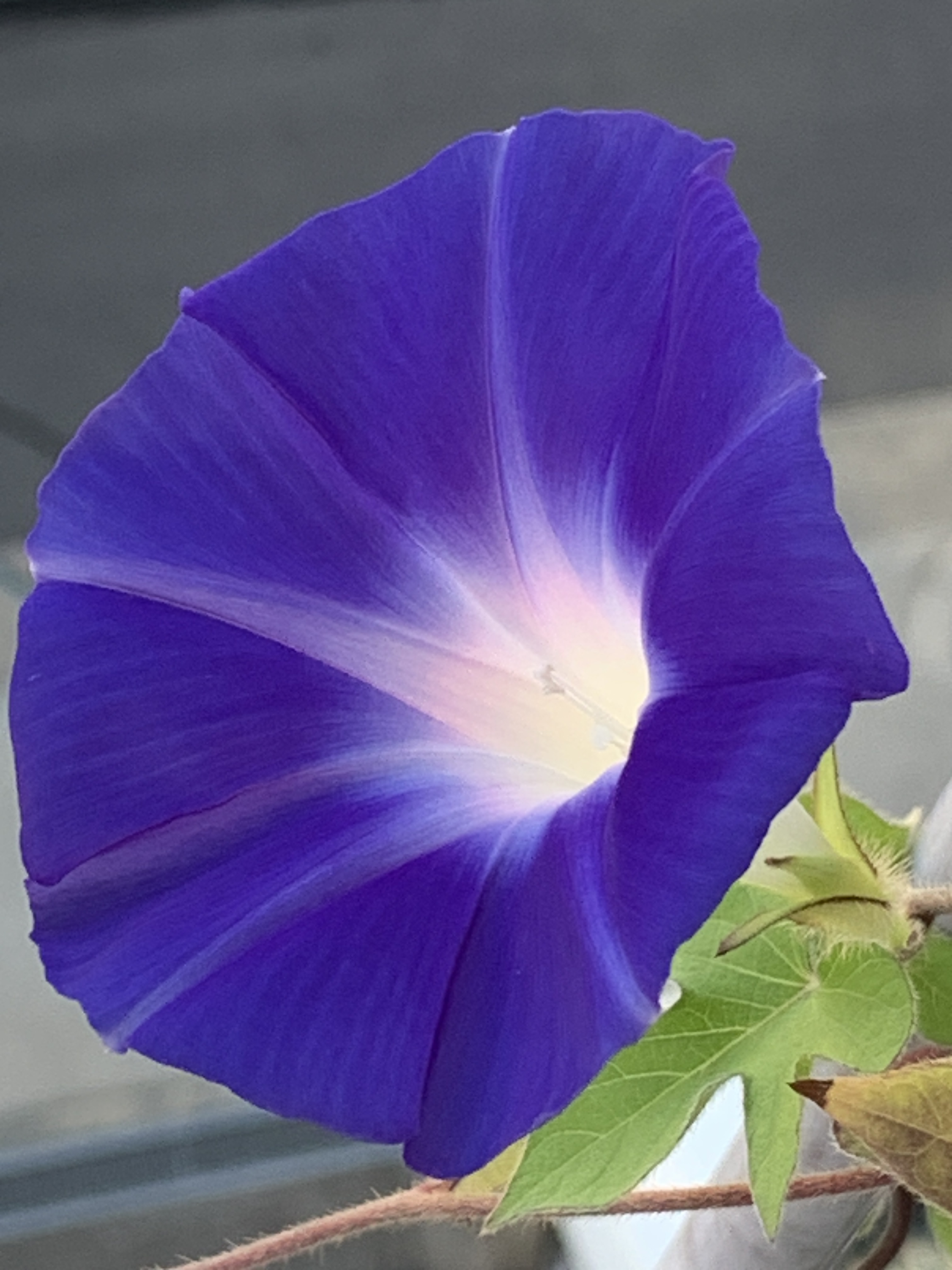
Veranda report: my morning glories are not good at multitasking, they can bloom or grow but not both at once, and for a while they’ve been specializing in the latter. The veranda is now a complete tangle of wires and morning glory vines. I’m hoping they will make good on their growth and bloom more in September or October, knock wood. Lemon tree growing more pointless leaves, enough already, give me some lemons! Mint syrup achieved again, time for mint soda or maybe something more adventurous if I can think of it, any ideas? Cherry tomato plant successfully repotted and seems to be growing with a little more energy? although it hasn’t managed any new flowers yet, knock wood again.

Chinese: mostly Anki and fic reading, with some ongoing translation practice. New words from the farmboys, somewhat game-related:
· 拿铁 the phonetic word for “latte” as in coffee, why they chose these characters I’ll never know (and why it’s nátiě instead of latiě).
· 头头是道 entirely logical, perfectly correct
· 绝了 slang for “too much,” “incredible,” used both negatively and positively
· 接龙 shiritori—I can’t remember the English name for this game, the one where you say a word starting with the last letter of the word the person before you said?
· 捉迷藏 hide and seek
· 说了算 what I say goes, that’s the final word on the subject

High school baseball tournament, featuring as usual sunburned buzz-cut teenage boys with improbably kira-kira names. Some of my favorites this time around: 利朱夢, pronounced “Rhythm”; 凱塁 (pronounced “Kyle”) and 球児, both clearly destined for baseball from birth, since 塁 is a base and 球児 is another word for a high school baseball player; 七聖, 吏紗, and 琥珀, all charming names more typically used for girls (琥珀, not a common name either way, means “amber”), and 空輝星, whose family name means “sky” and first name means “shining star.”

Some music that’s been in my head lately: Who Cares, one of the Gershwins’ best; He Can Do It, from Purlie; Les Barricades Mysterieuses (Couperin), and Jiang Dunhao singing a slow version of his 麦芒.

Rereading some Cynthia Voigt; like (the very different) Peter Dickinson, I think she’s one of those writers who would be considered a major 20th-c. author if genre (in her case, MG/YA and some fantasy) wasn’t a thing. She really needs a whole essay, not a paragraph in the middle of another post, but lately the one I was reading was The Vandemark Mummy, which is kind of about the importance of integrity and scholarship and family and feminism, as seen by a perceptive (and slightly psychic) but not especially academic or introspective twelve-year-old boy, in the context of a well-constructed mystery. It’s beautifully written in her deceptively straightforward style, with some incredible set pieces (Phineas going through the basement in the middle of the night). I also think it would make a very good movie, if they cast Althea right and didn’t make her too conventionally pretty.
ETA as it occurred to me: it would be really interesting to read The Vandemark Mummy alongside Gaudy Night, because although obviously very different they treat some of the same themes in (mutatis mutandis) similar contexts... it's the middle of the night right now, but I want to think more about this one...

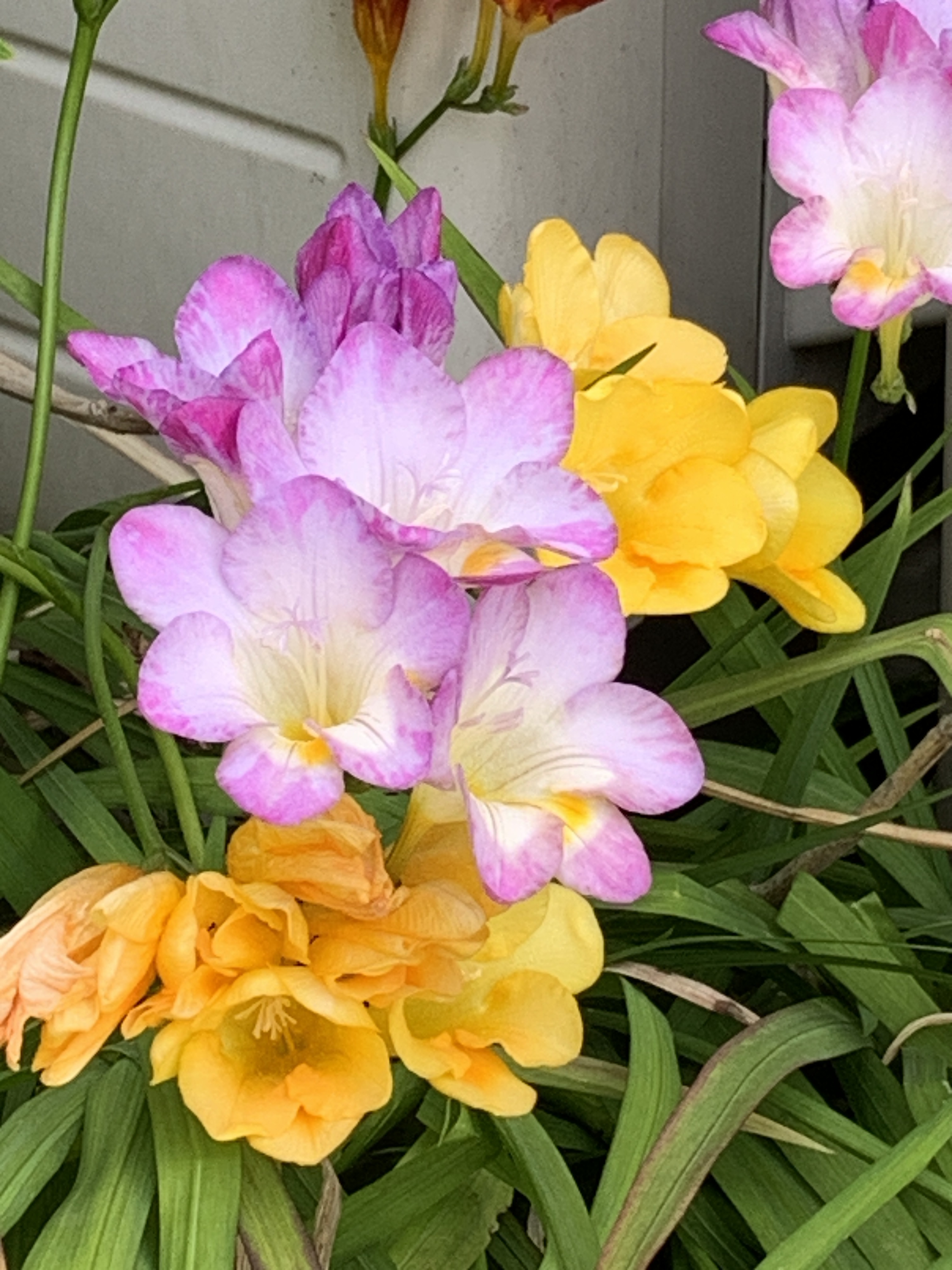
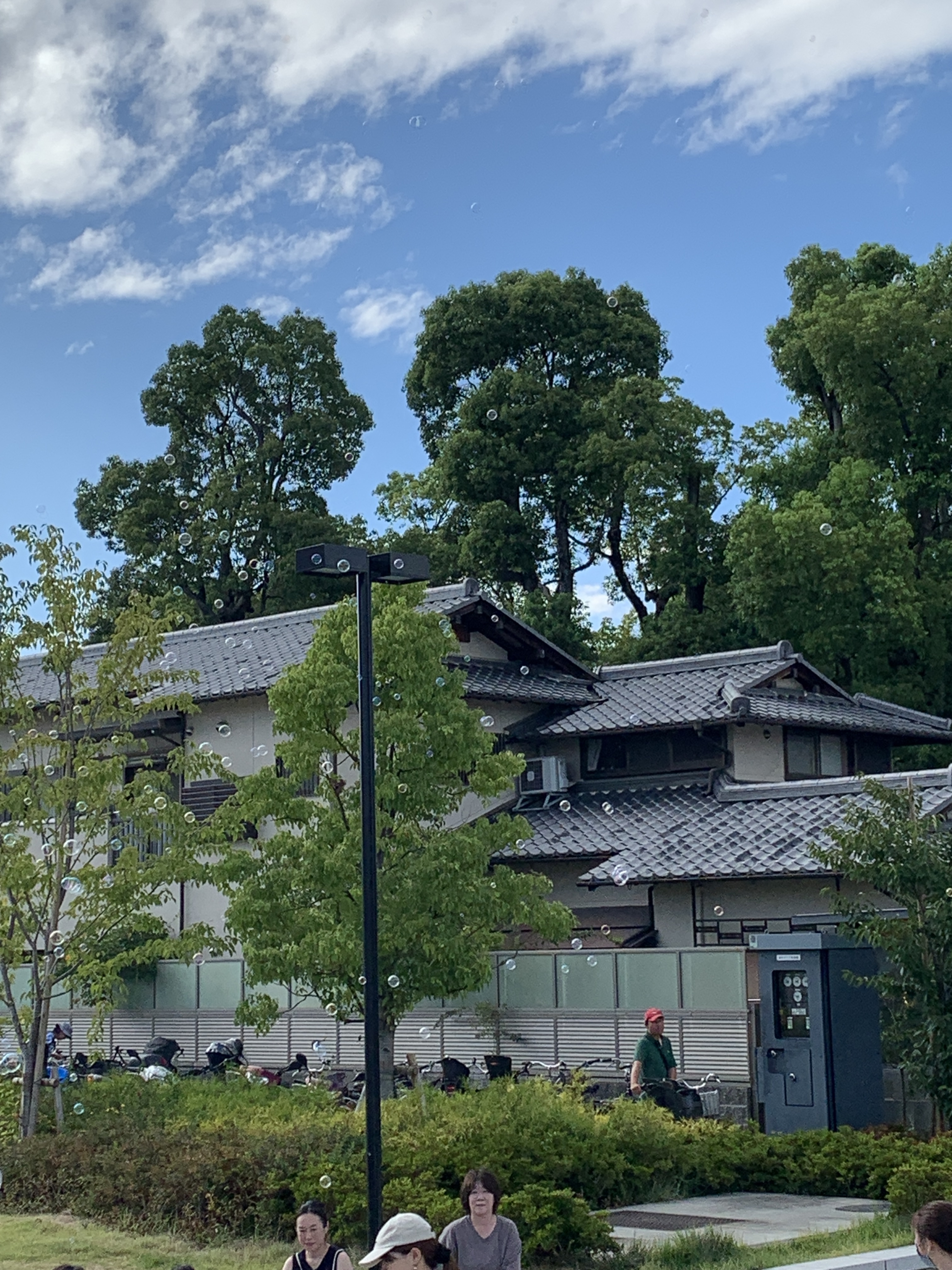
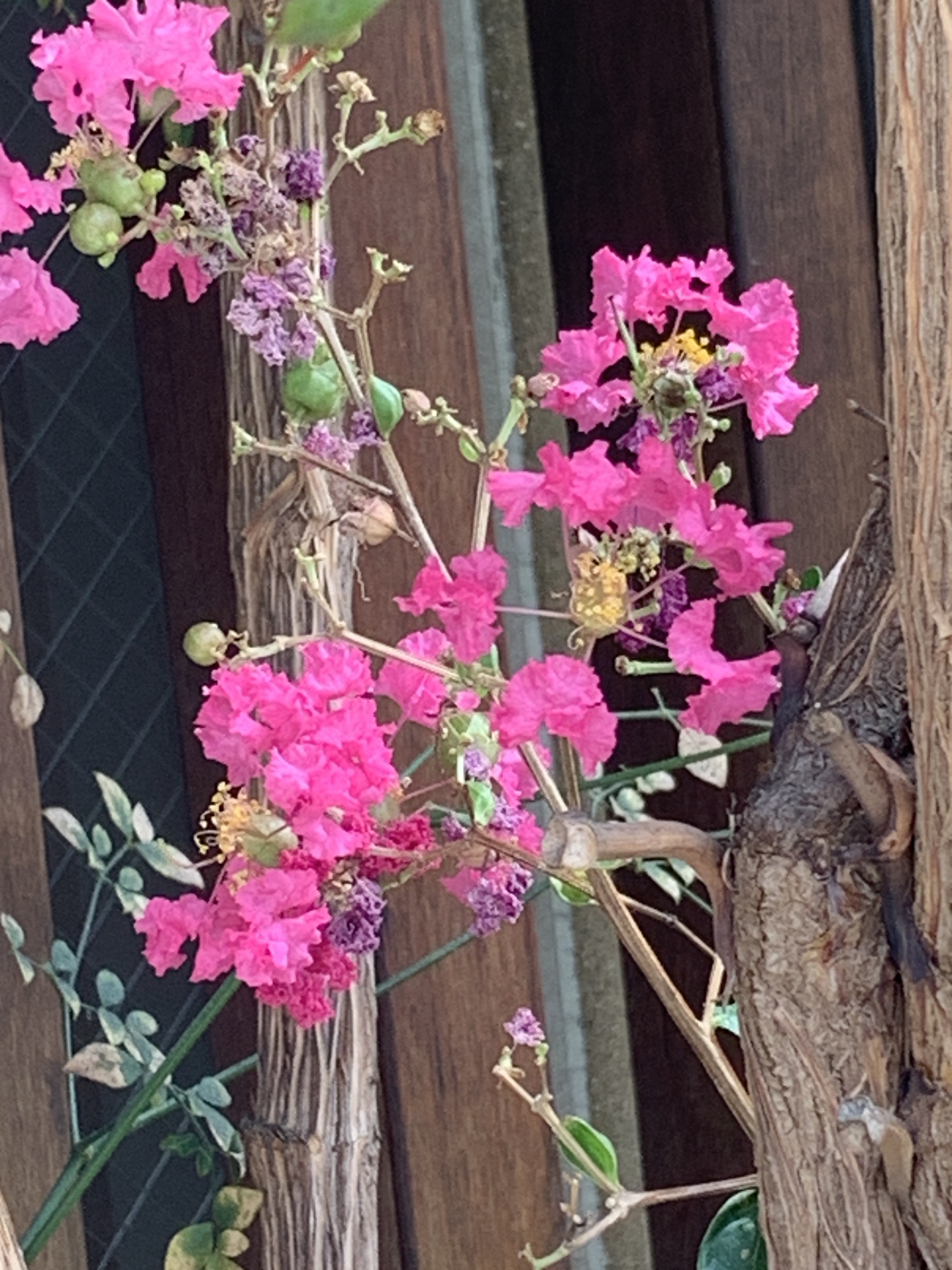
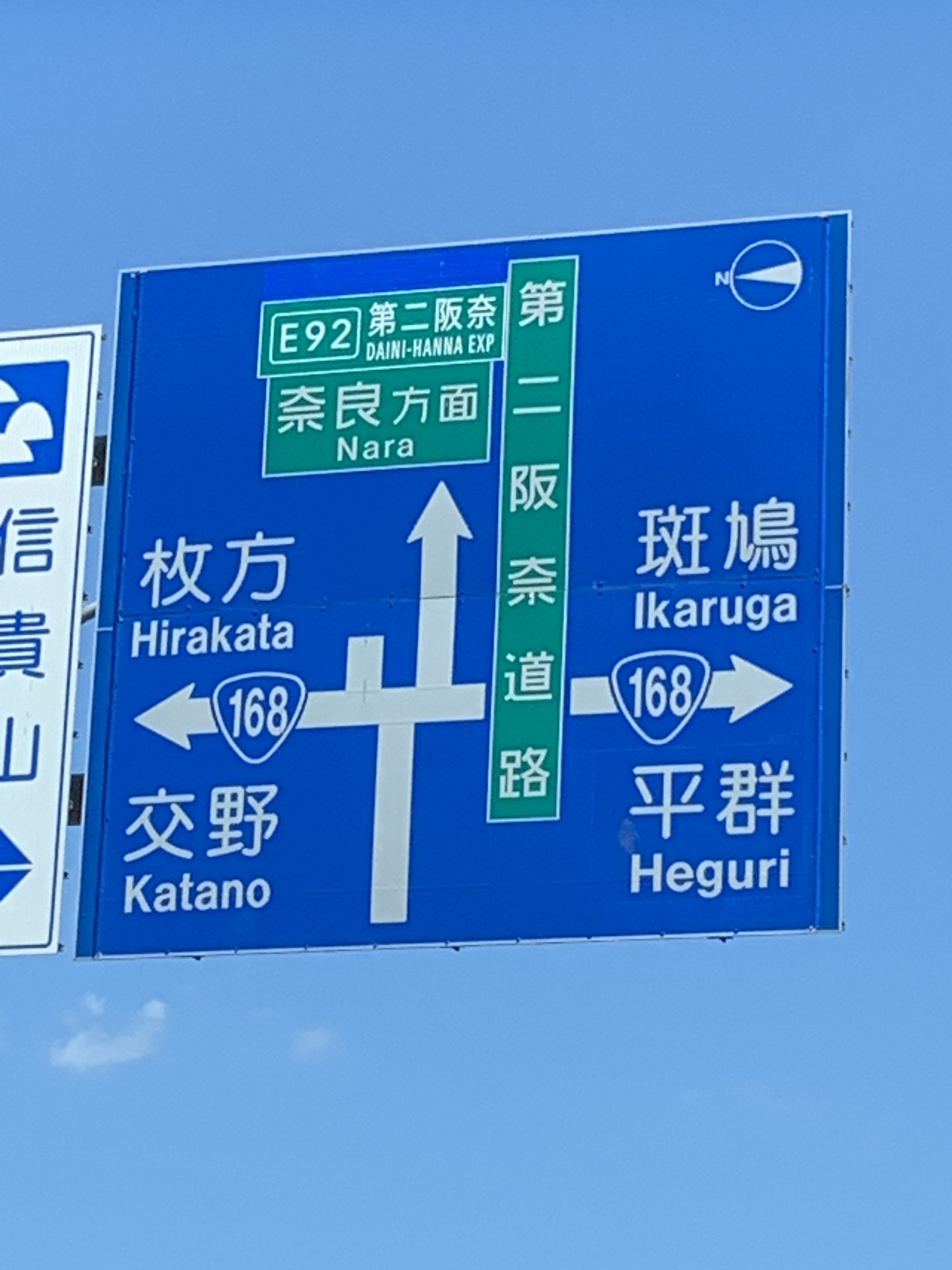
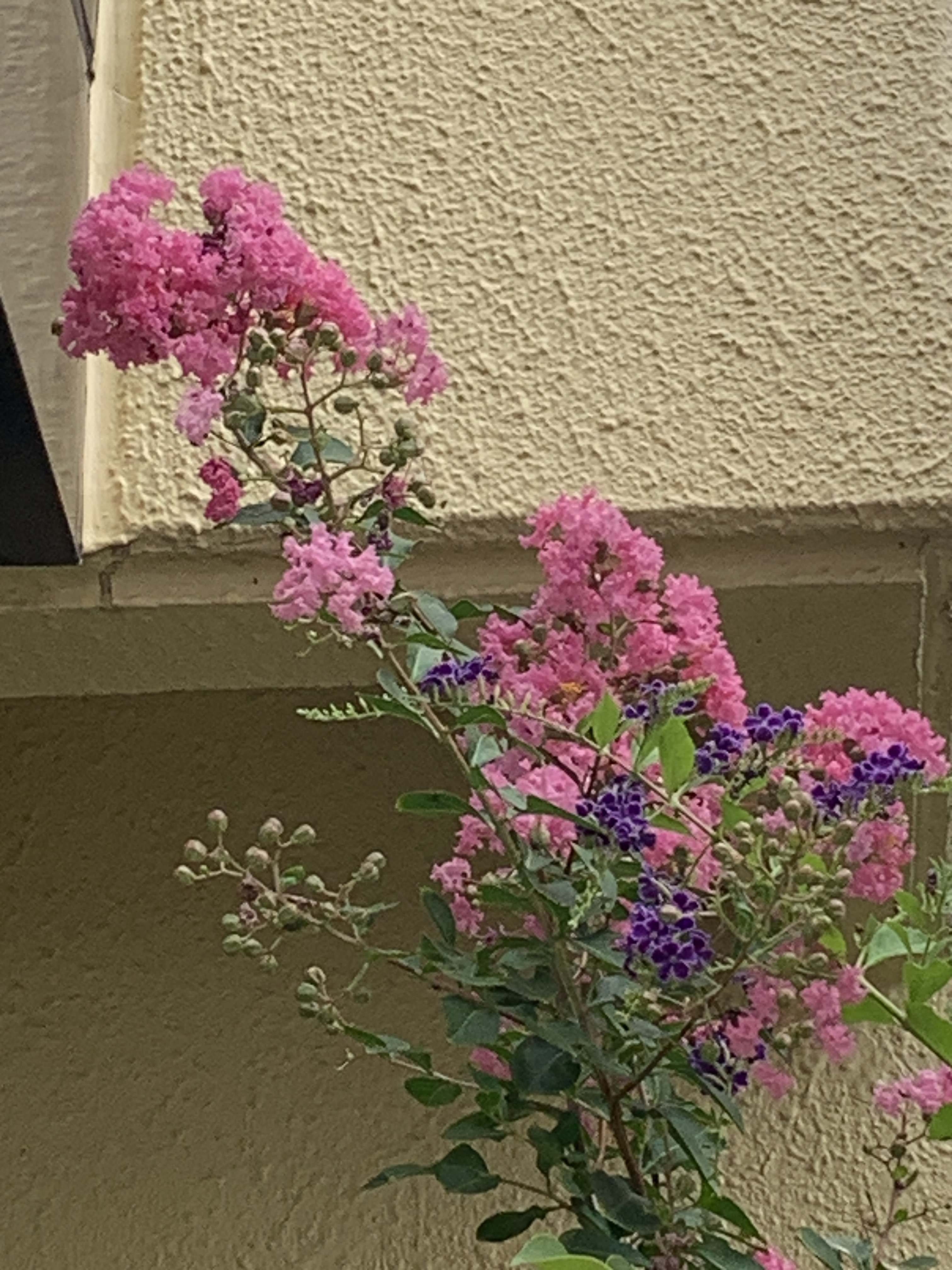
Photos: quite a lot today. Bubbles against a shrine background; a cleverly concealed Jiji-chan, too hot to do anything more than open her eyes and give me the fish-eye; another cat I don’t know, eating her vegetables; some fresh figs; some sarusuberi, ah, crepe myrtle; a house with its own greenery; a humongous, translucent hibiscus; trees and sky; a fried-egg flower (no, I don’t know its real name); the neighbor’s morning glories; and a road sign that tickled me because all four of the place names on it are 難読地名, ie you have to live around there or you’ll never figure out how to pronounce them.
bubbles bigjiji omnivore
figs sarusuberi2 ieie
hibiscus2 skytrees medamayakiso
asagao11 asagao10 nandoku


Be safe and well.
nnozomi: (Default)
Thanks to kind encouragement in my last post, I have gone ahead and made a community presenting histories of women in and around Japan, 1868-1945. I hope to post about one person a week, and the first one is already up (below the sticky post). A request: people on Tumblr and whatever the other social media sites are now, if you think your friends/followers would be interested, a quick link would be much appreciated (me being only on DW). Let me know if sample text/links etc. required. Regardless, please take a look if interested, and enjoy!

Shana tovah to those who are celebrating the new year right now. Have to remember to go out and get some apples and honey tomorrow.

Via the blessed Wenella as usual, Zhu Yilong (looking almost improbably demure and serious) talking about how he works to create characters based on experience—” you might not find someone who is exactly 1:1 like your character, but you’ll find elements of him in different people, you need to put them together yourself”—interesting in terms of his process, and also in its relation to how writers work to build up characters (as Dorothy Bryant says in her writing manual, “When I choose a model, I’m actually choosing, not that person, but a particular quality. It might be a certain vulnerability or passion that I sense in her or a strain of daring or of fear that seems likely to lead to certain events, or a particular act she committed which leads to a complex of possibilities”).

For the last few weeks the local baseball team has been pushing toward a league victory, and it has been (officially?) forbidden to say “pennant victory” or anything like that on TV, in the news, etc. etc. Everyone just said “THAT” or possibly it should be “You-know-what.” Yesterday they clinched it (now I’m worrying about the playoffs), and the ban was repealed--but a lot of the spectators had homemade signs saying “It’s THAT time” and similar. The power of language!

Photos: Mostly flowers. Three morning-glories from my veranda (at least two of which may be the same one at different times, I’m not sure any more), some more crepe myrtle, some red berries, and somebody else’s morning-glories, prettier than mine. Also a family nameplate which made me laugh because both 竹 and 笹 are types of bamboo, and they have the real thing growing right there to illustrate their names. Also assorted cats and a gentleman whom I believe to be taking a nap and not, like, preparing to be sacrificed or anything.
asagaoc asagaoa asagaob
pinksarusuberi redberries
hidingasagao wallasagao takesasa
mustardcat jijitail nap


Be safe and well.
nnozomi: (Default)
·I made (?) two things. The Guardian fic which is basically all my Zhao Xinci feelings in one place is now complete and ended up running to 35K, twice as long as the next longest fic I’ve ever written, which I did not expect. (Wish to hell I could write 35K of even vaguely coherent original work in six weeks!) I think maybe I’ve gotten Zhao Xinci out of my system for a while, but who knows. The fic is also, inevitably, another entry in my administration-saves-the-world series.
Also I’ve spent, oh dear, almost two months poking at another Chinese translation for fun, this one of an interview of Zhu Yilong and Ni Ni, to be found here (on the 0630 sheet), while the original interview is here (via the blessed Wenella; I don’t think she’s posted a proper translation of it, but I may just have missed it). Please note that it is spoilery for 消失的她|Lost in the Stars. Rife with my mistakes as usual, although a-Pei and Xi-laoshi helped me with some of the stickiest places. Notable for very sweet chemistry between them, Ni Ni doing about 2/3 of the talking (see also: all Zhu Yilong’s other shared interviews ever), Ni Ni explaining why she respects him as an actor and also giving him hell (“this from you, Mr. character bleed?”) when she feels he needs it.

·In other cdrama news, elen and I just finished watching Under the Skin, which I enjoyed a lot—good leads, good ensemble cast, lots of competence kink and interesting plot writing. Typically, I fell for a character who only appears in four episodes (Lu Haizhou, played by Zhang Tao), at first because he reminded me of a younger Chen Moqun, and then I kept liking him more the more I saw of him. Am I going to do anything with this? Who knows.

·Listening to San-San-San as it’s known in Japanese, more properly the St.-Saëns Third Symphony, which I’m never gonna get a chance to perform because amateur orchestras can’t afford to do pieces with organs in them, but it’s one of my very favorites and blows me away every single time. I realized that the first measures, the premonitory muttering of the strings, invariably come with a very strong sensory memory: standing on the upper balcony of the vast auditorium where my father’s orchestra rehearsed, listening to them play it, and eating something nougaty and delicious (not white nougat like Toblerones, German-style nougat like this).

·The high school baseball tournament is on—almost over, actually—and I’ve been following it on TV (every game in the national tournament is broadcast on national TV in full, it’s Japan’s national religion, you only think I’m joking) and hoping the Keio team wins, because I’m shallow: unlike almost all the other teams, whose players wear regulated buzz cuts, they’re allowed to have proper hair. Would like to think this also means that they’re somewhat free of the oppressively regulated culture of high school baseball (the fictional Nishiura High School being a shining exception, come to think of it they also have no hair rules), but who knows.

·Reading a couple of Japanese books about language learning experiences.
This got quite long One is by one of those journalists whose motto is to go places nobody else does and do things nobody else has done, in the course of which he ended up learning bits of French, Lingala, Bomitaba, Spanish, Thai, Burmese, Shan, Chinese, and Wa (three of which I had to look up how to spell in English). His accounts of how to get a working knowledge of a language from scratch on the ground are really interesting (get a native speaker to come up with a bunch of similar but not identical sentences, ie “I eat, you eat, he eats” or “She goes, she went, she will go” etc., and figure out the grammar empirically), and tempt one to go learn a brand-new language somewhere. He talks about having difficulty connecting with French speakers from France, even when having a grasp of the language: “If only the French had different ethnolanguages!” referencing how a sure way to get into conversation in the Congo countries was to ask someone “So what’s your native language?” given the plethora of possible answers. (He really doesn’t like French: I was tickled by the complaint that in French “not only do all the consonants at the ends of words disappear, when there’s a vowel placed after them all these presumed-dead consonants rise up like zombies, it’s a horror show”). He also put me on to “Yokohama Pidgin Japanese,” apparently used for communication among foreigners and Japanese in Meiji-era Yokohama, as summed up in a comical/alarming “dictionary” published in 1879 which has to be seen to be believed (Orientalist all to hell but with not much mercy for foreigners either, and containing an appendix contrasting Chinese and Western pronunciations of Japanese). Weirdly, one of the sites that came up when I looked it up belongs to a university professor whose linguistics research I became familiar with after having met him in a completely different context (friend of a friend of a friend, it’s complicated, he got me some wonderful recordings I couldn’t have found elsewhere). Finally, this journalist describes spending a year in a remote village in the Wa State, speaking three languages (or a language and two dialects, depending on who you ask) none of which he was fluent in. He talks about someone in the village receiving a letter with news that their correspondent was in good health—mailed two years and four months ago, the time lag making him think of communication among different solar systems.
The other book, which I’m actually still working my way through, is by a younger guy who talks about learning Romanian and becoming a published author in Romanian while hardly ever leaving his apartment in Tokyo. I am really turned off by the linguistic tone, which is a sort of heavy forced colloquial style, with 俺 (casual male pronoun) instead of one of the more neutral ones, って instead of と (as in speech, not writing), and だよ thrown in at the end of every sentence, like having “I mean…” or “y’know?” scattered everywhere. (It could be that it grates on me because the latter in particular is very East Japan, and clashes with my West Japan-assimilated ears, but who knows.) He does have some interesting things to say, though, including a discussion of how to translate the title of Usami Rin’s novel 推し、燃ゆ into Romanian, without losing the distinction of the online slang, the comma, and the archaic verb declension (the English title is apparently Idol, Burning; I think My Fave, Aflame might work). Will report further later if he comes up with anything else to the point by the time I finish the book.


Be safe and well.
nnozomi: (Default)
It's so hot. Right now there's a night thunderstorm going on somewhere nearby, no rain, just flashes and bangs, and also I'm listening to Mahler 2 and it's hard to tell what's thunder and what's kettledrums.

・Baseball. It's the season for the national religion = summer high school baseball tournament. (I am not kidding as much as I might be; there is a lot to say about high school baseball, war, colonies, and minorities.) A lot of the players have incongruous sparkly names, according oddly with the sunburned buzz-cut sweaty cheerful kids on the field. One kid burdened (or blessed, I guess) with the name 心春空 (heart-spring-sky), pronounced improbably Kohaku (amber). It's a pretty name, but he's going to have to spend his whole life explaining how to spell/pronounce it...
Unusually they had the finals of the high school girls' baseball tournament on TV too (baseball, not softball, no spinny pitching)--I can't say how they match up with the boys but they looked absolutely joyous, a bright-faced pitcher with a short bob and another with a solid build and a long ponytail, a deeply tanned girl in glasses with a constant smile…

・Music. Kapustin's 2nd Piano Concerto, which is basically a 15-minute love letter to Gershwin in general and "I Got Rhythm" in particular; Scarlatti's E major sonata K.380, here very liquid and soothing on guitars with animated visual, and here a bit more punchy on piano.

・Writing. My original thing has been neglected for a while now, thanks to the symposium of last-minuteness among other things. Unless I get more work later this month, I think I will set myself an hour or two a day just to keep it moving forward; as they say, if not now, when.
Excellent line from ratbones on writing: "There were a million routes to this fic not getting finished and one really hard route to the point I'm at now."
A pleasant but unhelpful hindrance to original-thing work is that I keep having fic ideas, aagh! I have four or five Guardian longfic ideas, new and old, that I might actually write some day, and a couple of other things too. Maybe if I were less terrible at time management these things would actually happen concurrently?

・Chinese. I'm falling behind on daily Anki practice, but still working on it to the tune of about 30-40 minutes and 100 or so sentences a day. This has to be good for something, right? I really need to do a) vocabulary and b) listening. I think for the former I need to distinguish "words I understand but wouldn't come up with on my own," "words I understand but can't pronounce," "words I don't know at all," and so on into separate study sections. 哎哟.

・Reading. Mostly rereading in English; in Japanese, this book about teaching Japanese in Changchun, a lot of interesting notes about Chosonjok (朝鲜族, Korean-Chinese) and their situation. I have another book I REALLY want to read, kind of oral history of a day in the life of 150 Tokyo residents, just my thing...but it's a hardback over twelve hundred pages long, carrying it around to read on the train would be a nightmare, and that's when I do most of my Japanese-language reading. I may just have to keep it on my desk and start reading a section every day.
Also still working on Omniscient Reader's Viewpoint, a bit past the 2/3 point. A nice line: “The comfort accumulated like spring raindrops. It was quiet enough not to notice it was comforting.”

・Photos. Just a few: an ordinary street, a crepe myrtle panicle (Wikipedia says a panicle is a "much-branched inflorescence," isn't that lovely?), a night-time cat.
Read more... )

Be safe and well.
nnozomi: (Default)
・Thank you very much indeed, anonymous benefactor (恩人?) who promptly followed up on my grumbling in the previous post by gifting me a paid account both here and at guardian_learning! Such a kind thing to do. Please let me know how to pay you back? Likewise if anyone is in need of a paid account but finding it hard to afford, or knows someone who is, drop me a line so I can do some paying forward. No time limit in either case.

・Still health-related gloomy, still (knock wood) in the tiresome rather than serious category. That aside, reminding myself to appreciate ordinary uneventful daily life... .

・For comfort, have Take 6 singing "Gold Mine". (I was going to say this is probably the only specifically Christian piece of music you'll see me post, but I forgot about, like, requiems and cantatas and so on and so forth. You know what I mean. For what it's worth, my atheist-Jew father absolutely adored this song...)

・Rereading the Mass-Observation wartime diaries, which deserve their own post sometime soon, both for funny and for painfully topical/relatable (see: pandemic, Ukraine, etc. etc.). “...Later in the day the depression wore off, but after 6 o’clock I asked a [nurse] what the news was; she said, ‘Oh, I don’t know. It’s too depressing.’” (Edward Stebbing, April 10, 1941) “There are the twin dragons, ‘too tired’ and ‘no time.’” (Edith Oakley, September 21, 1943)

・Random slightly silly Chinese question: You add 还 to good things to make them a bit less good, so 好 is good and 还好 is okay. So how do we translate 还OK?

・Just to confuse my Japanese/Chinese brain entirely, the Japanese novel I was reading included the word 那辺, with a pronunciation gloss of “nahen” and meaning “where.” Miura Shion, don’t do this to me.

・Watching bits of the spring high school baseball tournament and thinking about the various baseball players whose names suggest that they’re fulfilling lifelong expectations. The onetime Hanshin Tigers star closer, Fujikawa Kyuji, is named 球児 , kid who plays baseball. There’s a kid this year called Suzuki Rui, whose first name, 塁, means “base” as in first-second-third. The Yakult Swallows used to have a center fielder called Manaka Mitsuru, whose family name, 真中, means “dead center.” Another of this year’s high school kids actually goes him one better: he’s a center fielder whose family name is just 中, center, only it’s pronounced Atari, which is the word for a hit...

・I have some other (slightly less silly) language stuff to post about, and I’m still thinking about the post on translation I’ve had in mind for ages; sometime soon.

・Photos (now that I have all this wonderful paid-account photo capacity!) This year’s first cherry blossoms. Some not!lilies-of-the-valley, and some pretty blue starflowers (that’s not their name, I don’t know their name), and some flowers which are not actually flowers. A city canal, a real tree and a graffiti tree, and a vending machine which does not sell drinks.
Read more... )

Be safe and well.
nnozomi: (Default)
I actually did some good revision work on my original thing today, and rewarded myself with a bit of Guardian AU silliness; this was inspired by the weather today, not surprisingly, and comes from the baseball AU clevermanka and I were playing with a while back. I don't think there's any other context needed...
Featuring the Dragon City Dragons )

Be safe and well (and dry and not muddy).
nnozomi: (Default)
Daily life: Baseball is back for the spring, the high school tournament this week and real baseball beginning next week. Assuming they're taking suitable precautions, it's very comforting to have Koshien back after the gap last year--the spring and summer high school tournaments are as close to a religion as modern Japan gets, televised in their entirety and practically mythologized.

Music: The radio introduced me to Grażyna Bacewicz, new to me and very much my thing in her combination of neoclassical and modern. (Having been working with a fictional Polish composer, it's nice to spend some time with a real one.) She seems to have been someone worth knowing as well, with a pleasing turn of phrase. "My role is to do what I do tolerably, of course without standing still. So I will continue to write for our old instruments, but looking for new expression, by caring for the originality of the form, musical language and choice of instruments. What will come out of this--who the hell knows."

Books: In keeping with the above baseball news I've been catching up on Oofuri (Big Windup), one of the few manga I read regularly, a realist, down-to-earth, affectionate, unsentimental high school baseball story. (Not actually BL, but Higuchi Asa definitely knows which doors she's leaving open to that interpretation.)
(Edited to add: this morning I saw two high school kids in the park, swinging bats experimentally (not a euphemism) and chattering--"Well, the way batters used to do it...". I felt like I'd had a visitation from a couple of the manga characters.)

Chinese: I learned a helpful new phrase, 心有余而力不足, which I believe should be translated as "the spirit is willing, but the flesh is weak."

Writing: Still receiving useful advice. I think I can solve a lot of problems by handling one secondary character somewhat differently, but I'm not sure where to go with that yet.

Photos: A selection from some long walks lately )

Be safe and well.
nnozomi: (Default)
Daily life: Cut for rumination on the Current Situation )

Music: Some Eliane Elias piano stuff, delicious Brazilian jazz.

Books: Rereading Jan Mark's Handles, a lovely weird piece of character study in Norfolk dialect about 11-year-old Erica, who prefers motorcycles to anything else, and Elsie, who feels the same, and their interactions at his cycle repair shop with motorcycles, marrows, tiresome relatives, human tadpoles, and would-be plagues of frogs.

Chinese: Courtesy of kind fellow enthusiasts, I've been listening to Zhu Yilong singing a lot, and it sounds like he sometimes pronounces the "h" words (海星, 很 etc.) with almost a "kh" sound. Is that a thing singers do to make the lyrics clearer, a dialect thing, an individual quirk, just me overthinking?

Writing: I enjoyed the discussion in my last post about the different ways we write--linear vs nonlinear, stable vs fluxy, among other things. I do have in mind to try the Scrivener free trial and see what it does for me.
I was thinking about the major stresses in society, with regard to worldbuilding. If I'm going to say that in this particular AU class-based issues are the most important stressors (and their overlap with religion, and religion's overlap with ethnicity, but that's several more kettles of worms), I have to have that in the back of my head (but not the front of my head) all the time, inflected differently for each POV character and their very different experiences of class.

Be safe and well.
nnozomi: (Default)

I want to write a little about Ookiku Furikabutte, a Japanese manga (also made into an anime series) by Asa Higuchi. In short, it’s about high school baseball, it’s nineteen volumes long so far and not even close to finished (I hope; also, this is by no means an uncommon length for a manga series), the art is somewhat on the crude side, but obviously as a deliberate style choice rather than through lack of talent, it’s funny and touching and realistic (mostly) and goes into more detail about baseball games than even I can deal with.

The story centers on the baseball team at Nishiura High School, which has never had a baseball team before; hence there are only ten team members, plus student manager, supervising teacher, and coach, and all the players are sophomores (Japanese high schools are 10th-12th grade). Their ace pitcher is Ren Mihashi, who makes up for slow pitching speeds with incredible control, and comes in completely unsure of himself because of the way his teammates in junior high treated him. Catcher Takaya Abe, strong-willed and short-tempered, recognizes Mihashi’s gifts and commits himself to getting the best out of him, never mind that Mihashi is absolutely terrified of him most of the time. The others are neat people too, and they come together quickly into a strong team, both on the diamond and in their mutual bonds; I like best the story lines which show us the team just hanging out together.

We also get to know numerous other teams who are Nishiura’s opponents; honestly I have trouble keeping them straight, but each has its own personalities and its own issues. The two I don’t lose track of are Motoki Haruna, a brilliant pitcher who played with Abe in junior high school and parted less than amicably with him, and his laid-back, observant, only moderately gifted catcher, Kyohei Akimaru, one of my favorites (I have a thing about catchers in glasses). They turn up in and out of Nishiura’s orbit, following their own story.

Anyway, there you have the basic outline. At the moment in the series, Nishiura and Haruna’s school, Musashino Daiichi, have both lost in the summer prefectural tournament, meaning their hopes for the national tournament (Koshien) will have to wait till next year; they’re getting busy training again. Volume 19 is full of delicious bits, but—well—a lot of people write fanfiction about this series slashing any number of the main characters (mostly Mihashi/Abe and Haruna/Akimaru), and I have to say this volume makes it hard to NOT see them that way, even if one wanted to ;) . Examples follow.

Just for one thing, apart from Mihashi and Abe sharing a hotel room (on a team trip, two beds, very innocent), we get the two of them alone in a room while Abe has his shirt off TWICE in one book. Once is in the hotel room, Abe emerging from the shower with a towel across his shoulders; the other is in the school weight room earlier on. Thanks to Abe’s one-track baseball mind and Mihashi’s, um, quirkiness, I would not say that sexual tension was a prime feature of either scene, but it’s entertaining. Oh, and at the team retreat we get the endearingly domestic scene of Abe waking Mihashi early so they can make breakfast for everyone (and it turns out Mihashi’s the one who knows what he’s doing in the kitchen, he even gets up the nerve to yell at Abe about dumplings).

What else? Abe and Mihashi go to talk to Haruna (with Akimaru standing by) just after the latter has lost his big game. Abe and Haruna end up yelling in each other’s faces, rehashing the past, with Mihashi wide-eyed and Akimaru obviously taking mental notes; and then the scene ends on a silly note with Mihashi blurting out “Haruna-san, c-c-can I feel your muscles?”

Akimaru’s teammates, rhapsodizing about how playing on a team with Haruna has made them feel they can aim for the sky; and Kyohei Akimaru standing there while they talk at him, wondering “How could they think I make a difference to him? Teamwork…confidence…dreaming big…?!” as if he’d never heard the words before and wasn’t sure he wanted to hear them now. This is both why I like Akimaru so much and why I think this is such a good manga in the first place; individuality which doesn’t fit into any of the expected patterns.

nnozomi: (Default)
a peaceful afternoon at home, pretty much.
I have some work (for money) I could be doing, nothing exciting or dramatically lucrative, but work is work. I'll do some later. It won't go away.
I have some work not for money I could be doing, two or three different things, translating and writing, which I would like to do too. Maybe I'll do some later. 
I have some work maybe eventually for money I could be doing; it's mostly done and waiting on a couple of transliterations, but it could use a last check. Maybe I'll do it later.
You can see how motivated I am. It's not my fault. Honestly. Cramps are a good un-motivator. Still, unlike the work, they will eventually go away.
In the next hour, though, I should a) wash the dishes, so I can put tonight's rice on, and b) play the cello a little bit so I don't suck at tomorrow's rehearsal, or so that I reduce the degree to which I suck at tomorrow's rehearsal. With kind T next to me to live up to, and nerd/arrogant M and sweet but distant A over at the first violin desk looking down on me from the heights, it would be good to not suck as much as possible.
If I get these two things done by six, I can sit down and watch the baseball game on TV. Except that it's the Tigers against the Giants, and the Tigers lately are heading for the bottom of the league at speed. I'd like to think they'll get better when they get Kyuji back, even just from the psychological boost, but I ain't betting the farm on it. (Go away, LJ grammarcheck. I know "ain't" is not grammatically correct. I am using it in full cognizance of that fact. And if you don't know from Kyuji either, what have you got for me?)
Good things: I got two "good reviews" from work clients today, one at each site, suggesting that I'm making some people happy. The translation site review was from a lady or gentleman who'd sent in a paragraph from the end of a novel/short story to be translated, which pleased me very much--I'm a literary translator at heart, never mind all this e-business, periodontal disease, constructivism and conflict, lawsuit about refrigerators stuff.
I had very weird fragments of a dream last night, in the interstices of a long, ragged thunderstorm going on outside: something that might make a story at some point, centered around one visually and emotionally vivid image.
Okay, girl, the time has come the Walrus said: time to get moving. Here I go. 
nnozomi: (Default)
so I mentioned I've been reading, and occasionally writing, fanfiction. Having seen that people write real-people-fic about baseball players, mostly having them sleep with one another, I'm very sad that there aren't any fics in English about Japanese baseball. I am being horribly tempted to write a fic slashing Yuki Saito with Masahiro Tanaka. It would have a nice built-in plot arc, thank you Koshien finals fifteen-inning tie etc. etc., would in fact be ridiculously easy to do (allowing for the fact that, you know, I don't really know what either one of them is like as a person, nor am I likely to, and so their inner lives would have to be pretty damn fictionalized). But nobody would get it. Sigh. 
Another question: is it ethical to write fiction about real living people doing things they don't do in real life? (Historical fiction of whatever kind I have no problem with, as long as it's well done. Fiction about dead people with living relatives who knew them is a little dicier, requiring some respect.) I'm inclined to feel, well, ethical, no, not really. If I were famous, I wouldn't be thrilled to find that people were writing fiction about my sex life. Unfairly, I feel like I'd have a slight ethical edge writing about Yu-chan and Ma-kun in English, since the chances that they could or would read it would be extremely minimal.
Well, it's all just doodling. Back to the daily round.

jushin

Apr. 28th, 2012 05:53 pm
nnozomi: (Default)
I've kind of thought this was true for many years, but yeah, this is just about certain, really: my truest function in life is to be a reader/watcher/listener. Not very useful, but what gives me the most joy and fulfillment, much more than creating/interacting in any context myself.
I'm swimming in the good stuff right now, more or less by chance convergences. Some good people's fanfic that I want to go back and (re)read, mostly by the ladies (I think) known as raven and Philomytha. (If Lois McMaster Bujold knew what was best for her readers, which I have to say she mostly does, she would just tell Philomytha to put all her fanfics together and send them off to the publishers, with a note saying "Publish this as Illyan's Book and send half the royalties to me and half to Philomytha.") Oh, and there's the genuine Ivan book coming up too.
Baseball on TV tonight: Atsushi Nohmi pitching against Sugiuchi, which could be a spectacular pitcher's duel--or just a mess. You never know with baseball, which is one of the fun things about it.
An old recording of my dad's orchestra doing the Mephisto Waltz, which just, oh my goodness. There's not a lot of Liszt I really like, but that piece, well, at the risk of vulgarity, if you are feeling you have not met your quota of orgasms lately then just go listen to it.
Inspired by other people's LJs (irnan and elizabeth_hoot), I went and got the Star Wars trilogy (the real one) out of the video store. I'm only halfway through A New Hope yet, but my God, I'd forgotten just how good these things are. Cheesy and campy, sure, but what they're trying to do they do absolutely brilliantly. And it doesn't hurt that young!Harrison Ford is handsome, and Mark Hamill, well, I understand some people grow out of Luke Skywalker eventually, but apparently not me. Good looks with a rock-solid base of sweetness which I can't think of seeing anywhere else. (And excuse me, LJ, I thought this was the hangout of geeks, why is Skywalker getting spellchecked?) 
Not as many new English books as I'd like--I was disappointed with the crop when I visited home this March. Still, there's the new Bujold due and also a new Pamela Dean supposed to come out sometime in the not-too-far-future. I wish a long-lost great-aunt of Rosemary Kirstein would appear and leave her a large sum of money so she could quit her day job and WRITE MORE.
Anyway. We honestly should not complain. I shouldn't, anyway. Life contains many many glorious things. 

nnozomi: (Default)
 More thoughts on the crosscultural qualities of baseball in Japan.

The Russian-born ace pitcher Victor Starffin is interesting for many reasons, not less the standard English spelling of his euphonious last name: a back-formation from the Japanized Russian. “Starukhin” became “Sutaruhhin” (roughly) became “Starffin”… Wikipedia (I’m sorry to say) tells me that he came to northern Japan with his White Russian family after the Russian Revolution, grew up in Asahikawa where he became a high school star, and was more or less blackmailed into pitching professionally, with his family’s right to remain in Japan hanging in the balance. He won three hundred games, and is sometimes called “the blue-eyed Japanese,” an extraordinary feat in a country where a Korean boy can be born and raised of parents born and raised there and still not be considered Japanese.

During the wartime years, baseball was considered an enemy sport. The authorities had the good sense not to go against popular sentiment to the extent of banning baseball games altogether, but did, bizarrely, insist that all the baseball terminology, borrowed wholesale from English, be translated into Japanese. I’ve read that “baseball games stopped dead while players and umpires tried to remember what they were supposed to say,” but can’t verify this. Postwar, some of the Japanese terms stuck, some of the English words returned, and a whole new host of unique neither-nor expressions arose (some of them back-translations from the Japanese). Ichirui, nirui are commonly used in preference to “first base, second base,” for instance, but you’ll rarely if ever come across yuugekishu for “shortstop” or honruida for “homerun,” apart from the newspaper box scores. And how about “get two” for “double play” or “dead ball” for “hit by pitch”?
In his book about baseball in Asia, Joseph Reaves writes that while baseball was introduced to Taiwan by the Japanese colonists, it remained after the war—with some de-Japanification. “Baseball still was played, but when it was, Japanese terms like sutoraikku (strike) and boru (ball) were banned.” Japanese terms? Clearly, the de-Americanization of wartime baseball in Japan had not penetrated to the colonies: the enemy-English of 1942 Japan was the colonial-Japanese of 1946 Taiwan.

The Koshien tournament (see previous post) was suspended during the wartime years, for all the obvious reasons—materiel was needed for the munitions of war, not for gloves and bats, and young men were needed for aircraft factories or battlefields, not for pitching and hitting. The exception was the summer of 1942, when sixteen teams competed in a military-themed “ghost Koshien” or “makeshift Koshien,” so called because it does not appear in the official history of the tournament. There’s a whole book about the 1942 Koshien, fascinating and sad, given how many of the players went on to fight and die in the war. Others, like the ace pitcher Jun Togashi, survived the war but paid a less obvious price—Togashi’s professional career was shortened because he’d damaged his shoulder during the tournament, thanks to the wartime no-substitution rules.

The journalist Kim Chanjung has written a book about the summer Koshien of 1981, in which the two teams in the final (not coincidentally, both from the Kansai region of west Japan) boasted between them five Korean-Japanese starting players, two of whom chose to use their real (ie Korean) name: Han Yu and Chung Sosang. Kim writes about his young daughter’s excitement at seeing the Korean surnames on the scoreboard at Koshien Stadium. Despite this, there are still almost no Korean-Japanese players who use Korean names professionally, reflecting the general trend among Korean Japanese. Hichori Morimoto, long of the Nippon Ham Fighters and now hitting for the Yokohama Bay Stars, is an exception of a sort, using a Japanese surname and a Korean first name. (“Hichori” is a slightly Japanized spelling of a pet name; a more typically Korean transliteration would be something like “Hee-chul.”) The same Korean first name-Japanese surname pattern is used by a rising young high school star, Waseda Jitsugyo’s Kwonsu Yasuda, known for his habit of doing push-ups in the on-deck circle. Articles about him have mentioned his “unusual” first name (“he was named by his grandfather”), without specifying his ethnicity.
It’s probably worth mentioning that, while God only knows what goes on in the darker and damper corners of 2chan, it seems to be Not Done in Japan to use ethnic epithets in the ballpark. Foreign (meaning Western) players are often considered to be big dumb sluggers, to put it bluntly, but, for instance, I’ve never heard of a black player being called kurombo (a rude diminutive of the word for black, less offensive than the n-word but not nice). Nor have I ever heard bad words being yelled at the players who are known or suspected to be Korean. This may be good gamesmanship or Japanese sweep-it-under-the-rugification (koto nakare shugi, if you prefer) or some of both.

home runs

Jun. 12th, 2011 03:19 pm
nnozomi: (Default)
 This is something that happened a while back, but continues to interest me. So I have this favorite player on the Tigers (Hanshin, not Detroit). Lin Wei-tzu is his name, a young outfielder and pretty good hitter who comes from Taiwan. A while ago he and another player, a guy called Sakurai, did some nice batting and, after Hanshin won the game, were called out for a "hero interview," a Japanese tradition by which the fans cheer while an announcer asks the player(s) formulaic questions and receives obvious answers. 
I was half-listening, generally pleased that Hanshin had won and Lin had done well, when the rhythm of the interview broke. The interviewer had said to Lin something along the lines of "Now please give Sakurai over here some praise for his good work too," using the word negirau, which means something like "to praise" or "to reward for hard work." Lin said "Sorry?" It was immediately obvious to me, watching, that he didn't know the word, but the announcer simply repeated himself as if he thought Lin hadn't heard him clearly. 
To Lin's credit, he remained unfazed and, in front of the several thousand fans jammed into the stadium, asked amiably "What does that mean?" The interviewer, on the other hand, was remarkably disconcerted, stammering and fumbling around before coming up with a passable definition of the word. Lin got the idea, said cheerfully to Sakurai something like "Keep the hits coming, man," and that was that.
The reason this stuck in my head was the interviewer's lack of ability to deal with the situation. Now, Lin went to high school and college in Japan and speaks Japanese, to my ear at least, very competently indeed; his answers up till that point of the interview were standard hero-interview style, beginning with "Well now," ending with "Yup," and using boku for a first-person pronoun (there are many ways to say "I" in Japanese, and boku is sort of the masculine-innocent one, the one Luke Skywalker as opposed to Han Solo would use). Unlike many of the "foreign players" (=those from the States, Australia, South America, and sometimes Korea) he doesn't use an interpreter. So the interviewer clearly had him mentally filed as "can speak Japanese" and when that proved not to be completely true, got stuck--as if there were "Japanese" players and "not Japanese" players and no middle ground in between.

Coincidentally, not long after this the National High School Baseball Tournament* website put up an article about Taiwan and Japanese baseball. They touched on a story from 1931, when a team from Taiwan--then a Japanese colony--made it to the finals of the tournament. Colonial teams from Taiwan, Korea and Manchuria participated several times, but this team was notable for its starting members: three Japanese, two Chinese-Taiwanese (?), and four indigenous Taiwanese (referred to in the article as members of the "Takasago tribe," which I thought was a derogatory expression). 
Particularly notable, in fact, when you consider the Musha (Wushe) Incident of 1930, one year earlier: indigenous Taiwanese rose up and killed about a hundred Japanese colonists, which--not surprisingly--resulted in reprisals in which nearly a thousand indigenous people were killed. And just a year later Japanese and indigenous high school boys were playing baseball on the same team? People are strange. Baseball is strange.

Someday I'd like to do some real research about baseball in Japan's prewar colonies--Korea, Taiwan, Manchuria, even the South Pacific--and the lingering effects of the colonial period on baseball in Japan. Some of the best professional baseball players in Japan have been Taiwanese-Japanese (see the legendary Sadaharu Oh) and Korean-Japanese (Isao Harimoto, Masaichi Kaneda and so on in the past; Tomoaki Kanemoto, Shinjiro Hiyama, the Arai brothers, Hichori Morimoto et al. currently playing), and yet it's still a sensitive subject. Judging by the interviewer's unsuccessful attempt to pigeonhole Lin Wei-tzu, the story isn't one of the past.


*The National High School Baseball Tournament, better known as Koshien, is held every summer (and every spring, but the summer is the really big deal) with 49 teams representing the 47 prefectures (two each from Tokyo, which has a lot of people, and Hokkaido, which has a lot of ground to cover). Every game is broadcast in full on national public television, and the stars of a given year--notably the dueling pitchers Masahiro Tanaka and Yuki Saito of about five years ago--become household names for a while. Japan isn't supposed to have a national religion any more after World War II, but the Koshien tournament comes pretty close.

or not.

Nov. 7th, 2010 09:27 pm
nnozomi: (Default)
 So, my last post? Where I wrote about Kawahara in the Japan Series and pitching good there and how happy that made me? Well, today he pitched too, and today he got hit. 3-6 for the Dragons--his team--before he got in the game (in the fifth inning, what the hell?), and 6-6 when he stepped off the mound at the end of the inning. And now Lotte, the opposition, has another run in (off a different pitcher, but so what), and it's the seventh already, and if they win this game they win the Series. I really don't care who wins the damn thing, but I'm afraid it's turned into the one outcome I can't stand--the Dragons losing because of Kawahara. 
Right now I would like to go find him and give him a hug and tell him to please not hate himself. Isn't it odd how one identifies with others. There are plenty of people I know personally whose emotional state, whatever it may be, just doesn't make that much difference at all to me; and here I am heart-aching for this guy I've never met and never will and probably wouldn't have anything in common with if I did. But it's a long-time thing with me, Kawahara. I know it doesn't make any sense, but I care.
nnozomi: (Default)
 Kawahara pitched tonight. One strikeout, one walk, one center fly, and then they switched him for a southpaw. Top of the seventh, second game of the Japan Series.

Jun'ichi Kawahara is my favorite baseball player. Not the best player I know of (that would probably still be Kyuji Fujikawa, even though he's had his ups and downs) or the player I've seen the most of (almost certainly the Tigers' own iron man, Tomoaki Kanemoto), but the one closest to my heart.
I first saw him pitch more than ten years ago, when he was an up and coming starter for the Giants. (I won't go through all the teams in the two Japanese leagues, but take it from me that the Yomiuri Giants are the Yankees of Japan, in most all senses.) I liked Kawahara then for the sense of modest seriousness he projected on the mound, the tall slight frame and the beautiful eyes. (Yeah, I'm a girl watching baseball. And your point is?) 
Went away from Japan for a while, and came back in 2003 to find him the Giants' star closer. Until May of that year, that is, when what should have been a routine ninth inning, with a healthy lead against the Yakult Swallows, turned suddenly into an upset victory for the Swallows and an unprecedented setback to Kawahara's career. Well, everybody has bad days. The manager--I don't remember who it was that year--put him in against the Swallows again two days later and he did okay, but then only a couple of days after that it happened again. They left him on the mound long enough to dig himself a deep, deep hole, and then finally announced a change of pitchers. Kawahara all but ran off the diamond, the brim of his cap tugged low. While the guy after him was warming up, the camera panned over the bench (I was watching the game on television, not at the stadium). Kawahara was sitting very straight, with his trademark pokerface still on, and one silvery line from eye to jaw. "That is not sweat; it's tears," the announcer remarked somberly. What gave the announcer to know this I couldn't say, but I'm sure he was right. 
After that Kawahara was never the same. It was supposed to be something to do with his pitching form, but it always looked to me as if he'd just plain lost confidence, as if he went out to the mound every time thinking "Oh, God, they're going to hit me again, it's going to happen again."
The Giants kept him around for a while and then traded him to Seibu in the off season, shunting him into the less popular Pacific League. Seibu tried using him as a starter; it didn't work that well, and then he got injured and missed a whole year, and then they decided they didn't need him any more.
So he spent a year unemployed. Any sensible guy in his thirties would go look for a job somewhere, wouldn't you think, but Kawahara apparently wasn't ready to give up baseball, or didn't want it to end that way, or... Anyway, he kept training on his own, and then at the end of the year, he took the open test for the Chunichi Dragons, and Ochiai, their caustic and independent manager, took a chance on him.
And did well by him. This brings us to last year, 2009, when Ochiai gave Kawahara a good long warming-up period in the farm team and then, halfway through the season, started using him on the top team as a middle reliever. He tended to pitch only a couple of outs at a time, often not even a whole inning, but he did well.
There was a game somewhere in there when, for whatever reason, they put him up for the "hero interview" at the end. "I, um, I never thought I'd, I'd stand up here again," he said. "I'm just happy." 
This year, to my disappointment, Ochiai barely used him on the top team--but as soon as the Dragons hit the postseason, Kawahara came up. Taking advantage of his experience? Who knows. Here he is, though, pitching in the Japan Series, getting the outs, wearing his same old poker face but cracking a smile every now and then. I'm glad for him, and proud of him, and grateful to be reminded that sometimes there's something on the far side of failure. 
nnozomi: (Default)
 Writing for an audience of zero plus me for now, to polish up my English. Watch this space for book reviews, random Japan and Korea notes, occasional quasi-religious musings, music and architecture ravings, baseball thoughts, and whatever else crosses my mind. 

Good things to start off with, then. The Tigers won today, with Akiyama pitching and Lin Isuke's two-run homerun (yeah, I know it's pronounced Wei-tzu, but I've always liked the Isuke reading, and he probably wouldn't mind. When is somebody going to come up with a history of Taiwanese players in Japanese baseball?). 
I've been reading Modern Osaka, written in 1932 by Kitao Ryonosuke: a love letter to the city, the same way I love it now, messy and industrial and every-which-way and beautiful because of all that rather than in spite of it, and full of the quirky details that make up the real life of the city. Would love to translate it, but can't imagine how; the text itself is part of the experience of reading it. Hard to figure. 

Leave it at that for now. Until next time. 

Profile

nnozomi: (Default)
nnozomi

December 2025

S M T W T F S
 123456
78910111213
1415 1617181920
212223242526 27
282930 31   

Syndicate

RSS Atom

Most Popular Tags

Style Credit

Expand Cut Tags

No cut tags
Page generated Jan. 6th, 2026 04:57 am
Powered by Dreamwidth Studios