nnozomi: (Default)
Things are a little up and down, but I got two really lovely Yuletide gifts, so making sure to note them here: What Abigail Did When She Housesat, a Rivers of London fic with wonderful Abigail and Indigo and an absolutely inspired original character of sorts creating the plot, and Names Give Us Away, which is exactly what I wanted with regard to Rachel Abramoff at the Crater School. Delighted with both of them <3 <3 <3
Best mid-holiday-or-otherwise wishes to everyone!
nnozomi: (Default)
Good wishes and hugs as wanted to people on my f-list (and others too!) who are having a hard time right now; a lot of people seem to be sick and stressed, even aside from the usual global issues.

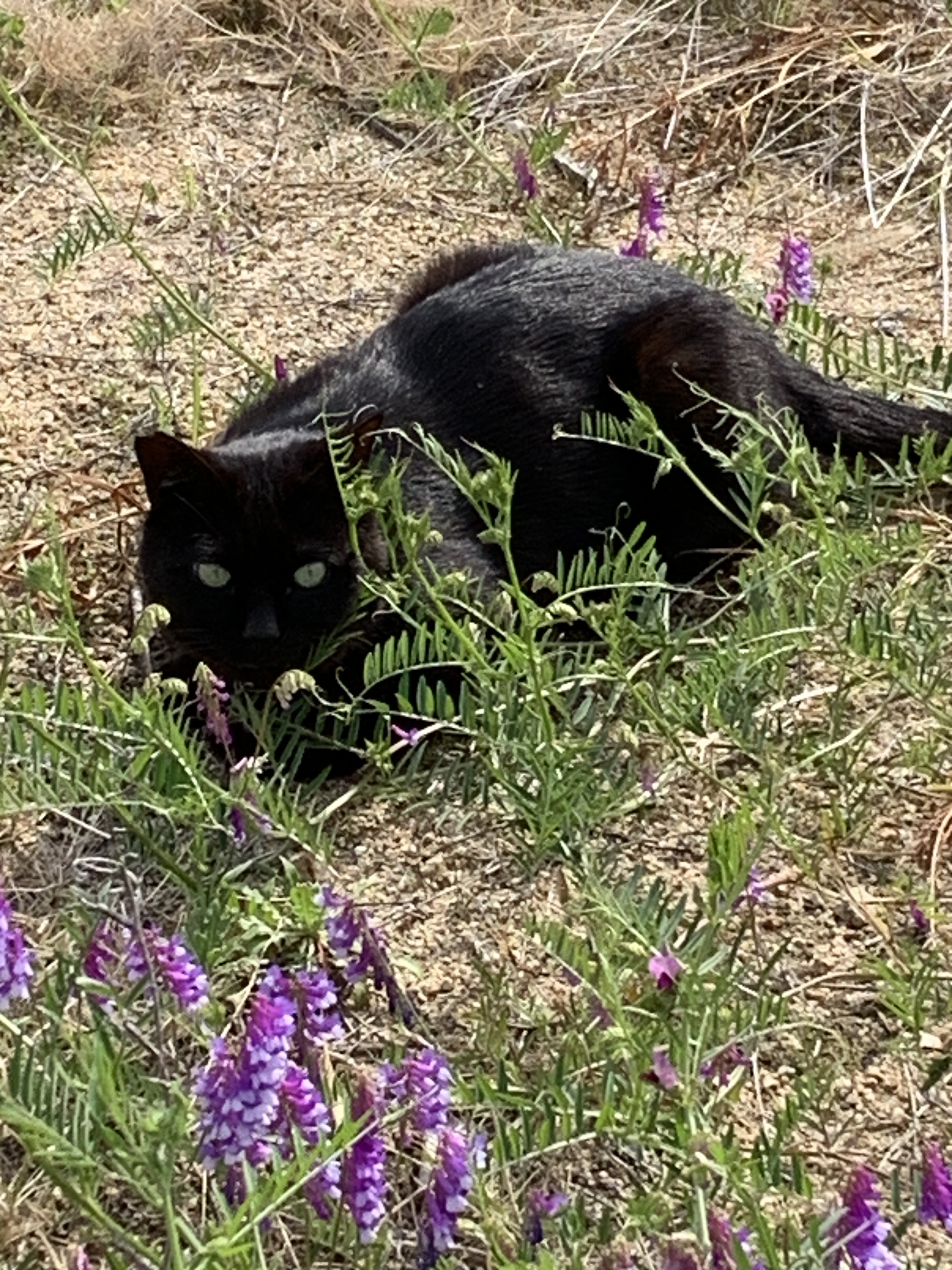
More adventures with Kuro-chan the cat, no photo this time: I went past the park gates one evening to find Kuro-chan curled up on the wall outside, so naturally I stopped to say hello. Me: aw, your fur is so cold, 小冷猫猫, let me pick you up-- Kuro-chan: [hiss, growl, snap] Me: okay okay, I get it! Kuro-chan: [looks around, stretches, jumps off the wall to suri-suri around my ankles] Mrrowr? Me: …okay, if you say so? Kuro-chan [contentedly settles into my arms to relax langorously throughout the very short trip across the street to their putative actual home, while being stroked and crooned at in whatever language came into my head]. Cats.

I was thinking about what my family always called “household words” meaning phrases either from books/movies/etc. or heard in real life which we started using on a regular basis. Five cents, please (courtesy of Lucy van Pelt the psychiatrist, also allowing me to link my favorite Peanuts strip of all time here); long time no interface, I have no idea where this one came from or if anyone else says it, but I use it with online friends often; that’s life on a crocodile isle (from T.S. Eliot, sometimes used in full with “You see this egg? You see this egg?” too, I say it to myself when frying eggs); Study now, dance later. Plato AD 61, a graffito my mom saw once, which we use as shorthand for “get down to it”; after the opera—my dad ran a semi-professional opera company in his spare time, and was always exceptionally busy with rehearsals in the last few weeks before a performance, so that any normal household duties would be postponed until “after the opera,” a time sooner but not much more definite than the twelfth of never. What do you guys have of this kind?

I posted my Yuletide fic, considerably later than I’d planned but well before the deadline; it could still use (and will hopefully get) a brisk edit, but I think it hangs together. Big relief! Knock wood I will manage to write a couple of short treats before the 25th, we’ll see.

Jiang Dunhao song of the post: a couple of new ones from a music program, 好盆与 and 小孩与我, not all that exciting musically but fun to watch and listen to, the former in particular has a couple of really lovely vocal moments.

It’s the season when vending machines in Japan offer hot drinks of all kinds; many varieties of coffee and tea, to begin with. I’m not much of a coffee drinker except when very sleep-deprived, so I favor 焙じ茶 or roasted green tea (I also like to make it from teabags at home and soak dried fruit in it as a late-night snack). Corn tea is also much rarer but delicious (I was wondering if cornsilk tea, known in both Korean and Japanese as “corn beard tea,” is correspondingly 玉米胡茬茶 in Chinese…). I love hot chocolate, but vending machine cocoa is usually repulsive, basically hot brown water full of sugar and chemicals. Other standards include corn soup (with corn kernels in), お汁粉 hot sweet red-bean porridge, and Hot Lemon (just what it sounds like, hot flat lemon soda with honey, stickily sweet but very satisfying on a cold day). The less standard offerings are getting weirder and weirder every year, this year I took some notes: miso soup with clams, yukkejang soup with rice, sundubu soup with tofu, extra-fancy corn soup scented with truffles (at an extra-fancy price), Starbucks caramel macchiatos, and “milkshakes,” which as far as I can tell are hot sweet slightly thickened milk with caramel?

The download problem never ends! cobalt.tools was so great and now it’s not; it doesn’t do YouTube any more, which is YouTube’s fault, of course (and I’m still not sure of a decent YouTube downloader, none of them seem actually safe?) and now cobalt.tools won’t recognize bilibili URLs any more either, although it says it should work. And you can’t ask for support help with error messages without signing up to a github account, and… (Yes, it’s a free service! I would be happy to pay them some money and get some support in the normal way!) oh dear.

Rereading Melissa Scott’s Dreaming Metal, the second volume of her Dreamships SF duology (the eponymous first volume is also very good). I really love these, they are far and away my favorites of anything Melissa Scott has written. They are about, among other things, AI but not in the way we think of AI right now (although the first volume bears a little more resemblance). The worldbuilding is wonderful—everything is in there, technology and language and clothes and entertainment and politics and ethnic groups and class issues and public transit and food and jobs and religion and family structures and God knows what else, but it’s not infodumpy, you just get to live in the world for three hundred pages or so and see it all there. Spoilery thoughts on the central conceit of the book: where it’s also amazing is the ideas about what kind of music an AI musician might want to make, how it would be derived and what it would sound like, and the way human musicians might react to it and work with it—in a way that’s both plausible and sounds like something exciting that I actually want to hear.

Reading another book of essays by a Taiwan-born writer who lives in Japan and writes in Japanese; unlike Li Kotomi|李琴峰, who grew up in Taiwan, taught herself Japanese, and came to Japan as an adult, 温又柔 came to Japan with her parents at age three and has lived here ever since (she’s Wen Yourou in the Chinese reading and On Yuju in Japanese; her romanized name on the copyright page splits the difference and uses “Wen Yuju.” I’ll settle for the latter for convenience. She also comments on how much her real name sounds like a pen name). I’ve only read one of her novels, 祝宴, which is about a middle-aged Taiwanese businessman, resident in Japan for many years, and his family—he’s 外省人 and his wife is 本省人, their younger daughter is marrying a Japanese man and their older daughter has a girlfriend. Very little actually happens but it was affecting and hopeful without veering into melodrama or Japan Sentimental. I found a lot to resonate with in her essays (reminded also that for me, with no original connections to Japan or Taiwan or anywhere else in Asia at all, studying/writing in Japanese or Chinese can be a much less fraught matter for good or ill). Like me Wen Yuju was fascinated by Lee Yangji’s short story Yuhee—she’s the editor of a Lee Yangji collection, which she says drew her some criticism from Korean-Japanese readers who argued that a Taiwanese-Japanese woman shouldn’t be doing it, another complex issue.
In some ways she covers a lot of familiar ground—growing up as a first- or 1.5-generation immigrant, more comfortable with the new country’s language than her parents’, sometimes accepted and sometimes dealing with microaggressions and blank majority ignorance, struggling with identity and complicated relationships with her parents’ country and family, and so on. It occurs to me that though there are so many anglophone novels, both YA and adult, now that go into this—just from a quick look through my shelves right now, Elizabeth Acevedo, Bernadine Evaristo, Tanuja Desai Hidier, Jean Little, Melina Marchetta, Naomi Shihab Nye, Chaim Potok, Nina Mingya Powles, Isabel Quintero, Joyce Lee Wong, Lois Ann Yamanaka, and that’s just a tiny sample—and still so, so few in Japanese, so that Wen Yuju and just a few others are reinventing the wheel because they have to. It’s not like the “monoethnic Japan” myth was ever true, I wonder when this will change.

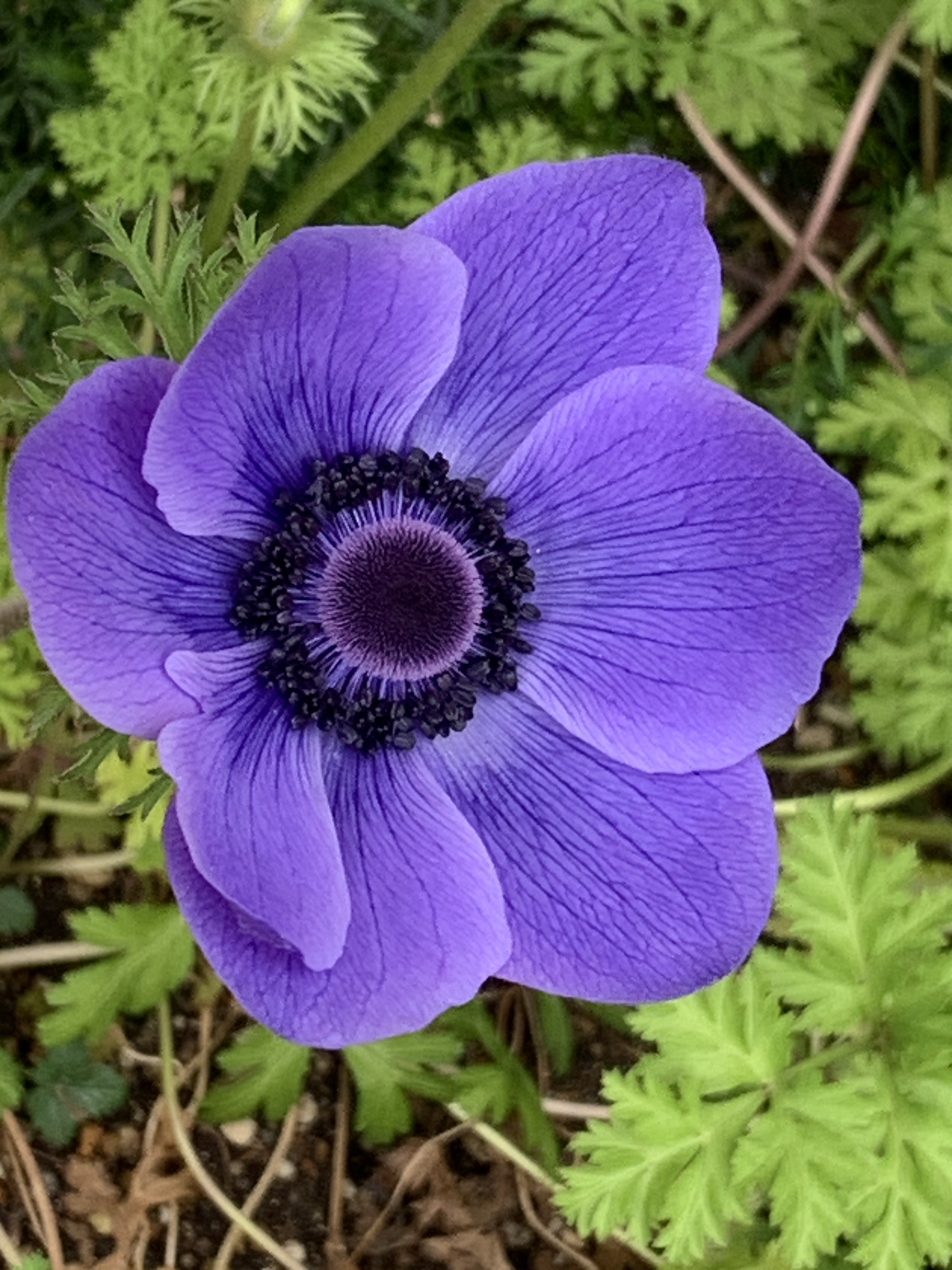
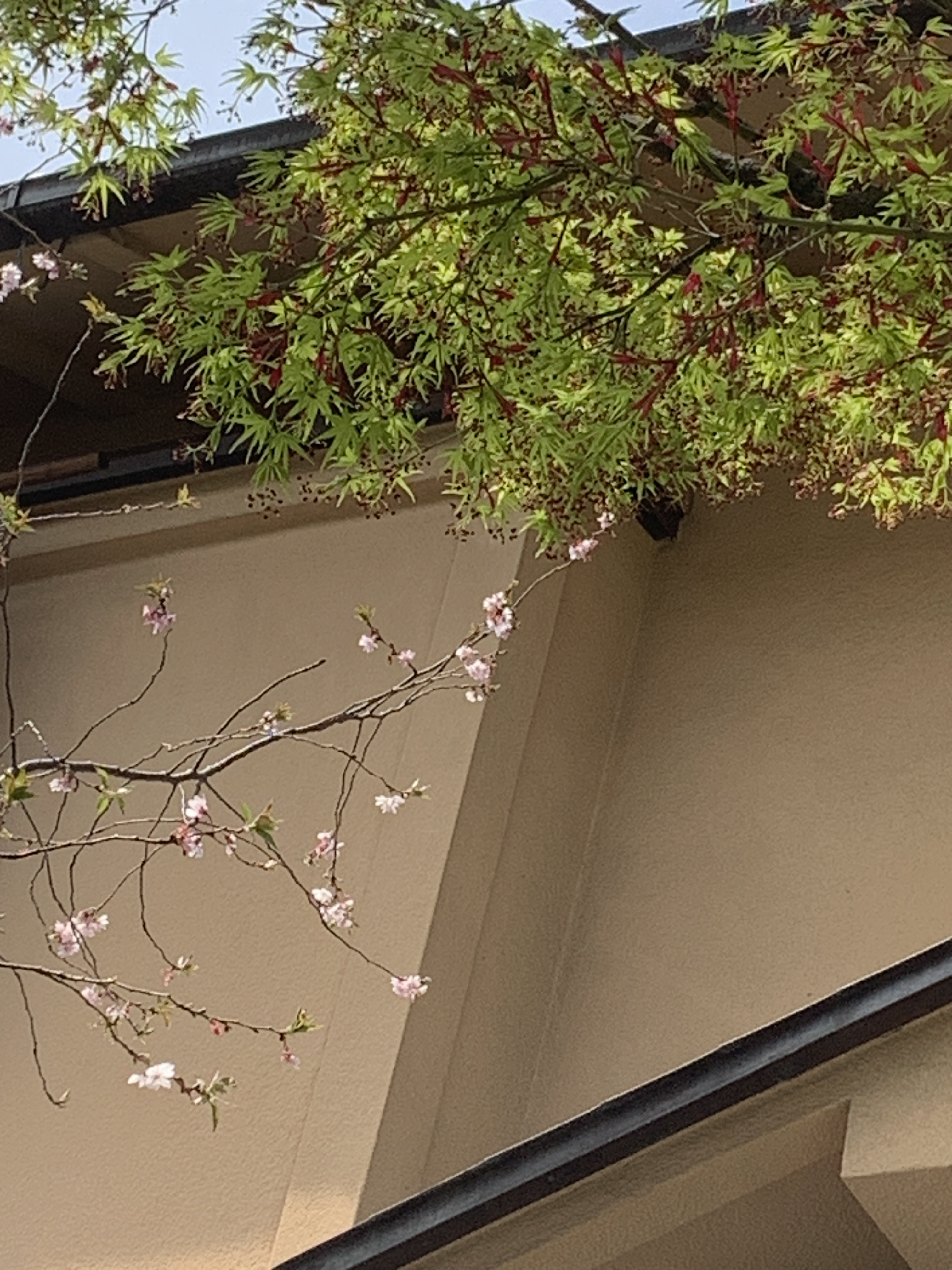
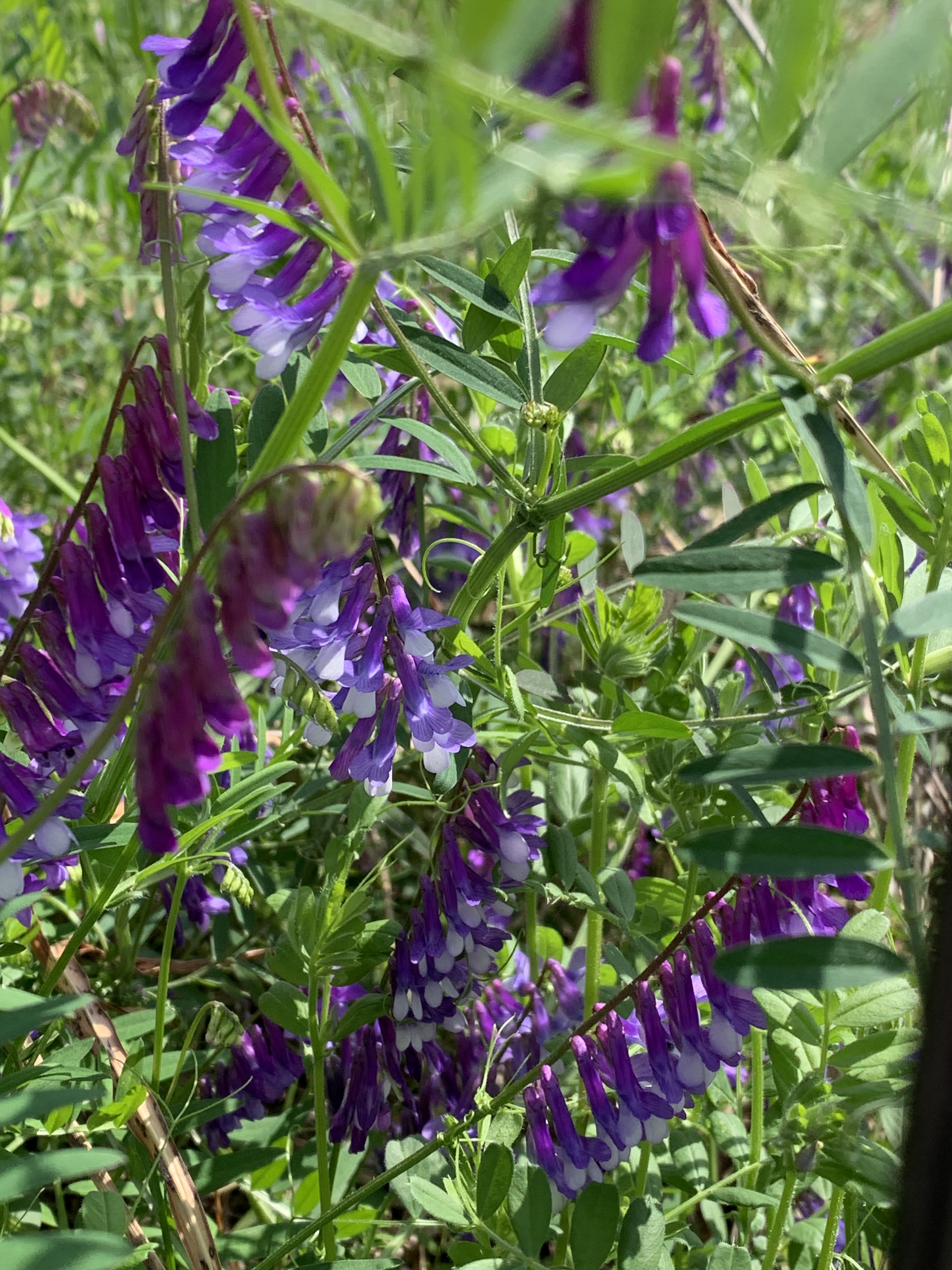
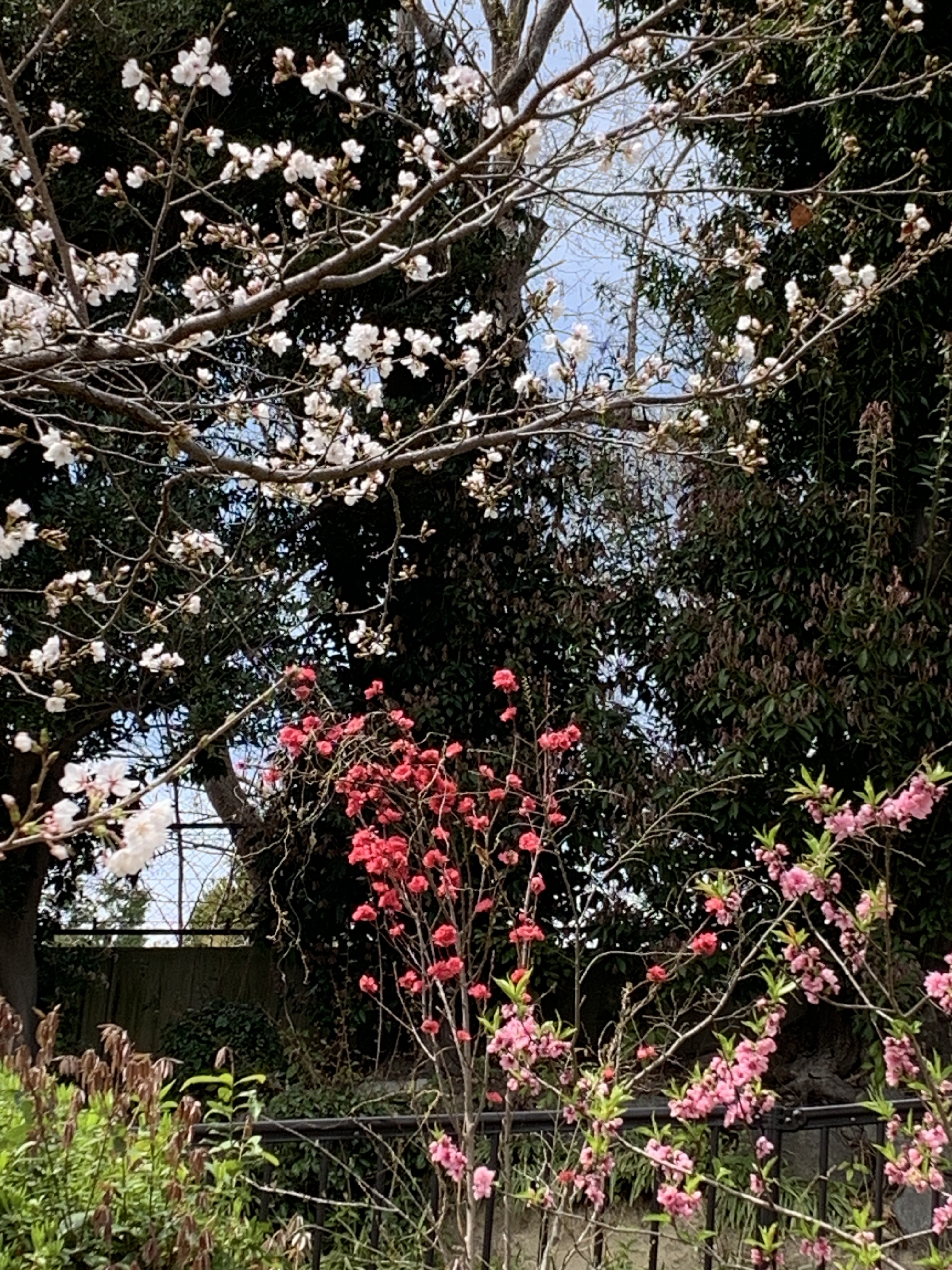
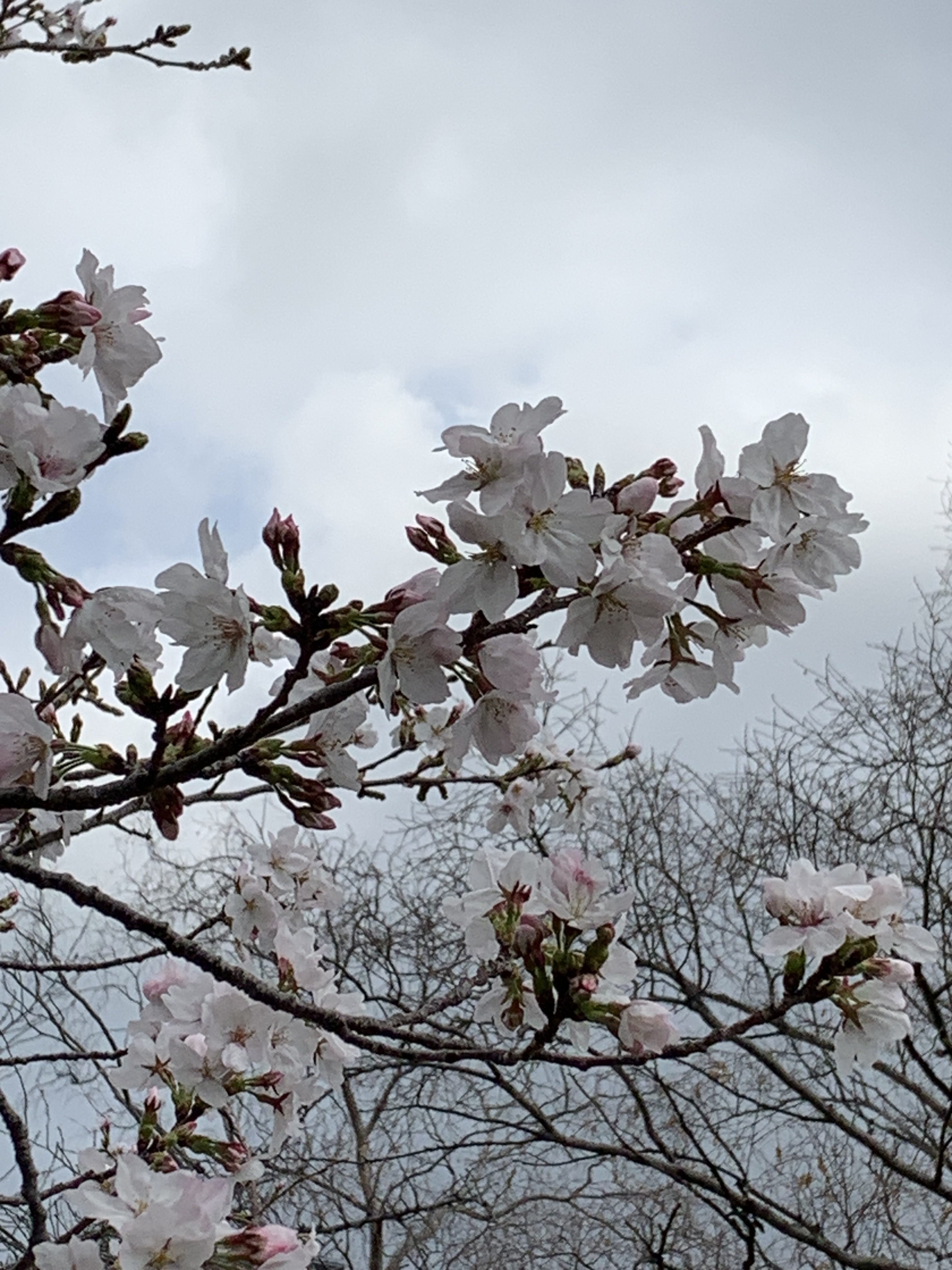
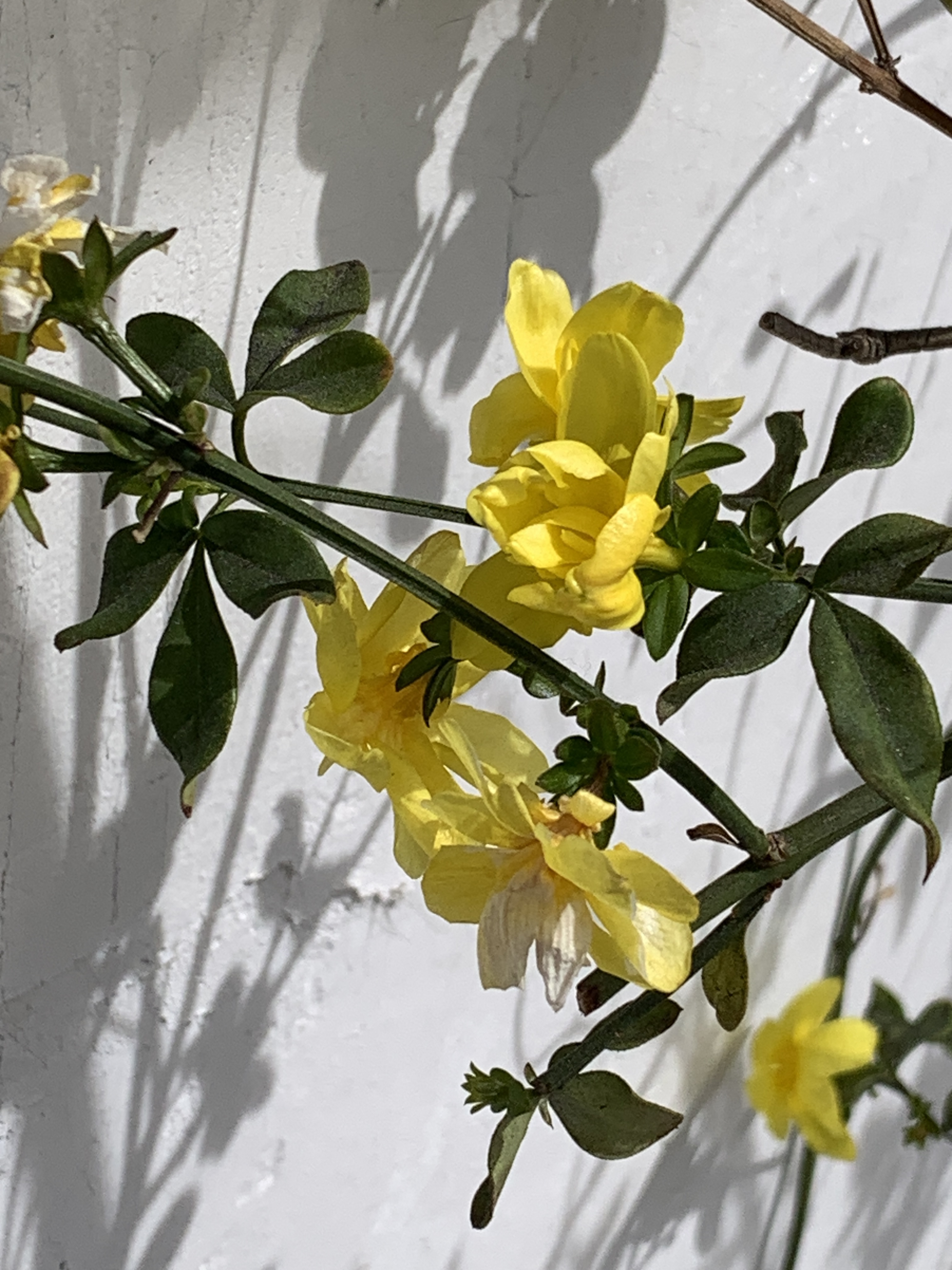
Photos: Seasonal leaves, flowers, and skies; Koron-chan, who doesn’t seem to feel the cold and maybe I wouldn’t either if I were that nicely rounded; a bakery with an interesting tagline; kumquat jam made by Y from the produce of his father’s kumquat bush, which was as delicious as it was beautiful, although the photo isn’t very good. I’ll take a better one next time.


Be safe and well.
nnozomi: (Default)
While I’m thinking of it: December’s coming up and about time for me to think about sending New Year’s cards. You know the drill: if I haven’t sent you a card before and you’d like one, DM me with a name and address to send it to, likewise if your name/address/etc. has changed, or if you’d rather not get one this time around.

Silly language stuff: I realized the other day that I’d inadvertently done a Tom Swifty in the thing I was writing, along the lines of “he was making tea adroitly with one hand.” (Of course, it could have been his left hand! But still. I guess in that case he would have been making tea gauchely, or else sinisterly… .) Also, I keep seeing people refer to the well-known dictionary as “Miriam Webster,” and now I want to work a minor character with that name into a story somewhere, just for fun. I always liked the name Miriam.

While Y is not what I would call fannish per se, he is sort of fannish-aware thanks to a long history with manga, anime, and games, plus he looks tolerantly on my fandom-related hobbies (“oh, is it time for the Christmas transformative-creation event already again? good luck!”). He texted me the other day to say “there are two girls in archery-club gear sitting in front of me on the train canoodling like nobody’s business, pure yuri!”

Jiang Dunhao song of the post: 赫马佛洛狄忒斯, an enormous transliterated mouthful of a title that renders down to “Hermaphroditos” (nicknamed 小赫马 by fans). The lyrics, by the pseudonymous 沃特艾文儿 (“Whatever”), always strike me as really surprisingly queer for a mainstream Chinese song, when you put together 每个名词都分男女,标签贴给我也贴给你,可仍有人坚信不疑牵手同行就能做情侣 (all the nouns are divided between male and female, with labels stuck on me and you, but there are still people who never doubt that you can be a couple if you hold hands and journey together) and 愚人的眼光里才没彩虹悬挂天际 (it’s only the fools who can’t see the rainbow hanging in the sky) and 世界是个什么东西,是个巨大的柜子而已…容纳谁都容纳不了你 (what is the world, it’s just a giant closet…no matter who they enclose, they can’t enclose you) and 深知爱就该百无禁忌 (deeply knowing love means having to ignore all taboos) and 我爱你是你,只因你是你 (I love you being you, just because you’re you). All that aside, it’s also a just plain good song with an irresistible rhythm in the chorus.

In ongoing architectural exploration, we went to see another Vories building, the Osaka Church, which is very simple and very lovely, although I have to say if you’re going to have a rose window I want it to be stained glass, not plain. Planned down to the angle of every pew. Old-fashioned portative organ in very beautiful wood sitting next to a modern piano, plus a pipe organ up in the loft. The church is open to visits on condition that visitors attend a service first, so we sat through half an hour of a noonday service: organ music (a Messiaen piece and something from the Messiah, I forget which one, and one I didn’t know), hymn-singing, the Lord’s Prayer (having spent six months in my youth attending a CoE school for reasons, I found I could still back-translate from the archaic Japanese to the “hallowed be Thy name” version), and a short sermon by a young woman pastor, possibly Chinese or Korean from her first name and very faint accent, wearing an immaculate trouser suit. No proselytizing of the visitors, much appreciated; if I lived nearby I might even visit the services regularly for the organ and the windows.

Because I do some volunteering for the local YMCA (very long story), I spent a day as a volunteer interpreter for…how can I explain this succinctly…a group of professionals (social workers, pastors, farmers, teachers, etc. etc.) from various developing countries who are spending several months in Japan studying to become “rural leaders.” They were visiting the day laborers’ district here, with a tour in the morning and a lecture and discussion in the afternoon.
All of them speak some amount of English but very little Japanese (although they had all picked up “daijobu”), so interpreters were needed. There was me and a younger American woman and two older Japanese women, one a high-school English teacher and one a sometime tourist guide, as well as two adorable high school girls. My group for the morning tour was me and the former-guide lady and half a dozen of the rural leader students (from India, Indonesia, Zambia, Cameroon, Vietnam and I forget where else), as well as the Japanese tour leader; I ended up doing all the interpreting (I urged the other lady to jump in but she just said “oh I couldn’t possibly)," which was not bad because I already know the district and its history quite well (a friend wrote a book about it that I might translate some day).
For the lecture in the afternoon, five of us switched off interpreting: it was clear that the two high school girls could only get through with constant help and even so managed only a sketch of the original lecture, while the American girl and the older Japanese lady did okay but missed some of the nuances in each direction; to brag unrestrainedly, I think I was the clearest and the most stable and accurate of the five. And really I should be ashamed not to be, after all, being the closest to a professional among them (although interpretation and translation are very different).
I had fun—interpreting is always exhausting, but almost always exhilarating as well—and enjoyed getting to interact with the visiting students a little (a very serious woman from Vietnam with a series of complicated questions, a Cameroonian pastor with a long beard and shorts, and so on). I was also really annoyed (typical, I’m afraid) at the way the whole thing was run. Mostly the people in charge of the event just sort of sat there looking hopeful rather than doing anything useful, and the group discussion was particularly badly run (the discussion questions were TERRIBLE, and I signed on to be an interpreter, not a facilitator. Although I did get to explain to a doubtful Zambian guy just why the Japanese birth rate hasn’t gone up in sociopolitical terms, with an Indian lady cheering me on). Also, in theory I am absolutely in favor of giving high school kids a chance to try out interpreting, but if the participants are actually going to get anything out of the event, the interpreters have to have more or less professional-level skills even if they’re not getting paid even professional-level peanuts.)

Translation work can give you a lot of access to other people’s family privacy. I felt very bad for the little girl whose documents passed through my hands the other day, to the tune of her baby immunization record, second- and third-grade report cards (it’s always a little surreal to translate report-card comments like “She paid attention in class very well this year, but needs to work on forgetting fewer things”), and her parents’ divorce and custody agreement. Then there was another little girl of similar age, transferring from a prestigious private elementary school in Kyoto to a similar one in Tokyo, maybe a professor’s child subject to the whims of university employment. Also a family register in which the date of marriage preceded the first son’s date of birth by only six months, making me wonder as always where it actually fell on the range from 100% shotgun to “well, we’re getting married soon, why wait.”
One of the other issues with this kind of work is that young children in particular tend to have far-out names, and the clients usually don’t advise you how to pronounce them. Japanese is (I think) unique this way, in that a) the writing system is mostly not phonetic and b) while there are standard character readings, most characters have multiple standard readings plus you can basically decide to pronounce them any way that comes into your head, which is the way a lot of parents name their children, presumably without considering that the kids will have to spend their whole lives explaining how their names are pronounced and spelled (speaking from personal experience, albeit through a different process). So all you can do with names is take a wild guess. Place names are just as bad, since they are often distorted by long history into weird forms; I had hundreds of addresses to transl(iter)ate lately and had to look up almost every single one, just to be sure. I think the worst offender this time around was a place called 福谷, which could be Fukuya or Fukutani or Fukudani just in normal terms; in context it turned out to be Ukigai, God help me. Places like this constitute regional shibboleths of sorts; a couple more I’ve come across personally include 酒々井 and 柴島, where you just have to know how to read them or you’ll never guess.

Photos: Lots of seasonal fruits and leaves. Persimmons usually look much nicer than they taste, but we recently received bounty from my father-in-law’s kumquat bush and the fragrance is wonderful. Also the railway at sunset, and Kuro-chan the elder who noticed me passing by and stopped me with an imperious meow, in order to make use of me as a heating device usefully equipped with a mofu-mofu function (not a good picture, but my other hand was occupied).


Be safe and well.
nnozomi: (Default)
I'm sorry I've been so lax about DW commenting lately; work and other things have been kind of crazy, as always at this end of the year. Why is it that the busier you are the busier you get, and vice versa?

I was looking for a Chinese idiom equivalent to “pie in the sky” and found 画饼充饥 (feeding hunger on a drawing of a cake) which is not quite the same but kind of related; I also found 天上掉馅饼, meat pies falling from the sky, which sounds related and actually means more like “serendipity” lol (in Japanese 棚から牡丹餅, botamochi cakes falling off the shelf, or tanabota for short. Do other languages have serendipity idioms which involve falling food items, I wonder?).

Jiang Dunhao song(s) of the post: 命名, one of his signature songs—I’m not actually wild about the chorus, too rock-vocal for me, but the verse and the last line raise the hairs on the back of my neck (in a good way). Warning for flashing lights! And for something completely different from the same singer, 又是艳阳天, an adorable duet with the Taiwanese singer Claire Kuo, over on the jazz end of pop. (*Because there are a lot of bilibili.com links here—if you’re not logged in it stops playback a minute in, but if you close the pop-up and hit play again the video goes on. I almost don’t notice at this point.)

Also Jiang Dunhao-related (I’m sorry, I’ve been this obsessed for a while now), I’ve been watching a program for young singers on which he is a mentor. I hate the competition part—why do people always do this with music—but I’ve found it very entertaining otherwise, the young singers are VERY fun. I’m pleased to notice that several of the twenty-odd women contestants are not just not c-ent standard skinny but well over on the plump side, including Niu Mengyao, who has a fantastic contralto, and the Chinese-Malaysian Vanessa Reynauld (莎莎 to her Chinese colleagues), who is all-round adorable with her slangy English-Chinese, as well as Zhang Jiayu with a pretty floaty soprano. Long Yuxun also has an amazing deep voice: a talented and sort of nerdily self-absorbed young man called Jing Shenghui fell in love with her voice at first hearing, grabbed her to form a group with (they all have to make groups of three or four people), and has basically been glued to her side ever since, while she treats him with a kind of amused, impatient fondness and everyone else ships them. (A lot of what makes this program interesting is seeing which singers end up working together. I was tickled, and confused as usual by censorship rules, that not only were two women telling each other “I’m in love with you and your voice!” but everyone else was commenting 嗑到了, I ship it.) Other interesting contestants include Yin Yuke, who seems to want to be the next Zhou Shen only much more deliberately androgynous, and the delightful twins Xie Yuxuan and Xie Yu’ang, who compete and perform as a single entity (I just realized that their names must come from the chengyu 气宇轩昂); then there’s Chen Yang, a rock singer listed as from the mainland on Baidu and from Taiwan on Wikipedia (I know which one I believe), who clearly has a strong personality to match her strong voice and, well, I don’t have the strongest gaydar but this lady’s style… (Some very short links: Niu Mengyao and Vanessa Reynauld, Zhang Jiayu and Yin Yuke, Long Yuxun and Jing Shenghui, Xie Yuxuan and Xie Yu’ang, Chen Yang)

Orchestra stuff. I survived the previous concert—there were some places where I wish I’d done better, but at least one prominent little twiddle which I got right for the very first time during the concert itself, giving me a Mizutani feeling a character from the baseball manga Ookiku Furikabutte who says to himself at one point during a game, wow, I’ve practiced this really hard and I can actually do it! wow!. The new program is movie music, mostly dead boring, but the Totoro suite is actually quite fun here and there (although I think I’ll be tired of it in six months). And I’ve always loved the Star Wars suite, it’s a symphony and a good one, with the accompanying images it calls up from the movies (although sadly it doesn’t contain the Mos Eisley cantina jazz piece). At our first rehearsal I was joined by a high school senior, son of one of the bass players, who was of course a much better player than me (Japanese high school bands are brutal), very solemn and big-eyed and polite; we’ll see if he stays around, knock wood.

Bits of assorted reading: Antony and Cleopatra with yaaurens and company, where I by no means did justice to Enobarbus but enjoyed him anyway (and decided to adopt Charmian’s “keep yourself within yourself” line when in danger of losing my temper). Some Margery Allingham mysteries, which are very weird; I did enjoy her sub-Wimsey detective’s interpretation of “seems like Sweet Fanny Adams to me” into “I am not very sanguine about this.”

With encouragement from everyone around here and qian in particular, I have been sending off the agent query letters for my original thing at the rate of one a day since around the beginning of the month; so far three polite rejections, not that I’m expecting anything else. Reminding myself that some of the best authors I know (personally and otherwise) are self-published. One good thing unrelated to results is that I was reminded of the one effective way I know to get an intimidating task done: break it down into the tiniest components possible and tell myself I’m just going to do one of them and I don’t have to worry about the rest yet. One little tiny subtask at a time is usually surprisingly manageable.

Composers riffing on B.A.C.H.: Bach himself (or maybe not, authorship is disputed, but it’s certainly good enough to be Bach), and Schumann. I love both of these pieces, so helpful of Herr Bach to have a name with half-tones in it.

Photos: Mostly from another historical-building tour with Y, at the Chourakukan in Kyoto, plus some autumn sweets and some nice skies.


Be safe and well.
nnozomi: (Default)
Amended from past years:
Thank you for writing something for me. With the exception of the do-not-like stuff, please take any and all of this as optional suggestions only, and do what works for you.

Do not like: darkfic in general, incest, humiliation, graphic violence, PWP or graphic parts-and-fluids sexual descriptions (no moral objections, it's just not what I enjoy reading), blatant out-of-characterness, rape/dubcon, Christmas themes (not Christian myself), coronavirus/quarantine references etc.

Enjoy in particular: work (in all definitions) and people being competent at it, hurt/comfort, futurefic, ensemble pieces, playing with language(s), cuddling, scenes from everyday life.

Genfic is good, shipfic is good, although in the case of the latter I’d rather have a story that has something going on as well as pure romance, whether it’s a separate plot thread or a characterization arc.

I'm open to treats if anyone is so kind.

By fandom/characters (alphabetical):
The Crater School – Chaz Brenchley (Any)
The mixture of “boarding school story” with “science fiction” absolutely delights me and basically I just want more (set specifically at the school rather than in the larger setting, ideally). Of the characters I nominated, I love Mary Ellen “Mae”’s relationship with reading and writing, and Levity’s arc of getting comfortable at school, discovering her inherited talent for art, and falling in love; as far as Rachel is concerned, honestly I just want to see her (along with Jessica, of course) be explicitly Jewish (in whatever sense) on page, I refuse to buy that all the way on Mars even a girl named Rachel Abramoff has to be Christian! However, you can use any or none of these three, and/or other existing characters, and/or make up a set of original characters altogether; I’d just like to see the school doing its thing. (Something leaning more toward Antonia Forest than Elinor Brent-Dyer would be wonderful, but that definitely falls under optional-details-are-optional.) ETA: I finished reading Radhika's book just barely too late to nominate her, but I love her and I would be delighted to see her in a fic if you feel like writing about her too.

The Incandescent - Emily Tesh (Worldbuilding)
I have a thing about administration-saves-the-day (not that it does exactly here, but I love how big a part school administration plays in the book) and I love magic integrated into a modern-day setting, so this book did good things for me. Here again more than anything I kind of want a slice of life at school, set during the book itself or otherwise; I loved the A-level students, especially Aneeta, and would be delighted to have a fic focusing on them, but something from the teacher/staff perspective would be great too, or else feel free to make up entirely original characters if you’d rather. If you want to look into what the school (or one of the new schools/programs!) looks like after the events of the book, that would be fascinating too.

Juniper, Gentian, and Rosemary – Pamela Dean (Any)
I’m always about equally fascinated and frustrated by this book, and Gentian’s friends are what I like most about it—they have the most interesting takes on the themes of the novel, femininity and gender in general, religion, art and science, conventionality and unconventionality, romance and friendship, togetherness and solitude, what you have in common with people and what makes you different from them. I’d love a missing scene from the book, futurefic, or anything from their perspectives, especially if it provides a bit of comforting closure for the ending, or else a canon divergence where things go better in the first place. You can throw in romance in any combination among them if you’re interested or keep it to friendship, whatever works.

The Melendys – Elizabeth Enright (Rush Melendy)
I love all the Melendys and their friends (and would be happy to see any and all of them appearing, in and out of the tagset), but I’m especially fond of Rush, the sarcastic, cheerful, quick-witted, occasionally self-doubting polymath who spends hours at the piano; I would love to see Rush a little older and what he’s making of himself, in whatever context. Again, really an ensemble fic in which Rush has his fair share of page time would be great too. I’d rather no focus on romance for this canon (although if you want to give Willy Sloper a love life with any non-Melendy person, that would be delightful!).

叛逆者|The Rebel (Wang Shi’an)
I got a spectacular Wang Shi’an fic a few Yuletides back, and I have never quite stopped thinking about him and wanting even more. (You can find my thoughts on him AT LENGTH under the "pannizhe" tag here--please feel free to read or ignore as you like.) I can't help wanting a story in which, without necessarily being a better human being, he's compelled by circumstance to turn his talents (thinking on his feet, lying and deceiving as needed, planning ahead, balancing temper and calm...) to good purposes instead of bad ones. I know that is a weird, and weirdly specific request, and I will not hold you to it; basically anything Wang Shi'an-centric, whether canon-compliant or -divergent, would be wonderful.
I’ve requested only Wang Shi’an himself so as not to complicate matters, but please also feel free to bring in any other characters who occur to you—Lin Nansheng and Chen Moqun, with whom he has incredibly complex relationships; Lan Xinjie, Lao Gu or Lao Ji, Meng Annan, even poor dumb loyal Secretary Zhang or Wang Shi’an’s blink-and-you-miss-her wife. One request I do have for this canon is attention to the historical context--I don't mean you have to do a huge research project, but I feel like the story has to be grounded in the time and place for the characters to be who they are.

Rivers of London – Ben Aaronovitch (Abigail Kamara, Indigo)
Indigo and her foxspeak and her adoration of Abigail all delight me, and Abigail’s brilliance and teenage-ness and resilience likewise; I’d love to see them having an adventure of some kind, large or small, details up to you. Any other characters (original ones included) welcome too, although I especially enjoy the way Abigail looks to Nightingale as a mentor and her unlikely friendship with Simon. (My other favorite character is Kim Reynolds; I can’t exactly see how she could fit easily into an Abigail-focused story, but if something occurs to you, go for it!)

Taiwan Travelogue – Yang Shuang-zi (Any)
Because their futures are less determined by the canon, I’m especially curious to read about Ozawa Reiko and Tan Tshiok-bi (Chen Chueh-wei? Chin Jakubi? why is romanization so linguistically and sociopolitically complicated; come to think of it, should Reiko be piped with Ta-tse Li-tzu? sorry, just doodling); what their friendship/romance was like and what happened to them after the events of the book, in Taiwan or Japan or elsewhere, whether they mirrored Chizuko and Chizuru’s relationship, as they do in the book to some extent, or developed in their own unexpected directions. That said, if you want to focus on Chizuko and Chizuru (Chien-ho|Tshian-hoh…), either with missing scenes from the book’s history or giving them an alternate future, that would be lovely too. In either case, one request I do have for this canon is attention to the historical context--I don't mean you have to do a huge research project, but I feel like the story has to be grounded in the time and place for the characters to be who they are. (I speak Japanese and some Chinese, so the more of either, as needed, you want to throw into the fic the better, as long as you’re confident in it!)

Thank you again!
nnozomi: (Default)
Just after I wrote up Makiko Vories at senzenwomen, Y said “let’s go out to Omi-Hachiman and see some Vories buildings,” entirely coincidentally. So we took a two-day trip, stayed in an inn by the lake with a hammock on the balcony, saw a lot of beautiful buildings in both Japanese and Western styles (they all have big windows everywhere, which I love), went on a punt trip down the river, took a cable car up the nearest mountain to see the site of an ex-castle, and enjoyed ourselves in general.

I’ve been working on one of those awful software translations—I hate software stuff, give me machine tools, screws and bolts, or motion control any day of the week—and it has various This Units and That Units, which is at least mildly amusing because it keeps bringing to mind Murderbot. I wonder if the SecUnits ever came with manuals and if anyone had to translate them.

I’m volunteering with a Japanese class for Chinese teenagers, eight fifteen- or sixteen-year-olds with only very rudimentary Japanese; tiring because they are reluctant and easily distracted compared to my Saturday juku kids (who vary hugely in motivation but are remarkably well-behaved and 乖乖), but a fun challenge, everything from a girl who looks like an aspiring idol (hair to her hips, very slim, very well-dressed) to a kid on the autism spectrum who sticks firmly to his OWN pace in everything to a shy little anime otaku to a smart-mouthed young man who tries to use his fluent English to get away with things with me (I resorted to 这小子! to put him in his place). I can follow maaaybe half their talk among themselves, it’s too fast and too slangy, but it’s good practice for me (although I’m so used to “Speak English! Not Japanese!” that deliberately trying to shift into Japanese and make them speak it too is a real challenge). Haven’t yet had a chance to ask any of them if we have any fannish interests in common.

So when I bought my bassoon it came with a repair contract at the store, a large, high-end-ish musical instrument chain store; I’ve taken it back a few times for tuning up, always with the store clerk who sold it to me in the first place, a helpful, personable young man I’ll call S here. Last week I got a letter from the store in very formal terms: “we would like to inform you that [S] has resigned under the provisions of Employment Regulations Article ###. If you have any concerns about his work with you, please contact either the woodwind department or the accounting department as below…”. I took this to Y to see if he had any ideas and he’d never seen anything like it either; we concluded that S must have embezzled something??? but I certainly wouldn’t ever have guessed at such a thing, and I kind of feel bad for him. Need to check and see if my bassoon teacher knows anything more (all bassoonists have about 1.5 degrees of separation). I feel like I’ve brushed up against the first scene of a detective story. (Also, who am I going to get to fix my bassoon now if I need it?)

Jiang Dunhao song of the post: 最好的我们, a duet from some years ago with Zhou Shen (they are close friends). Apart from being musically lovely it’s kind of amusing visually: the two singers are rather similar in features and coloring to begin with, and on this occasion they had almost identical haircuts into the bargain, so there’s a kind of 水仙 effect an octave apart.

Photos: Just a few, I haven’t been taking that many lately. Might add some of Y’s Omi-Hachiman photos later on. Lake Biwa, decorations on a mountaintop shrine, and a striking evening sky seen from a train.


Be safe and well.
nnozomi: (Default)
Many thanks for help and advice in my previous post. Of course as soon as I told myself I would start on query letters, a ton of day-job work fell on my head (not that I can complain, but still), but I am trying to move a little forward every day.

Orchestra news. For a while I was kind of dreading it, because of the senior bassoonist, an older lady who nagged me unmercifully about all the things I was doing wrong. She was quite right! And also she wasn’t doing it to be unkind, she was genuinely well-intentioned and concerned with helping me improve, but I found it very stressful and unwelcoming. So one week she texted me and said “can we talk before rehearsal tomorrow” and I thought, oh dear, she’s going to suggest I leave the orchestra because I’m just not good enough. So I went, full of trepidation, and the first thing out of her mouth was “Actually I’m leaving the orchestra.” (I was good, I didn’t say “what do you mean you’re leaving?!”) So she has moved on for reasons of her own, and we parted friends, and now I have some last-minute Dvorak Sixth (or Doboroku as it’s called among Japanese musicians) parts to learn. I can’t play the damn thing, but it’s a wonderful piece, an old friend from way back, and the second bassoon part is full of delicious low notes and it’s extremely exhilarating (and exhausting, but never mind that). Wish me luck, sigh.

If you are (by whatever definition) multilingual, how does your brain sort out what languages you think in when? I’ve never sat down and analyzed it, but I think I’m pretty predictable, English is my baseline, drifting into and out of Japanese depending on context and convenience. (When visiting my mom this summer, I had to have various practical conversations with people like electricians, bank tellers, and so on, and I kept rehearsing them in my head in Japanese and then reminding myself that no, they would actually take place in English.) Chinese creeps in here and there around the edges; more than once in moments of minor frustration I’ve caught myself saying “Aiyaaa mō!” which is Chinese and Japanese garbled together (but expresses my feelings very well). (The farmboys have also been helpful in providing innocuous but satisfying Chinese phrases for these moments, from 我真服了 to 完蛋了 and 玩儿呢!)

Music: Fourth movement of the Schubert Great symphony, which starts with a breath-holding “something is about to happen!” feeling and quickly moves into straight-up excitement. (For those who liked the Beethoven jazz a couple posts ago, I feel like Schubert gets into his own version here, even if not quite as syncopated, complete with walking bass.)
Jiang Dunhao song of the post: 轻轻 sung live, a folk-song-ish original lovely to listen to (and look at).

The overlap between Chinese and Japanese can occasionally be comical. A-Pei was very amused by the names of a couple of Japanese baseball players I passed on to her, 太贵 and 好贵, in Japanese the quite ordinary male first names Daiki (or Taiki) and Yoshiki (or Yoshitaka), in Chinese respectively “too expensive” and “quite expensive.” We haven’t found Chinese names that sound equally bizarre in Japanese yet, but I’m sure there are some.

Stack of new books! Behind cut: Brenchley, Cook, Edwards, Harrod-Eagles, Matuku, Samatar, Wells, Whiteley/Langmead.
Chaz Brenchley, Rowany de Vere and a Fair Degree of Frost and Radhika Rages at the Crater School: Latest in the Crater School series. The Rowany novella is very slight and not very interesting, although I do enjoy her voice. Radhika is really fun, I think the best one so far; certainly it’s nice to see even one non-white character turn up, although I do feel like the setup suggests she would in fact run up against a lot worse than some well-intended microaggressions at school, but it is nice also to imagine a school where people are decent enough that that doesn’t happen. (Maybe next time around we could have, you know, non-Christian characters too, or some actual f/f?) Oh well, I love Radhika herself, complex and entertaining, and I love the ensemble cast. (I actually nominated this series for Yuletide, only nominations closed just a day or two before I read this installment…oh well.)
Ida Cook, The Bravest Voices: Courtesy of a post by cyphomandra. Autobiography in which two opera-obsessed English sisters, one a budding romance novelist, become friends with the great singers of their time and also save a large number of people from the Nazis, all improbable but all true. Ida’s voice is delightful (I’m sorry there wasn’t a chapter from her sister Louise, just to find out what her writing voice would have sounded like) and the opera parts are as fascinating as the rest, and inextricable. I think the best description is something like “Betsy and Julia Ray crossed with Naomi Mitchison in 1934 Vienna.”
Erin Edwards, Finding Hester: Also from somebody’s DW post but I can’t remember whose? Account of an online community’s successful attempt to track down Hester Leggatt, one of the people involved in the WWII Operation Mincemeat spy incident. It’s my period and I enjoyed it (and was envious and admiring of the research work), but felt that it was definitely written for people who have already read and/or seen Operation Mincemeat, given its wealth of details on background characters but very little about the incident and its principal players itself. Also I found the references to the Discord group a little tiresome; either take the traditional route and just keep the researcher(s) in the background of the text, or take steps to involve the reader more with the community (pocket introductions to the members, excerpted conversations, etc.). That said, the chapter which actually quotes Hester’s letters and diaries was a delight (reminding me a little of Olivia Cockett, another wartime civil servant with a mind of her own having an affair with a married man).
Cynthia Harrod-Eagles, Before I Sleep and Easeful Death: Latest two in a very long mystery series which is one of my comfort reads. Not a whole lot new and amazing, but as always the characters feel real, the language is good, and there are dumb puns. Not pleased with Atherton’s latest girlfriend, I think he should have stayed with Emily; on the other hand it’s delightful to see Slider’s daughter Kate coming into her own.
Steph Matuku, Migration: Also from cyphomandra. This felt like two or three distinct books jostling together, and I had trouble assimilating “interpersonal struggles at military high school” with “end and new beginning of the world, at great cost.” I think I would have gotten over that if I’d felt more invested in the characters. I liked Farah and most of her friends fine, but you never get to know them in the way of characters who live in your head later on, they’re sketched in such broad strokes and generalized characterizations, plus the minor characters sort of fade in and out of frame as if there was a limit to the page count each of them was allowed. That said, it is really interesting worldbuilding (which would probably be more meaningful to me if I knew NZ better), and you could make several more books out of the possibilities there. It occurred to me that the whole thing might work well as a ballet.
Sofia Samatar, The White Mosque: Beautifully written, sad, thoughtful memoir/essay about traveling with a Mennonite research tour in Central Asia and being half German-Swiss Mennonite and half Somali. Predictably, I enjoyed the meditations on language a lot, as well as the small details of the places she visits. “The Mennonite game”—figuring out, when one Mennonite meets another, what their degrees of separation are (usually very few) and how—is what I’d call a lovely piece of worldbuilding if it were fiction.
Martha Wells, Rogue Protocol and Exit Strategy: I think I was right to start from the end of the series, I didn’t enjoy these quite as much as the others I read, although I will probably go back to reread. My problem with Rogue Protocol in particular was that it’s either everyone in sight being unhappy and/or unnerved, or action scenes, or both, and “too many action scenes” is one of my perennial complaints about books I otherwise really like, see also Rivers of London. Exit Strategy suffers from the same action-scene thing, but I enjoyed it more because the characters are more fun; also I like the way Murderbot teaches itself new skills, sometimes deliberately and sometimes under stress, which build on each other as they come into use.
Aliya Whiteley and Oliver K. Langmead, City of All Seasons: Elegant writing and a satisfying ending, but not quite suited to my id; a little too fairy-tale-ish for me.


Photos: One butterfly and some (?) goya vines, plus many from a visit to an ex-brothel. Y and I went on a tour of this beautiful old building which is now a fancy restaurant; the neighborhood around it has been a red-light district for a century and is not friendly to passing strangers with no business there (not in the sense of dangerous as far as I know, but you’ll get glared at, and the tour guide warned us not to stare rudely or take photographs on the street). The building itself was restored a few years back and is now stunning inside; don’t miss the sleeping cat imitating the one at Nikko Toshogu, or the round flower inlays (with mother-of-pearl), which are on the ceiling, luckily it’s a tatami room so you can just lie down on the floor and gaze.


Be safe and well.
nnozomi: (Default)
So as you may have seen I spent some of my last post grumbling about the (emotional and practical) difficulties of starting to look for a publisher for my original thing (or rather, starting the Rube Goldberg process of finding an agent who... etc.). With helpful advice from qian and others, all much appreciated, I am trying to take some more concrete steps, but right now I'm stuck on finding comparative titles for my query letter. The thing is, a) I don't have access to all the books coming out in English (there are SOME in bookstores, and if I know what I want to read I can order it, but I can't just go down to the store or library and read everything that comes out) and b) I am a very fussy reader and I just don't read that widely among new books! I don't know what there is out there lately!

so please let me know if you have any ideas about books that partake of the following:
Essential:
-- published within the last three to five years (sigh)
-- SFF
Any of the below:
-- AU early 20th-century England or Europe
-- New magical system
-- Multiple protagonists who are friends but not lovers
-- M/M romance which is plot-relevant but not the main focus
-- M/M romance involving strangers/quasi-enemies to lovers
-- Male/female friendship between colleagues
-- Colleagues from wildly different backgrounds who share a passion for their work
-- Political machinations, preferably against a monarchy
-- Get-out-of-jail subplot

...that's all I can think of at the moment. Possibilities I have right now are Freya Marske's The Last Binding series and, although it's older than they're supposed to be, Zen Cho's Sorcerer to the Crown. I want to say Emily Tesh's The Incandescent, because it chimes with my mind so well, but I can't actually think of any directly comparable points, oh dear.
(For the record, don't worry, I am not going to name a book in a query letter without having read it! I can get hold of promising possibilities if I need to, but I have to know what to look for first...).
nnozomi: (Default)
To my relief, the stray cats didn’t forget me over my summer elsewhere; my morning run is now reliably interrupted by a belly-patting session with Miké-chan in the park, and one of the green-eyed cats near the nighttime junior high came immediately over to say hi when I went past, winding in and out of the fence and bonking its forehead into my hand.

How does everybody save (non-work-related) files as a rule? As with so many things I am old-school and inefficient; at the end of the month, the latest version of everything I want to save goes onto a couple of USBs, stored in different places. If it’s the middle of the month and I want to be sure to save something, I email it to myself. I never use GoogleDocs etc., everything is on my hard drive + memory sticks.

Work: Someone in a translation I was editing had come up with “adversary management,” which confused the hell out of me until I realized the intended meaning was “adversity management.” Presumably “adversary management” is a little more active…

I found a decent, simple recipe for limeade and have made it twice with very good results. Actually the first time, I couldn’t find limes in the supermarket and had to make sudachi-ade instead; even more of a pain to squeeze (it takes three or four sudachi to make up one lime), but just as good taste-wise. Lovely tart pale-green summer drink, and the kitchen smells deliciously limey as a bonus.

My mom reminded me of a piece of graffiti seen years and years ago which became a family joke: “I love grils. / [Different handwriting] You mean girls. / [Different handwriting again] Hey, what about us grils?”

Courtesy of the farmboys as usual, I learned the Chinese word for post-its (便利贴, convenient stickers) and duct tape (大力胶, really strong tape). Also 心急吃不了热豆腐, you can’t eat hot tofu when you’re fretting, roughly equivalent to “hold your horses, calm down.”
Earlier this year the actor Zhang Zixian was among the farmboys’ visitors; he’s the one whose nuanced performance as Wang Shi’an in The Rebel absolutely blew me away, and it was mind-blowing in another way to see him out of character: cheerful, comic, laid-back, with a bit of a stammer, obviously very likeable but coming off nothing like either poor screwed-up evil Wang Shi’an or one of the most gifted actors in the business, for all that’s what he is. Performers are something else.

Speaking of performance, Y and I went to Takarazuka a couple of weeks ago because they were reviving their production of Guys and Dolls, which has been one of my favorite musicals all my life. It was very disappointing on one front: the Japanese book and lyrics, dating from the 1980s, are limp and awkward and miss the point entirely more often than not, an extra shame because the original English ones are so sharp. (I know it’s a tall order to turn good English lyrics into good Japanese lyrics which are also singable and mean the same thing, but it has been done! The Japanese lyrics for the latter-day Gershwin musical Crazy For You are a masterpiece.) Also the audience was very subdued, hardly rippling with laughter even at the punchlines that survived into Japanese (“Tell him I never want to speak to him again! And tell him to call me here”), although Y figured this was just a cultural thing. Still, the dancing was very good (including the traditional Takarazuka Grand Staircase at the end), and the singing was a lot of fun: you get used very fast to the “men,” ie women playing otokoyaku, singing contralto instead of tenor/bass, and the second act in particular was riveting. This is from a much earlier production, but the staging doesn’t ever seem to change, and it gives you a good idea of what the otokoyaku sound like (Shibuki Jun as Sky Masterson singing Luck Be A Lady). Parenthetically, it amuses me that Takarazuka is obviously much stricter about policing YouTube than about B站. Also, we killed some time wandering through the theater shop looking at the vast quantity of performer headshots etc., reflecting that the gorgeously androgynous otokoyaku overlap interestingly with the occasional gorgeous androgyny of male C-pop (and J-pop and K-pop) singers, approaching from the opposite side as it were. I imagine there have already been papers written about this as a cultural/sexual/sociological phenomenon.

Music: I’ve probably posted it before, but Beethoven’s Sonata No. 32 devolves (or rather sublimates) into jazz in the middle of the second movement, which I can never resist. I’ve linked it with a timestamp here (Mitsuko Uchida’s recording, with notes on YT by the astute Ashish Xiangyi Kumar), but listen to the whole thing if you have a chance.
Also, Jiang Dunhao song of the post (because I can): his own 铁皮火车不停开, sung live sometime last year, which I find very comforting.

In purely personal stuff, I’m depressed and annoyed with myself for taking no steps AT ALL toward ever getting anything I’ve written or translated published, in spite of helpful suggestions on all sides. I’m struggling with the pessimistic feeling that it’s all pointless: I’m terrible at promoting myself (either to agents/publishers or to would-be readers), I’m probably not writing anything that would suit the publishing zeitgeist, I don’t have connections who would do the promoting for me and nobody will take on a writer cold at this point in time, I don’t know the ins and outs of the process of getting translation rights etc., I can’t bring myself to try to get a novel published through what now seems to be the typical route of short stories*, and so on and so forth. Obviously the solution is to get off my ass and at least TRY, and if I fail disastrously in terms of original writing, then to look into self-publishing, but it’s very hard to get rid of the WHY BOTHER YOU WILL FAIL (and probably poison the waters by doing it wrong the first time around) dark cloud.
*Short stories. I think I’ve said so before, but my mind just seems to work in novel lengths? I never can think of anything I want to write as a short story. I have written lots of short story-length fics, but by virtue of being fanfic they’re all kind of…within novel-length [or drama-length, you know, long-form] continuities, not completely freestanding. I don’t know. Ideas for doing something to deal with this?

Photos: Very few, because it’s been too damn hot and humid to be motivated to photograph anything. My limeade and some flowers and the balcony with sudare at sunset, Koron-chan taking her ease, and also WARNING for people who don’t like creepy-crawlies, a very elegant centipede. I thought it was a lot like Oliver Melendy’s encounter …something which looked like a tiny, elaborate trolley car. It was perched on a leaf, standing firmly on ten blunt little round feet that could have been wheels… The whole creature was a rich cinnamon brown color, and along each of its velvety sides was arranged an ornamental row of creamy scrolls., but if you are more Mona than Oliver, maybe don’t click.


Be safe and well.

麻吉で

May. 18th, 2025 08:00 pm
nnozomi: (Default)
Today is just assorted bits of Chinese-related things and photos.

Courtesy of A-Pei who likes to bake in her free time, I learned much to my disappointment that the Chinese word for “brownies” is 布朗尼 (bùlǎngní); I think it should be either 小褐蛋糕 (little brown cakes) or 巧克力正方形 (chocolate squares).

Also from A-Pei, the Taiwanese slang 麻吉 (májí), from English “match,” used to mean “close, getting along well” etc. (Not to be confused with Japanese slang マジ (maji), coming (I think) from 真面目 (majime) and used to mean “serious, for real.” There is a train station called 馬路 (Maji) where you can take pictures and caption them マジで, either “at Maji” or “for true.”)

And one more from A-Pei, the Taiwanese word for avocado, 酪梨 or “cheese pear”—I’m not sure which is weirder, that one or the mainland 牛油果, “lard/butter fruit.” On the other hand, when you think of the root word of avocado, English can’t talk either.

嘛 (ma) is a sentence-ending particle which just means something like “y’know,” “right” as far as I can tell; for phonetic reasons I’m always tempted to translate it as “man” (in the interjection rather than literal sense).

At the Saturday juku I was practicing English vocabulary with eighth-grade Yuki, who is bright and knows it and has no hesitation about arguing his corner when he thinks he’s right; it took me quite a while to convince him that the difference between “success” and “succeed” was grammatically significant. It occurred to me later on that while this is easy enough to explain in Japanese (成功 vs 成功する, with a verb ending on the latter), it would be much harder in Chinese, where 成功 alone does double duty.

逆苏 (nìsū, also written 泥塑) is a Chinese fanword I ran across which was new to me; originally from “reverse Mary Sue,” believe it or not (the sū part is phonetic), referring in general to “feminizing” your idol (I am not wild about this term but it’s the shortest explanation I can find). I’ve definitely seen comments on Weibo etc. along the lines of 爱你老婆 and so on, from female fans to male celebrities, which seem to count as an example.

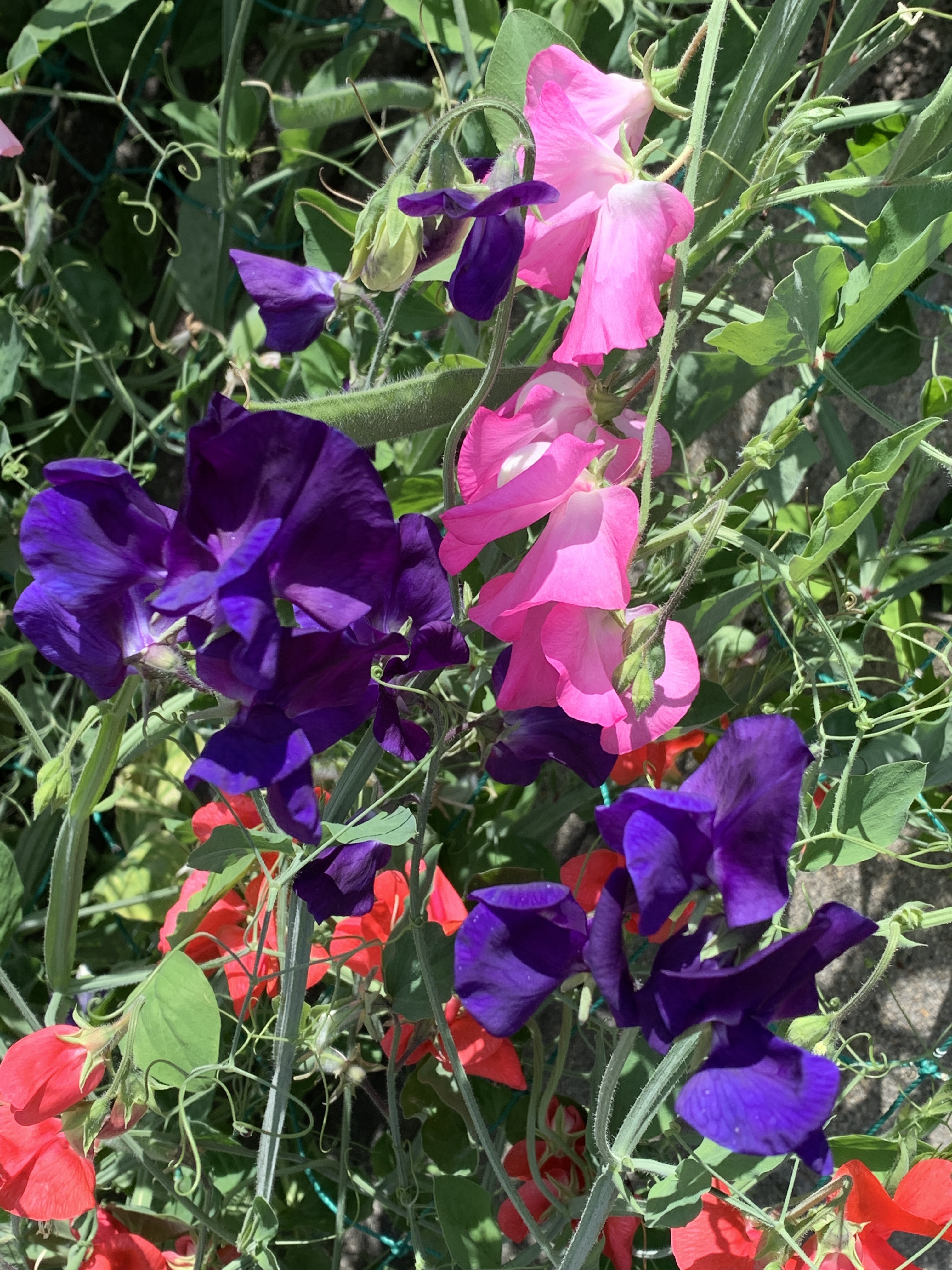
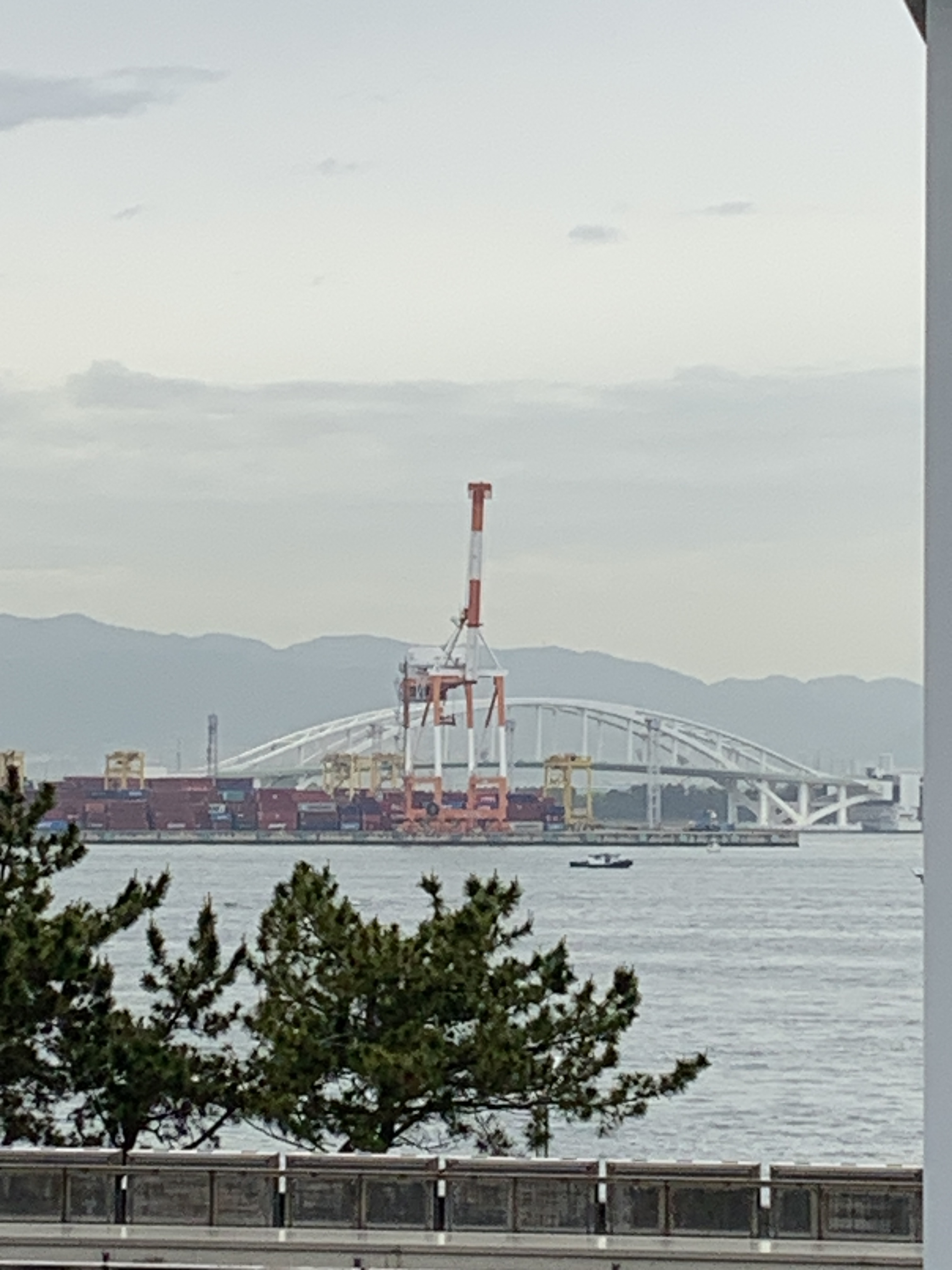
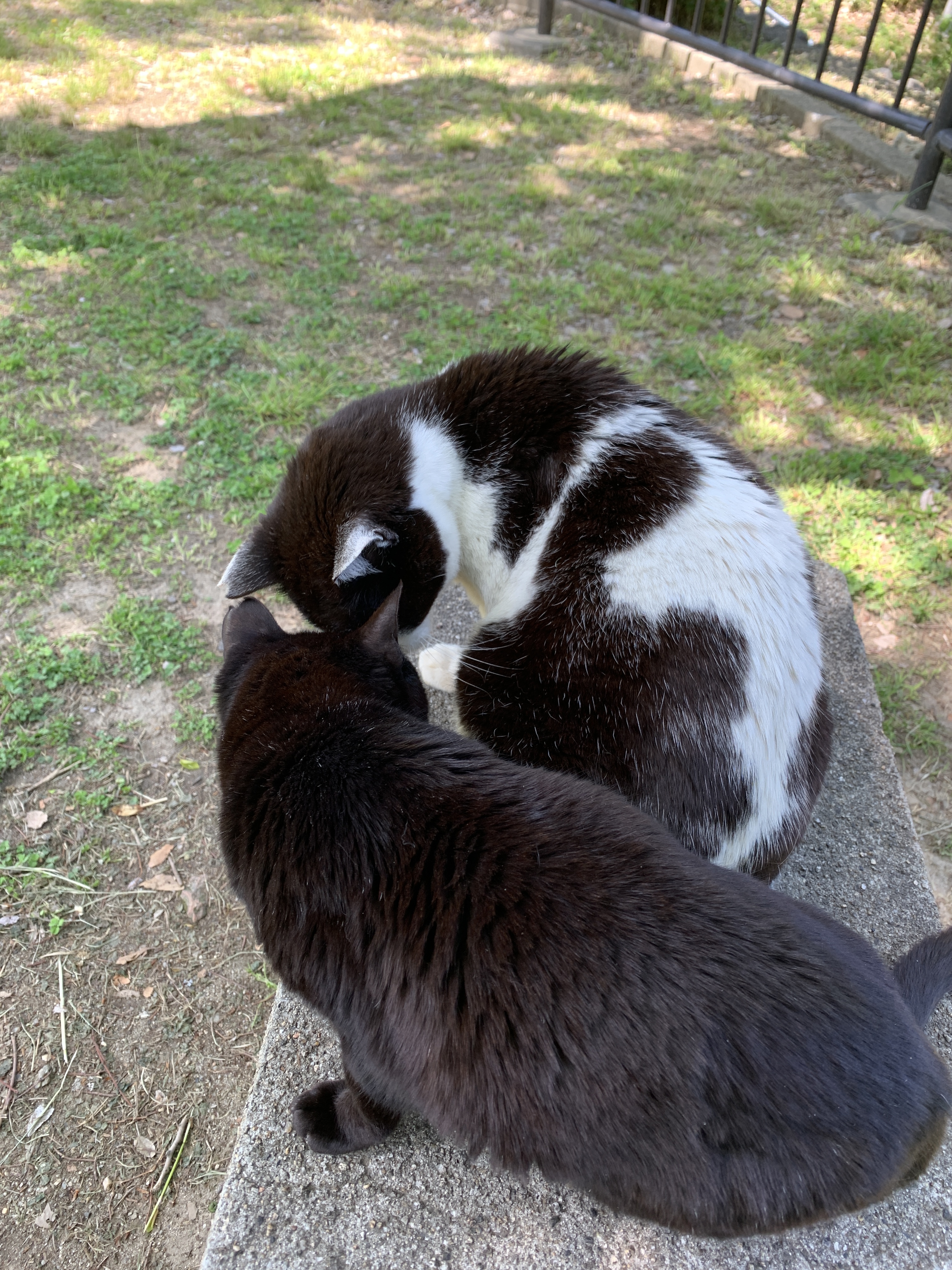
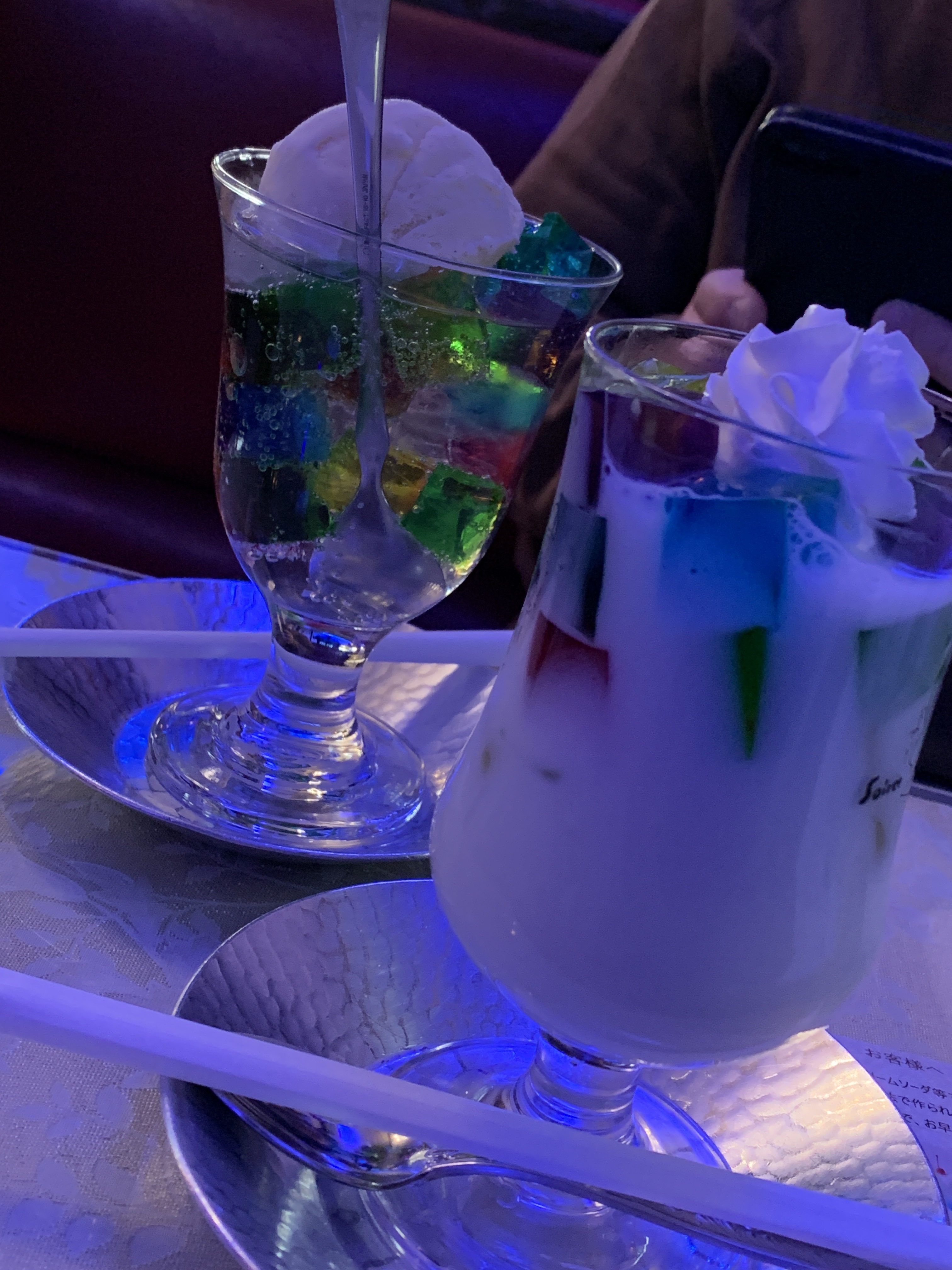
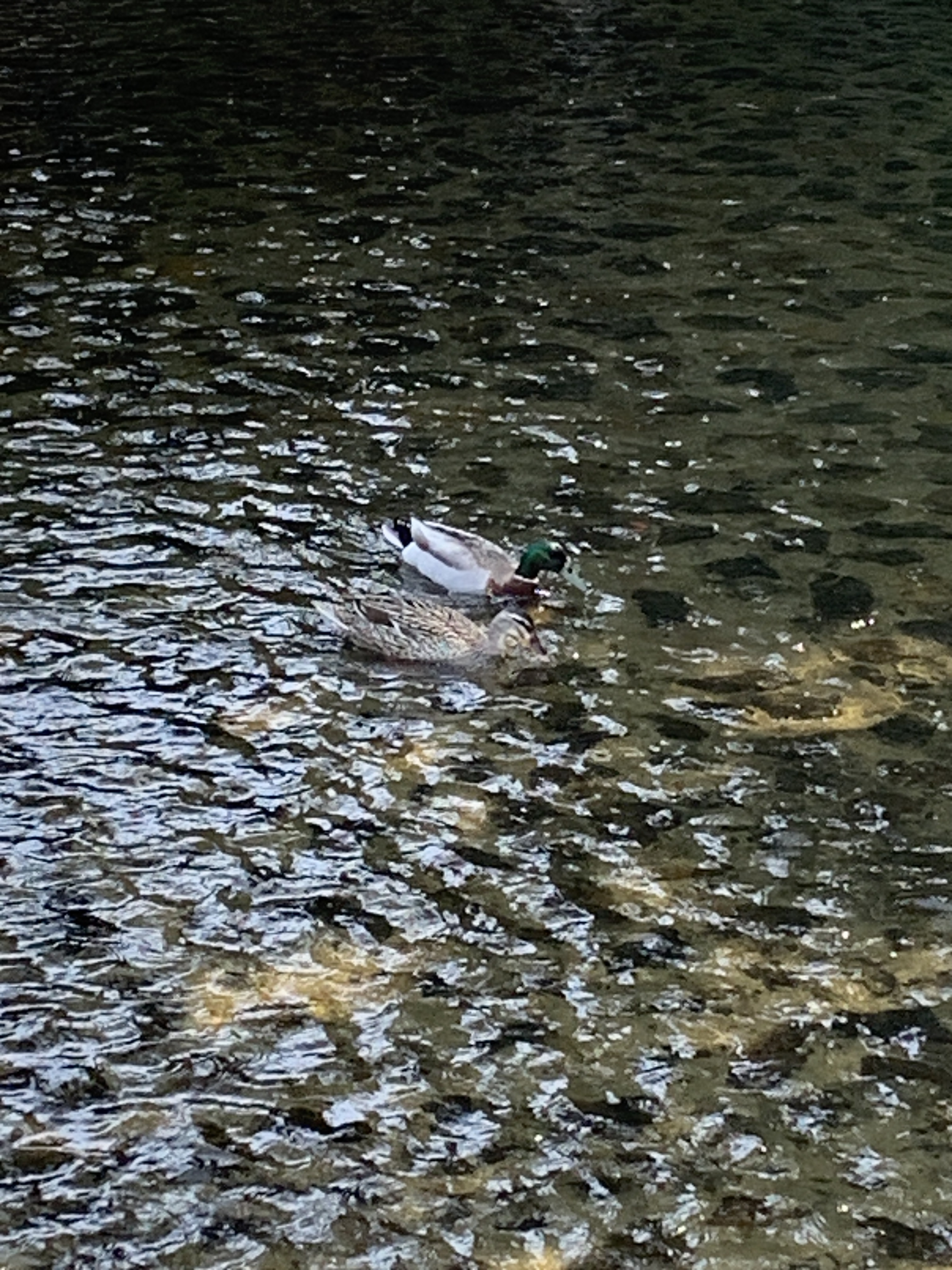
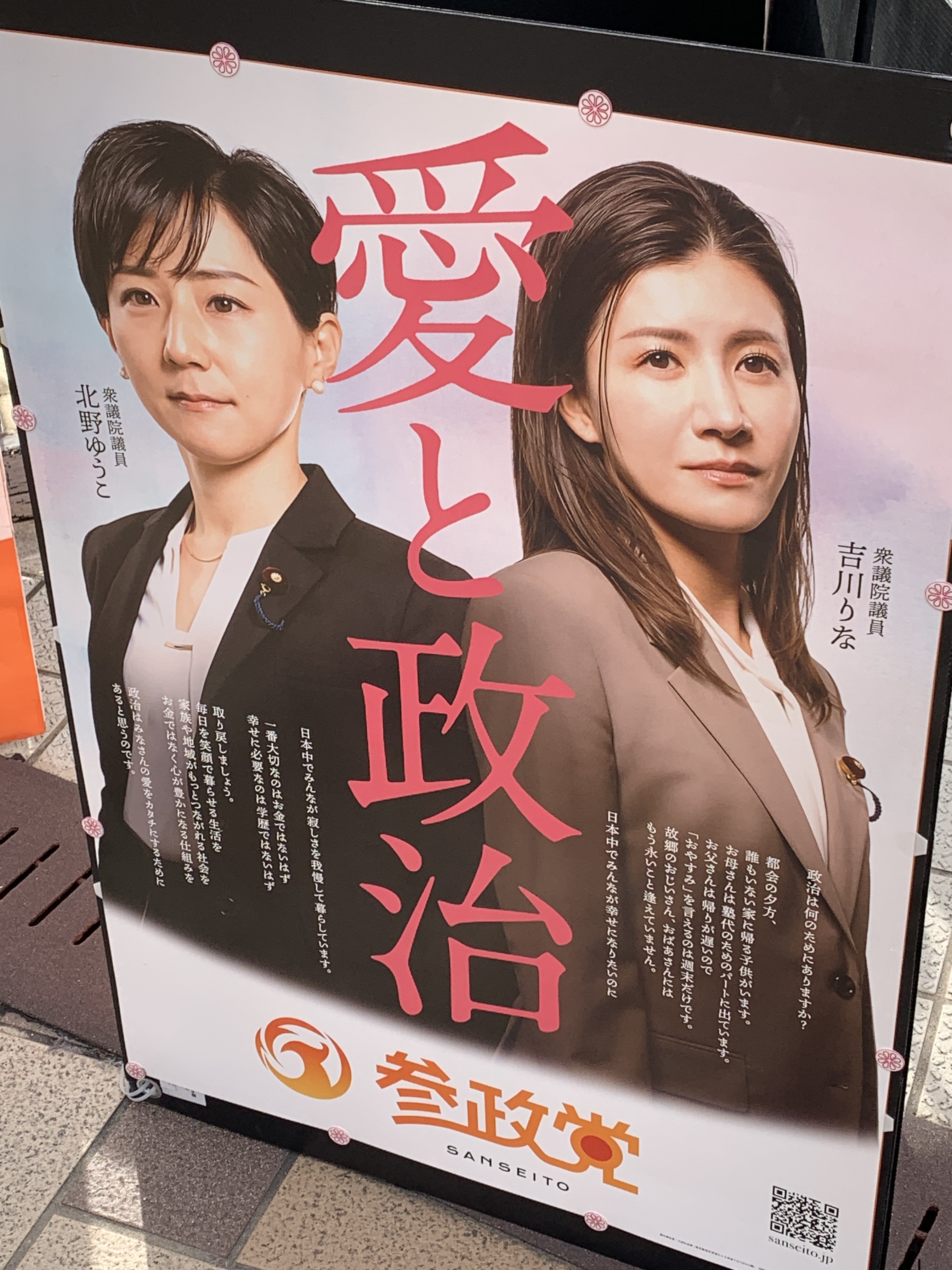
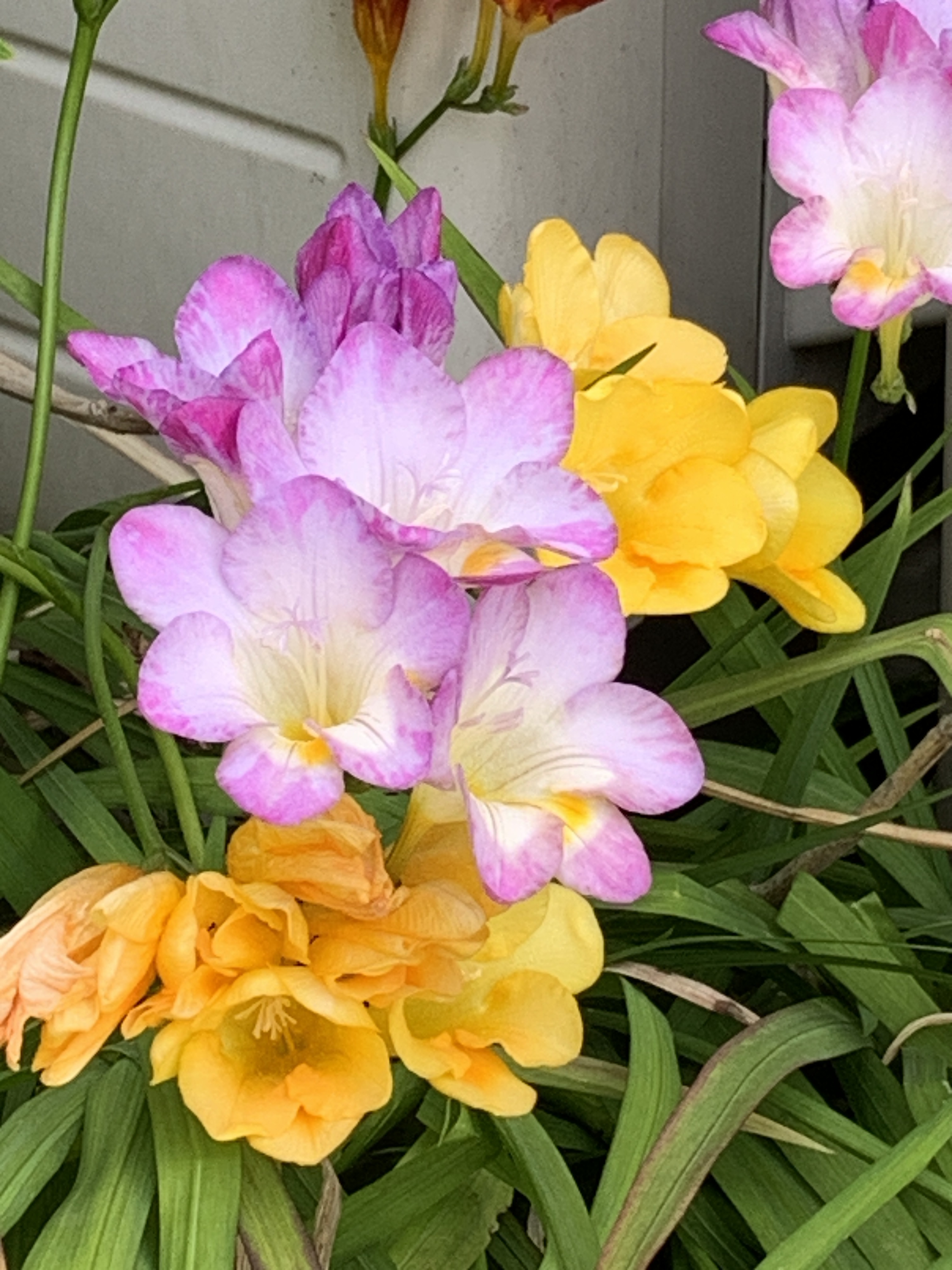
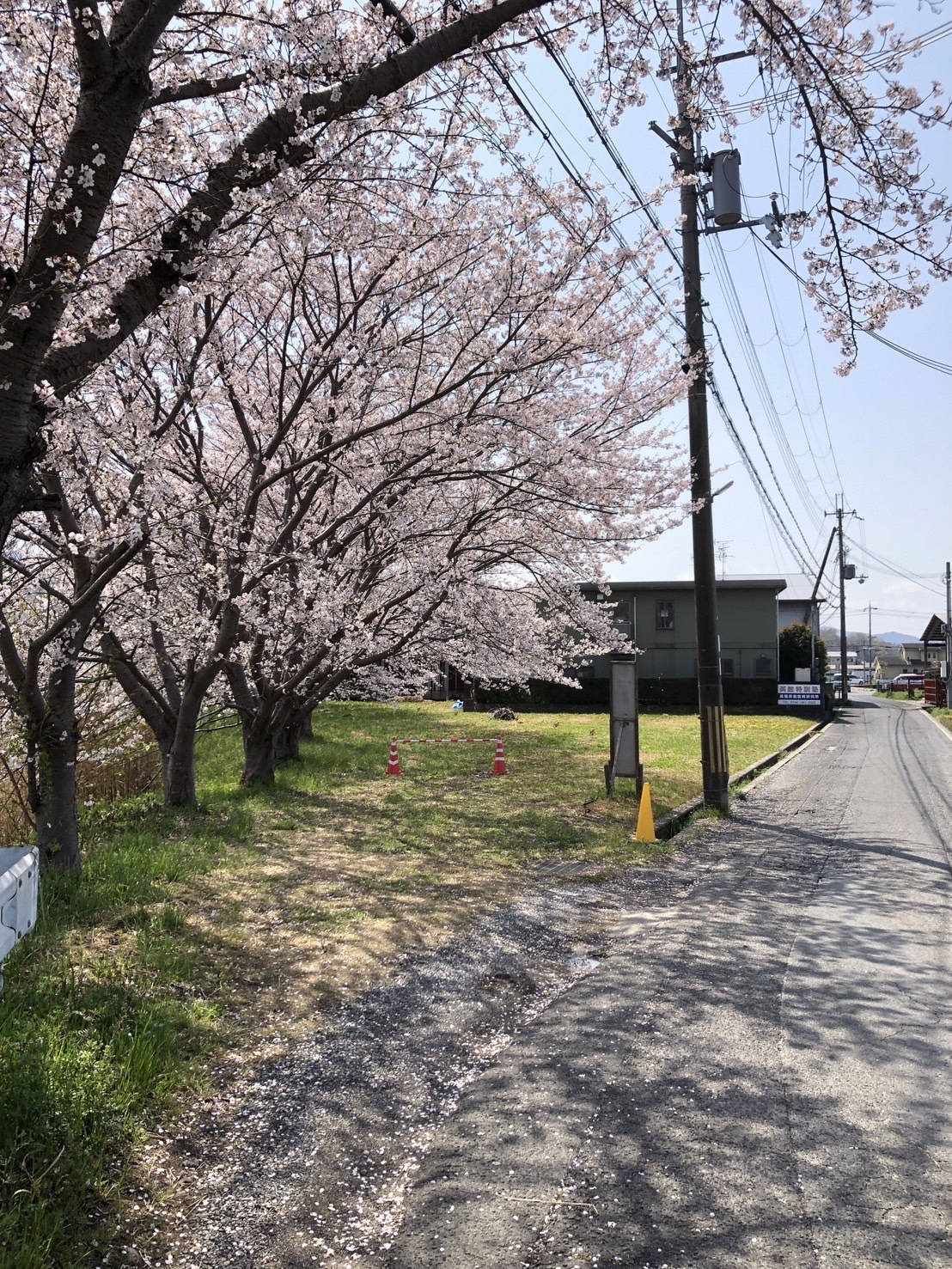
Photos: Assorted flowers, a container port with bonus mountains, chibi-chans on the march (you have to look closely to see them in their little pink hats, for obvious reasons I refrained from photographing unknown small children close up), Kuro-chan from the park and their friend Ushi-chan, fancy desserts in a fancy blue-lit café, a duck couple camouflaged by sunlight, a poster that cracked me up (it’s just a political poster for one of the rightwing asshole parties, but especially since the text down the middle reads “Love and Politics,” all I could think of was “this is an ad for a movie about two women politicians from opposing parties who fall in love during their campaigns”), and one of my farmboys who slipped in there somehow.


Be safe and well.
nnozomi: (Default)
this is mostly just self-satisfactionI passed HSK6! Well, technically apparently you don’t actually pass or fail levels 5 and 6, you just get a numerical score, but the pass/fail line for the other levels is around 60% and I ended up with 76%, so I feel okay about saying I passed. The listening test was a bitch, pardon my French; listening is so hard without context, plus my mind tends to wander…but I scored just about the same as I’d been doing on practice tests, so at least not worse. For some reason my score on the reading/grammar part was MUCH higher than on any practice test, thanks Xi-laoshi for going over the awful grammar questions with me a million times (I hate this section, you have to choose which of four long sentences contains a grammatical error). The writing section (where you have to read a passage and then summarize it from memory) was all about Liu Ying, a charisma train conductor from Changchun, who is a fun person to know about. Incidentally this was the online test; I would never pass the version where you have to write an essay by hand, thank God (or rather 谢天谢地) for computers and smartphones. (The test itself was a bit odd—I was expecting, from the strict rules, a huge auditorium, lockers for belongings, etc., but it was a little battered classroom with a couple dozen people spread across HSK2, 4, and 6, presided over by a middle-aged Chinese lady speaking Japanese with a heavy local accent—“your bag? oh, just put it under your desk.” It was nice to think about absolutely nothing but the content of the test for two hours or so.)

I’ve been reflecting on how different my Chinese study experience has been from studying Japanese. I had four years of classroom Japanese in college, including six months as an exchange student and a summer at Middlebury; I also watched some anime with friends, started reading Japanese books as soon as I was up to it, went through a period when I was watching all the Toyokawa Etsushi dramas I could get my hands on…but definitely laid my groundwork in the classroom, where I was fortunate enough to have good teachers. For Chinese I haven’t done any formal study at all, unless you count a weekly hour of conversation with Yu-jie and then Xi-laoshi; otherwise I’ve had Duolingo (not good, but not bad practice for a beginner), teaching myself from the lifesaving Chinese Grammar Wiki (and the Anki deck made from it), more Anki decks (HSK vocabulary and my homemade vocab one), A-Pei and our text-chats, the lovely people who kindly hang out at [community profile] guardian_learning, and of course incomparable teachers in the form of Zhu Yilong (in part via the blessed Wenella), Bai Yu, Liu Chang, Jiang Dunhao and his fellow farmboys, and their various c-ent colleagues. I think I got extremely lucky with Chinese study, in terms of a) having the time available to spend, which many people do not, and b) getting born on third base by knowing the characters already from Japanese.
Oh dear, that got long. Anyway, unfortunately passing the HSK does not magically confer fluency, but it’s a nice milestone to hit and hopefully motivation to keep going.


Other random Chinese-related stuff. Gu Lin Ruei-Yang is a pitcher for one of the Japanese baseball teams, a Tayal indigenous Taiwanese guy from Taichung who uses two family names (his mother’s and father’s), an interesting collection of characteristics; the history of indigenous Taiwanese success in baseball goes back to the legendary prewar Jiayi Agricultural High School team.
Silkworms are called 蚕宝宝, a word which adorably contains an affectionate diminutive (a lot cuter than silkworms are to look at, appreciate their work without googling them).
Listening to an interview with my favorite singer in which, doing a little self-PR, he says 我不挑活儿,可盐可甜. I was very pleased with myself (sorry, more bragging) for hearing and understanding this; 我不挑活儿 just means “I’ll take any work that’s going,” but uses more colloquial phrasing than the classroom words 选择 and 工作. 可盐可甜 I had to look up, but got the general sense of: it’s literally “I can do both salty and sweet,” and figuratively “I can be hardcore or soft and cute,” roughly. A fun phrase.
Also Zhu Yilong’s birthday vlog, in which some inspired person got him to go to a park and have a barbecue; he looks gorgeous and seems to be genuinely enjoying himself, singing along to the car radio, relaxing in nature, and earnestly cooking noodles. <3

Music: João Gilberto’s Disse Alguem, which is “All of Me” with Portuguese lyrics, and William Bolcom’s Graceful Ghost Rag, an old favorite of my dad’s and also of mine (the link is to Yeol Eum Son’s performance, which is one of the closer ones to my father’s).

Translating a table of chemicals, some of which cracked me up. “Glacial acetic acid” sounds like what happens when you put vinegar in the freezer; “methyl cellosolve” should be the brandname for a luthier’s tool (do you think they offer violinsolve and violasolve too?). And I certainly don’t plan to go anywhere near “fuming nitric acid” until it calms down. Also, this particular source text confounded me for a LONG time with 息化, breathification, which wouldn’t turn up anywhere, until I realized it was a visual typo for 臭化, literally stinkyfication and chemically bromide.

Random other things: I rediscovered cobalt.tools and am delighted to find that it downloads not only YouTube but also bilibili; now how long will it take me to download my huge backlog of bookmarked B站 videos? and will my computer have enough storage space? (I’m grabby about things I like online, whether music or fics etc.; I want to download everything, just because you never know when someone will see fit to delete it.)
For writing purposes a few days ago, I honestly genuinely found myself googling “why is the sky blue.”
So there’s a recent commercial on Japanese TV (I see CMs when I’m watching baseball games, I can’t help it) in which a giant, besuited salaryman is fighting off a monster amid a Japanese cityscape, Godzilla-style, while his wife and teenage daughter watch from their apartment window: “Oh dear, it’s your dad again. I hope he won’t knock down the supermarket this time.” “My boyfriend asked me if I can turn giant-sized too…” with a look of teenage angst. I’m entertained by the possibilities for stories here. (I don’t think this commercial has fulfilled its original mandate, on account of I don’t actually know what it’s advertising for, but it’s fun.)

Photos: Seasonal azaleas, irises, maple leaves, and other flowers I don’t know by name, as well as some carp flags and interesting machinery.


Be safe and well.
nnozomi: (Default)
A bit of Chinese wordplay that I thought was funny: when two people in white shirts stand on either side of one in a black shirt, someone describes them as 利奥利 (lì-ào-lì). Guess why (or see the answer here). Answer: Oreo cookies in Chinese are 奥利奥, which is just transliteration; but it makes perfect sense that if the black-white-black Oreo coloring is ào-lì-ào, then white-black-white would be lì-ào-lì… .
Also a word/character that I enjoy for its just-exactly-like-that-ness: 汆, which means to parboil, and which is made up of 入, put into, and 水, water. (Also relieved that water is water in Chinese, unlike Japanese, in which water 水 and hot water (お)湯 are separate words; Y and I had a debate over the Japanese expression in which you “boil hot water,” which doesn’t make much sense to me; a case in which the object is the result of the verb?).

Trying to transcribe something in Chinese (an interview about my favorite singer) which is unsubtitled, and finding it extremely difficult, although the speaker doesn’t go too fast and pronounces things quite clearly, apart from the sh/zh = r thing which all Chinese men seem to do. Even so there are a lot of gaps and places where I can hear the word but can’t figure out what character it might be. I did notice that sometimes a line which absolutely stumps me on one day seems quite clear when I come back to it the next; not sure why, but it’s interesting.

I’ve been enjoying everyone’s 100-formative-books lists, and finally gave in and made my own here. Featuring a lot of the same photograph (does it count as a stock photo if it’s one I took?) in place of a book cover image, because I couldn’t bring myself to search for images of ALL the Japanese books, quite a few of the English ones, etc. Why don’t they just give you a “no image” option? Also, I feel like I’ve left a lot out; I don’t remember all the books that were childhood favorites! I mean, if the titles or authors come up I naturally remember the books themselves, but I can’t list them all off out of thin air, and my physical books have undergone many shifts due to changing houses, countries, etc. etc. Where is there a giant master list of “all the books someone of my generation would have been likely to read growing up, Anglophone edition”…

One of my original-thing characters is having a professional breakthrough of sorts and I can’t tell whether I’ve managed to be as smart as she is or completely dumb (whether it’s going to make any sense to the [hypothetical] readers or seem like it was obvious five chapters ago). I should probably be relieved that I’ve managed to come up with something for her to be inspired about; it took me literally over a year to solve another character’s similar problem for him, jeez. I’m just about halfway through the whole thing now and things are starting to happen, but I still have SO MANY question marks in my outline and I’m making such very slow progress, oh dear.

Music: an older recording of Chen Ming and Jiang Dunhao singing , because I continue to be obsessed, and also I like this song; also last week’s radio opera was Figaro, so here’s Jessye Norman singing Dove sono, just because it’s one of the most beautiful things in the universe.

Photos: lots more sakura and cats, also one of the prettiest weeds I’ve seen.


Be safe and well.
nnozomi: (Default)
Xi-laoshi, my Chinese conversation partner, recommended in passing that I get my reading practice from books designed for learners, like one she showed me called something like Beijing in Spring or The Four Seasons of Beijing, you can tell how seriously I was taking this genuinely thoughtful suggestion, I’m afraid. No! This kind of thing is why a lot of people don’t ever master languages! (Also an overgeneralization, I know—it works for some people—but still.) My f-list is full of people whose perfect English comes from TV shows and fic; I’ve just been reading Li Kotomi on learning her Japanese through anime and music. I got good at reading Japanese from a) middle-grade books aimed at Japanese preteens (I still fondly remember the first one I got all the way through, in which an eighth-grade girl daydreams about kissing her best friend, also a girl) and b) Japanese translations of novels I knew very well from having read them in English. I can’t imagine I’d have gotten even as far as I have in Chinese if I’d been dutifully reading graded readers, instead of watching dramas and the farming show and reading fics and the occasional article about Zhu Yilong. It only makes sense. Or am I biased? What do you think?

I finished my readthrough of the Joan Aiken Dido books, in general highly recommended. I think osprey_archer was talking about hesitating to read the later books because they get so dark, which is an interesting point. The two Is books--Is [Underground] and Cold Shoulder Road--are definitely dark in places, although not tonally so different from the rest of the series, and worth it for the characters and the wild plots and the language. The second-from-last book, Midwinter Nightingale, though, is the most bleak and depressing thing I’ve read in ages—most of the book is spent with various horrible people, and when we do see Dido and Simon they’re usually miserable and in trouble. It ends with a defeat for the villains, but I wouldn’t call it a happy ending in any sense. Not going back to reread that one. The very last one, The Witch of Clatteringshaws, which Aiken knew would be her last, also has its dark moments but is very funny here and there and ends genuinely happily. (I couldn’t resist the following selection, which is really not typically Aikeny at all but delightful.)
‘...perhaps, in a hundred years’ time, this day will be remembered by our grandchildren as the day when a not very large force of English beat off an attacking army of Wends who wanted to turn this island into a place where everybody spoke Wendish. Don’t you agree?’
’What’s Wendish like, then?’ one of the men enquired.
Rodney Firebrace spoke up. ‘Wendish is an awful language. It’s highly inflected — there are nine
declensions of nouns—
‘What’s inflected?’ somebody shouted.
‘When words have different endings to express different grammatical relations. And Wendish has thirty different kinds of verbs. You have to decline them as well as conjugate them.’
‘What’s verbs?’
‘I hit. You run.’
‘Who says we run? We ain’t a-going to run!’
‘No way!’
‘Hooray for English verbs!’
‘We don’t want no foreign verbs!’
‘Are you all with me, then?’ called Simon.
‘Sure we are!’
‘Let’s go!’
‘We'll show those Wends the way back to Wendland!’
‘Let ‘em wend their way!’
Also, anyone reading the Dido books should not miss lionpyh’s post-series fic Now, in the meanwhile, with hearts raised on high, which is one of the best fics I’ve ever read in any fandom ever as well as being an immensely satisfying conclusion.

Y brought home this hilarious winter song called 布団の中から出たくない, ie “don’t want to get out of bed.” Highly recommended to anyone studying Japanese, and accessible even without Japanese thanks to the funny animation (for the southern hemisphere, they also have a summer song along similar lines). Although COMPLETELY different in style, I feel like clearly the Chinese equivalent is Liu Chang’s 再睡五分钟.

Since it’s timely, have Cesar Camargo Mariano (best known to me as Elis Regina’s husband, but also a great musician in his own right) doing April Child.

There’s a fancy coffee shop chain in Japan which uses city airport codes for its shop names, like NGS Coffee in Nagasaki and so on; the problem is that they’re based in Fukuoka, and so the company overall is known as FUK Coffee.

Photos: Spring is doing its thing and I have too many photographs, here are some and the rest will have to wait until the next post.


Be safe and well.
nnozomi: (Default)
More on my Li Kotomi translation project: she has an essay describing some of the details of the process of her translation of one of her own novels from Japanese to Chinese, with examples, which not surprisingly is hard to deal with (especially because for the Japanese reader, most of the quotations from the Chinese translation will be at least semi-comprehensible from the characters without needing additional explanation, but the same does NOT go for English). I enjoy her extended metaphor of Japanese and Chinese as “two independent machines” (although I’m not sure I agree with all of it).
For me … Japanese and Chinese are like two independent machines. … In almost all cases, the quality of the products produced by the two machines is similar, but one of them—the machine marked “Japanese”—is a little unstable in its operation and occasionally produces defects, so that its parts require more frequent inspection, refilling with raw ingredients, and lubrication.
Although the two machines are independent, they run off current from the same outlet. The amount of current is limited ... . When I am writing a novel or an essay in Japanese, I turn off the Chinese machine entirely and direct all the current to the Japanese machine in order to ensure its products’ quality. Conversely, when I write in Chinese I stop the Japanese machine. … [W]hen translating from Japanese to Chinese, I have to use about 30% of the current for the Japanese machine and 70% for the Chinese one, and the other way around when translating from Chinese to Japanese. However, since the products have been produced on 70% current, they must be inspected more carefully and thoroughly than usual. …
Each of the two machines has its own specialized production field, with unique functions the other does not possess. The Japanese machine includes special functions like hiragana, katakana, kanji, and ruby text, and excels in the production of fluid sentences and thoroughly variegated text. Because hiragana and katakana are capable of expressing sounds alone, effacing meaning, they have high affinity with other languages, meaning that various different languages can be used to supplement the raw materials. The kanji function has various additional options such as onyomi and kunyomi readings, which can be cleverly used in combination with the ruby function to weave a florescent world like the pattern on a kimono.
Elsewhere, the Chinese machine basically has a single hanzi function, but because this function combines overlapping aspects of sound and meaning, it enables the generation of more rhythmical, more formally beautiful couplets than in Japanese. Because each individual character takes up its own definite space, this function does not lend itself to flowing, variegated sentences, but excels at regular, definite text as well as sentences of silvan density. Also, because hanzi are highly neological, new words can be created even more freely and improvisationally than in Japanese. Further, the Chinese machine has a secret time-machine function which enables free connection to the many poems and chengyu sayings created over four thousand years of Chinese literature. This feature is not included with the Japanese machine.


Reading Measure for Measure with yaaurens and company, and finding it interesting for many reasons (also I need to go back and reread a_t_rain’s excellent epilogue fic. My brain in silly mode suddenly related it to The Mikado, with Angelo as Koko, guilty of the sex-related crime he’s cutting off other people’s heads for; which would make the Duke the Mikado, I guess, and Mariana Katisha. The plays certainly don’t map one on one, not to speak of the differences in tone, but they would make a fantastic theatrical double bill.

okay, so listen to the melody line of 祝我幸福 (Wu Qingfeng) and then of Meditaçao ; cross-cultural pentatonic scale friends. (As my dad used to remind me, there are only twelve notes, and the major pentatonic scale happens all over, see also Chinese dizi flutes etc., so it’s just a common and garden coincidence, but I still like the resemblance.)

I’m still playing the bassoon and still in a local amateur orchestra, for the moment (*circumstances unrelated to anything here may interfere). I’m also still very bad at it, but not as bad as I was. (I will never be more than a mediocre amateur as a performing musician, because I can never find the technical fingers/lips/tongue etc. parts of playing an instrument interesting at all. I like music because of melody and harmony and rhythm and timbre, not because I remembered to move my left hand just the right way or adjusted my embouchure just so! What does the one have to do with the other? I suppose it’s people who can find both interesting who become the real performers, good for them. Anyway, I kind of wish I’d taken up the bassoon years ago, because I enjoy it more than I ever liked playing the cello—I like having a part all to myself, I like the way breath vibrates into sound and the way it’s an instrument nobody notices but also penetrating and exciting. The other day we had our first rehearsal with a contrabassoon and sitting right next to the contrabassoonist was SO NEAT, I want to try playing one SO MUCH, it’s like a dinosaur that can sing in tune.

No new farmboy words today, although I did make a wrap-up post about watching the series (so far) here. Unrelatedly, A-Pei taught me a Chinese phrase for “the grass is always greener”: 外国的月亮比较圆, the moon is rounder abroad.

Discovered via YouTube, the architect Hamaguchi Miho’s Nakamura House. Unfortunately for my purposes she was too late for [community profile] senzenwomen, active after the war, but very interesting, and the house looks gorgeous on the inside (although Y rightly compared it to an elementary school gym on the outside, I have to say)—look at the high ceilings and the teal glass tiles and the light, and the wall of bookshelves (scroll down for some before/after renovation pictures). Both pretty and actually livable, which is far to seek.

Photos: the usual, including an ex-bicycle and a castle.
plumsbark plumswall stray
castletrain notbike yukiyanagi


Be safe and well.
nnozomi: (Default)
As I’m sure various posts over the last year have made clear, this silly Chinese farming reality show has hit me harder than any canons I can think of in the past, except my oldest favorite books and Guardian/associated shows etc.; maybe even more so, although that may be a function of volume. The farming show has two long seasons plus alpha and two short ones, adding up to a hundred and sixty episodes (and counting, if you include season 3) and a total watching time well north of two hundred hours (for scale, long enough to watch Guardian seven times in a row and then some), and that’s not even counting associated concerts and 花絮 and vlogs and… . This also explains why it’s taken me eleven months of watching almost every single day to get through it. Here is a suitably long and 100% self-indulgent post going over it! Not sure if anyone will read it but it was fun to put together. (This post’s format inspired by sakana17’s similar one, which should be an interesting comparison; thanks to her this is an English-language fandom of two, not one, much appreciated! <3)

What the show is about:
As of the beginning of the show (in fall 2022), ten actors and musicians aged eighteen to twenty-seven are to spend six months running a farm on their own. The theory is that they get some name recognition and a career boost (since their careers are either struggling or not yet started), the country gets some useful propaganda about young people in farming, and the production company gets a promising show. All of which did happen, six months became two years on and off (including two road trips around the country to visit each farmboy’s hometown and explore regional agriculture), and the farmboys formed their own company (十个勤天) and became explosively popular. As of now (spring 2025), seven of them are back on the farm for a third season and the other three, while still part of the company and performing with the others at intervals, are off furthering their entertainment careers.
The actual farming content is shown in thorough, day-to-day detail. At first they have no idea what they're doing and proceed by trial and error, mostly error, with a huge amount of wasted effort (one of the first new words I learned at this point was 白干); eventually, seeking instruction wherever they can get it, they begin to figure things out and produce results. In season 1 they divide into three teams, one responsible for renovating their broken-down living quarters, one for livestock (sheep, ducks, and chickens), and one for planting (roses, hydroponic lettuce, and wheat, although all ten of them work in the wheatfields). In season 2 they focus more on individual projects, mostly plant-related apart from fish, crayfish, and bees; they continue to grow wheat and rice along with rapeseed flowers. In addition they cook for themselves, entertain various c-ent personages as guests, adopt numerous local stray dogs, collaborate with farming/charity initiatives in various regions, and give concerts.


The propaganda thing: In short, yeah, it is propaganda in some ways. Here are the details of what it looks like to me, for what it’s worth. (Caveat that all I know about China is what I’ve read and watched. If I am getting something stupidly wrong or overlooking something likewise, please let me know.)
For a Chinese reality program there are not a lot of straight-up nationalist/jingoist moments, maybe two or three in two-hundred-odd hours (almost drowned out in effect by the good old capitalist-style advertising for sponsors’ products, innocuous things like energy drinks and household appliances, which is foregrounded almost to the point of parody). There is no shortage of messaging along the lines of, farming is good for the people and the country, more young people should become farmers, technology is good for farming; this part would probably not be significantly different on a similar show made in Japan or the US or Germany or wherever, and I don’t find it especially disturbing.
The part that bothers me much more is the negative space. There is absolutely no mention, ever, of Mao’s famine or anything else to do with modern Chinese agricultural history. Contemporary rural poverty is just barely touched on (possibly a little more in season 3, which is in progress?), but not in a systemic way or with any reference to the various related social issues of rural-urban and other inequity, etc. (it’s notable that when the farmboys visit rural areas the local residents tend to guess them younger than they are, emphasizing that rural people age faster). Also, while the farmboys use their name recognition to boost agricultural products from various autonomous minority areas, and when traveling in Xinjiang they stay in a Kazakh yurt, work on a Hui-run flower farm, and visit an Uyghur-owned vineyard, ethnic minorities in Xinjiang in particular and China in general are depicted only as loyal Chinese citizens and cultural local color. All of this is obviously no surprise given censorship rules; if one decides to watch the show anyway, there’s nothing to do about it except bear it in mind and try to read between the lines. (The other thing is that it’s all what the cameras show; there’s no way to know what the actual behind-the-scenes looks like, so who knows.)


So what is it about this show that I’ve found so addictive? After becoming aware of it thanks to mumblemumble and the episode she found where Wang Yang is a guest on the farm, I noticed “wow, there’s a lot of this” and thought it might make nice background Chinese listening practice while I did something else. Then I found I wasn’t making any progress on any of the something-else because I kept paying attention to the farming show, and then I realized I was hooked. (Also, it struck me at first as a nice low-key documentary-type thing to watch, fun and soothing, and then I got SO INVESTED that it wasn’t soothing at all, I was so concerned with whether the farmboys’ various endeavors, on and off the farm, would go okay!)
The obvious point is that the farmboys in question are ten good-looking young men! Easy to recommend on those grounds alone, especially since they are by no means all from the same mold visually. That aside, the show does two things in terms of story-telling that are surefire for me. First, it’s very slice-of-lifey—there are a lot of comic moments and some very dramatic and moving ones, especially in season 1, but the bulk of it is made up of the ordinary everyday tasks on the farm. Second, it is EXTREMELY character-driven. Which sounds strange to say about a reality/documentary show, but part of the essential interest of it is getting to know the ten of them in detail, seeing what each one of them is like, how their lives so far have shaped them and how they react to different situations and change (or don’t change) over the series, both individually and in their interactions with one another and with other people.
Also the language-learning, or at least -encountering, opportunities go without saying! Two hundred-plus hours of (mostly) unscripted conversation among native speakers, all of it with Chinese subtitles, is not easy to come by; their speech includes everything from net slang to Mencius as well as song lyrics, jokes and puns, technical terms and chengyu. I don’t know if it’s actually improved my Chinese—my listening is not much better, sadly, but I think I do read faster (thanks, subtitles!) and have a considerably larger vocabulary (allowing for slang) compared to a year ago. I wrote once before about the various dialects used by the farmboys, which are always interesting to listen for, especially as they pick up words and accents from one another (the Xinjiang-accented “zu ba” for 走吧 becomes a family catchphrase throughout the series, the guy whose roommate is from Guangdong acquires some conversational Cantonese, the use or misuse of 儿化音 is a consistent running joke, and so on). They also throw in bits of English of wildly varying accuracy here and there, sometimes employed for bilingual puns.
Finally, most of them are musicians (and all of them sing, even the actors), and I’m a sucker for that: watching them transform at their occasional concerts from hapless but determined amateur farmers to confident, experienced professional performers who love what they do, hearing some genuinely gorgeous singing (and some which, while less musically outstanding, is still fun in context, see character-driven above), getting glimpses of their rehearsal process for group songs (and dances) and the way the songwriters among them work on new songs, watching them fall asleep to a guitar lullaby from the “oldest brother” last thing at night.


Below, the ten farmboys in detail, with photos (not very well screenshot, sorry), because I couldn’t resist.
jdh
#1. Jiang Dunhao 蒋敦豪, born in 1995, a singer from Bole, Xinjiang: Reserved, soft-spoken, self-deprecating, with a deadpan sense of humor and a long-time performer’s aplomb, along with a quiet strength of will (cultivated over a very uneven career) that sees him through everything from midwifing sheep to handling an online fan implosion, shaken but coping because, as the oldest, he understands it to be his responsibility. Da-ge to his “younger brothers,” Dundun to pretty much everyone else. He takes charge of the sheep in season 1 (which turns out to be much more traumatic than anyone expected) and handles thirty beehives and the resultant honey in season 2, making good on the name of the band where he’s the lead vocalist (旅行新蜜蜂|Trip New Bee). On stage he comes into his own, still low-key and calm but shining with the joy of singing. (Not directly relevant to the show, he‘s now actually one of my favorite singers: he has a light, grainy yet clear, distinctive voice (danmu from a concert video: “when da-ge sings it just hits different”) with a tenor’s high notes and a baritone’s darker vocal color, along with an effortless dynamic, stylistic, and emotional range.)
Song: 麦芒 (a group song, but he wrote it and he sings the solo in the last verse)

luzhuo
#2. Lu Zhuo 鹭卓, born in 1995, a singer from Taiyuan, Shanxi: Gregarious, extroverted, a chatterbox who talks irrepressibly with his hands. sakana17 calls him a chaos magnet and she’s not wrong; the Chinese fans have a similar term for him in 全自动闯祸几, fully-automated trouble finding machine. Things just happen to him: machines break down the moment he climbs into the operator’s seat, rain falls from clear skies, he gets lost in unlikely places, you name it. He’s always getting himself into some kind of chaos and always getting teased rotten for it (mostly by Zhuo Yuan, see #6 below), and—except when he thinks he’s causing others trouble—stays cheerful, keeps the others cheerful by playing the butt of the joke, and keeps working. He’s kind-hearted to a fault, quick to joke around but equally quick to be sure no one’s feelings are hurt, and ready to step up and provide dependable support and comfort whenever anyone else is tired or upset or in a bad way; his long-standing friendship with Zhuo Yuan is the emotional cornerstone of the whole group. He spends both seasons growing roses.
Song: 后陡门的夏 (again, a group song which he wrote [except for the rap, which is Zhuo Yuan’s] and where he sings the last-verse solo)

gengyun
#3. Li Gengyun 李耕耘, born in 1996, an actor from Nanchuan, Chongqing: The only one of the ten to have some farming experience coming in, he comes off at first as prickly, dour, and intensely determined to get the work done right. In fact the former two characteristics are mostly a defense mechanism for acute shyness; once he trusts the others enough to relax, he turns out to have a goofy sense of humor and a deep well of affection. Expert at carpentry, metalwork, and artisanry in general, he does a lot of the background work making their dilapidated house into a home, including building a colorful herbaceous border and a swingset; he also raises a large family of pet rabbits and, true to his Chongqing roots, grows a forest of hot peppers. He can predict the weather, and climbs mountains for fun.
Song: 无奈 (written for him by Lu Zhuo)

lihao
#4. Li Hao 李昊, born in 1997, a singer from Foshan, Guangdong: In season 1 in particular, he tends to come off as the comic relief, with his melodramatic reactions usually played for laughs, his thick Cantonese accent (“it’s a feature, not a bug!”), his habit (even more than the rest of them) of bursting into song at the drop of a lyric, and his initial allergy to hard work—it takes him much longer than any of the others to resign himself to routine, tedious, strenuous physical work all day every day. But he’s also an aspiring director who becomes extremely competent, highly professional, and very diligent as soon as he has a camera of any kind in his hands; plus he’s a natural salesman, a world-champion sweet-talker who can bowl anyone over with a barrage of flirty chatter, the more effective because he really is interested in the lives of everyone he meets. This applies to dogs as well as people: he’s the first to adopt one of the local stray dogs, keeping “Hongbao” at his side for the rest of the series.
Song: 骗你是小狗 (which he performs on stage with a dog in his arms)

yibo
#5. Zhao Yibo 赵一博, born in 1998, an actor from Changzhi, Shanxi: Originally trained as a marine engineer, he has endless intellectual curiosity and a quick, organized mind that instantly absorbs and parses complex information of all kinds (except dance steps); he’s also, as the company secretary, a gifted administrator who can run a meeting or an event with flawless efficiency. Sweet-tempered, high-strung, soft-hearted, fast-talking, fond of practical jokes and wordplay, an experienced welder and electrician with a flair for technical design, a shy introvert who also has an urge to perform that drove him right into becoming an actor. He helps with the sheep and hatches his own chickens in season 1, and builds the greenhouse watering system in season 2.
Song: 小城回忆 (one of a series of “hometown songs” each of them recorded for their own province)

zhuoyuan
#6. Zhuo Yuan 卓沅, born in 1999, a singer/dancer from Yuzhou, Henan: Chronologically and also to some extent emotionally the center of the group, keeping the others going with his cheerful good nature and endless steady energy. Probably the most involved of all of them in the agricultural side of their work, he takes the lead in their wheatfields as well as growing many strawberries along with hydroponic lettuce, tulips, and thyme. Highly perceptive, always with just the right sly or heartfelt comment in his gentle Henan drawl, quick to express frustration but invariably pushing on through to a solution; a competent cook and a born dancer and dance teacher. He and Lu Zhuo (see #2 above), whose friendship goes back seven years over their time in the boyband trenches, are inseparable and deeply reliant on each other (although their mutual affection is often shown through ruthless teasing). Both are also fond of using their own dialect of English: “太amazing了,” “somebody people,” “let me see see” and so on.
Song: 凌晨三点半 (written to feature his various talents)

xiaotong
#7. Zhao Xiaotong 赵小童, born in 1999, a stage actor from Qingdao, Shandong: Get you a man who can do both, and then some: carry the heaviest things like it’s nothing, grow oodles of vegetables (he specializes in kale and fancy mushrooms), cook delicious meals (including both his own produce and his hometown specialties), draw and paint with skill and passion, care attentively for a sick roommate, build a basketball court from scratch and be the high scorer on it, perform an original crosstalk routine with great flair, write song lyrics in the fluent English he learned in England, cover Cantonese songs with a perfect accent, play a bamboo flute the first time he lays hands on it, and more. His watchword is 没事儿! no problem, it’ll all work out. His big innocent eyes and genuinely serene, sincere demeanor also allow him to get away with a lot of stealth sarcasm, disguised by his gentle delivery until the zinger lands.
Song: 没事儿,真没事儿 (his theme song)

xiaohe
#8. He Haonan 何浩楠, born in 2000, a singer from Jinyun, Zhejiang: Xiao He holds six vehicle licenses, everything from passenger cars to excavators and drones, and he won’t let anyone forget it; he also wants to make sure they know he’s a born and bred southerner. Teasing aside, his skilled machine operation is often invaluable on the farm, along with his level head in a crisis and talent with animals (he supervises the ducks in season 1). He’s a sharp operator when it comes to money as well, early on earning the nickname of 卧龙 (sleeping dragon) or Long-ge for short (no relation to Z1L). A fashion icon (insofar as possible in an everyday context involving mud, sheep, ducks, mud, fertilizer, fish, bees, and mud), he likes to swagger in his taciturn way, but when someone else is crying he’s the first to offer a hug.
Song: 雨过之后 (in which, like many of them, he makes free of English lyrics)

shaoxi
#9. Chen Shaoxi 陈少熙, born in 2002, a singer/actor from Lanzhou, Gansu: The only one to come from a family of entertainers, he grew up training to be a Chinese opera singer and occasionally performs excerpts, the ethereal opera vocalization much in contrast to his height, broad shoulders, and deep bass speaking voice. He has a tendency to explode showily at regular intervals, bursting into furious declamations using vocabulary as close as he can get to cursing on camera; but he never takes himself totally seriously, sweet nature just visible underneath. He also adores dogs and acquires most of the strays that become their pets, quick to croon and cuddle with whichever one is closest. Stubborn, hard-working, and a chronic grumbler, he runs the shrimp pond in season 1 and the fish pond in season 2, undaunted by sole responsibility for a large lake (which is promptly nicknamed 熙湖 in a pun on his name and Hangzhou’s famous West Lake).
Song: 若能握住那阵风或许我们就不会被吹得太远 (known to all and sundry as “Shaoxi’s 19-character song” for its long title)

yiheng
#10. Wang Yiheng 王一珩, born in 2004, a singer from Hohhot, Inner Mongolia: Only just eligible to participate at eighteen when the show started, he goes by didi (little brother) more often than by his name (when he’s not being called 小卷毛 or Little Curly for his signature frizzy hairdo). An enthusiastic and prolific singer-songwriter who wants to grow up to be David Tao, he is easy-going and happy-go-lucky, eager for new experiences of all kinds, from eating a hot pepper raw to drinking sheep milk fresh from the sheep and getting an excavator license. He also has a talent for carpentry inherited from his grandfather. In season two he takes charge of the crayfish pond, while also learning to cook delicious gourmet hamburgers, his favorite food (praised by one of his older brothers with “This family needs Wang Yiheng’s hamburgers like a fish doesn’t need a bicycle!”).
Song: 心暖暖 (a nice example of his style of R&B)


and a song with all ten of them to end with, just because why not: 我成为我的同时.

phew, 这就是一篇做大做强了的文章...
nnozomi: (Default)
Along with the general global worry I have one particular, somewhat related personal worry at the moment which isn’t going anywhere and will just have to play itself out over the time required; I suppose it’s the least I deserve. Otherwise, it’s spring and there are cats and I have (non-work-related) projects I’m excited about, life should be enjoyed when it can be.

Small language stuff. Xi-laoshi taught me 谷子店 in Chinese. 谷子 literally means “valley” or “grain,” but here it’s used for its sound value of guzi, which is phonetic for グーズ gūzu in Japanese, which in turn is phonetic for “goods” in English and in this case refers to fannish-type goods or what I think would be called merch…
Ear in Japanese is 耳, mimi. Worm, as in our pink wiggly friends on the sidewalk after rain, is ミミズ, mimizu. Therefore by all rights an earworm, as in the song, should be a mimimimizu (or, more efficiently written, 耳ズ), but unfortunately it’s just the English word transcribed. (Chinese apparently does use 耳虫 or 耳朵虫!)
I never remembered to say thanks for votes in the what-should-I-translate-next poll, here (if you still have an opinion or a question, feel free to let me know now as well!); in accordance with the majority vote, I’m working on Li Kotomi’s essays, but I may branch out into a novel or similar as well for added fun, since we’re hitting the dead time of the fiscal year. In passing Li introduced me to Selinker’s idea of interlanguage, which you’d think I would have come across before; I guess I did, just didn’t know there was a word for it. Reminds me, among many other examples, of Japanese-speaking teenagers learning Korean and sticking Korean verb endings on Japanese words to get by when they didn’t know the vocabulary (similarly, my frequent joke that if I don’t know a word in Chinese I can just use the Japanese word and add 子, cf 妻子,筷子,栗子 and so on), or the farmboys’ preferred use in English of Chinese duplication (我来试试, let me try try).

Latest farmboy words: 不灵(了), it won’t work, a wish won’t come true; 望梅止渴, to comfort oneself with illusions (literally, to quench thirst by thinking of plums); 冰美式, an iced Americano, exactly what the characters say; 珐琅锅, a ceramic pot a la Le Creuset; 抬杠, to argue for the sake of arguing; 举一反三, to infer many things from one thing; 香饽饽, very popular, delicious, the belle of the ball.

Music: Gabriella Liandu singing Speak Low and Bach via Cuba.

Writing and translation: As noted above, I’m working on Li Kotomi’s essays, but they go quite slowly because there’s a real need to think about each word, as she does. Also, she’s often writing about Japanese in Japanese, which is hard in the technical sense to translate—her childhood misunderstanding of the word 召し上がる, for instance, which relies on the characters used. Likewise, she writes “「中間言語」という硬い漢語に飽きたら「真ん中の言葉」と和語に言い換えてもいい,” for which I tried “We could also dismiss the intimidating Romance-language sound of ‘interlanguage’ and replace it with ‘the words in the middle,’” substituting Romance-language for 漢語 or words written/pronounced entirely in Chinese characters…is that a legal move on my part? Also there’s a place where she writes “不可能だと思っていた。思い込んでいた”—which I rendered as “I thought—I misconceived—that I could not,” and I wonder a little if she’s just playing with the variations of 思う in Japanese or also has the Chinese 以为, to think something wrongly, in the back of her head.
Translating/attempting some Chinese stuff for fun, not for public consumption; very difficult but still a fantastic way to acquire more vocabulary and phrasing.
v e r y s l o w l y with my original thing, mostly because until today I had a lot of work and my brain wasn’t up to it; determined to get back to 500 words a day. My timeline suggests that, in accordance with my usual screwed-up pacing, now (roughly halfway through the book lol) is when things actually start HAPPENING, which should be fun. I have about a million plot strands of various thicknesses going on, and theoretically I almost sort of kind of know how they all fit together, and I think it COULD be very good, but that’s a very large subjunctive.

Photos: Capybaras from the zookeeper school, also…what are they called…maras? I always think of them as Zen rabbits, for their habit of sitting still and staring off at the day after tomorrow as if meditating. Green-eyed monster (politely taking time off from cuddling to be photographed). Also more plum blossoms, camellias (or sazanka?), and an alley with a flower curtain.
capybara maracapybara mara
greeneyes plums1g plums3g
plums2g tsubaki2 yellowcurtain


Be safe and well.
nnozomi: (Default)
Thanks to osprey-archer’s reread, I’ve been rereading the Joan Aiken Dido books for the first time in years and years (bless openlibrary and its ilk), including some I never managed to read before at all, for one reason or another. I have to keep stopping or skimming now and then because the tension is SO MUCH, they’re thrillers really, but full of the most bizarre and wonderful (and horrific) flights of imagination. Captain Hughes breaking out of jail by designing the flying craft he's always been obsessed with, Dr. Talisman (whom I kept picturing as Wen Xiaoliu the whole time), the frightening witch antagonists drifting suddenly into wistful, genuinely poignant raptures about going home to the Caribbean, the Birthday League, Dido entranced by her scoundrel father's compositions...and I’ve still got like half a dozen books to go. In particular it occurs to me that Aiken makes Dido immensely brave, clever, funny, resourceful, and caring—heroic, as Captain Hughes says—without ever making the reader draw away from her as they would from a worse written Mary Sue-type.

If you have been blue lately, as which of us hasn’t, and could use a momentary burst of sheer elation, go listen to the ending of this Kapustin piano sonata—the timestamp should take you right there but really the whole thing is a lot of fun. Exhilarating.

I was infuriated and amused by a client comment on the math workbook I had to translate recently: the original question was about averages, “if you have five ミカン (mikan) of the following weights, what is their average weight?” or something along those lines. I translated mikan in the normal way as “tangerines,” and the client commented “The weights given would be too heavy for tangerines, so we should make this ‘oranges’ instead.” First, if they’re too heavy for tangerines they’re too heavy for mikan too! The words are synonyms! What did you want me to do, make it “clementines” like my dad used to call them? Second, who goes and LOOKS UP the average weight of a tangerine? (And where do you even look that up?)

Also vaguely on the same theme: for some reason the English textbook they use at the nighttime junior high, which I think is originally designed for sixth-graders, happened to have Boy A saying “I like math!” and Girl B saying “I don’t!” and I could not stop myself pointing out “you know, that’s not a very good stereotype,” before remembering that the half-dozen Korean-Japanese ladies who make up the class were undoubtedly familiar with sexism in much more straightforward and intimate ways (to start with, among the reasons they had to wait forty to sixty years to attend junior high). Oh dear. They saw the point, though.

I ran across Aoyama Akira in a work project the other day and I just thought he was neat; he was a prewar civil engineer who was the only Japanese surveyor involved with the Panama Canal, and then went back to Japan and built a bunch of drainage canals which prevented deadly flooding. Also he has the rare distinction of looking pretty good with a mustache (in his 1928 Wikipedia photo, at least). He seems to have been a gentleman of integrity: during the massacre of Koreans after the 1923 earthquake, he sheltered Korean laborers from his current construction project in his own home, and when asked by the government during WWII what would be a good way to demolish the Panama Canal, said “I know how to build it but not how to destroy it.” He also enjoyed poetry and Esperanto, gave his daughter a dagger when she got married, and believed women should have technical skills.

For all my ongoing farming show obsession I still remain loyal to Liu Chang and his livestreams as low-key background listening; in one recent one he streams himself playing a video game called What Remains of Edith Finch (I’m not a game person, I had to look it up; it‘s a bit dark for me but very interesting). Not the first game I would have expected to get a Chinese release, but why not? In language-learning terms it’s extremely fun to watch him play. His version of the game has the original English voiceover plus very artistically inserted on-screen Chinese text, and his English is good enough that he picks up the phrases in the voiceover from time to time and responds—“…but I had no idea what was behind that door.” “我也没有 idea!” and so on. Also he reads on-screen English text out loud in English with dates/numbers in Chinese, which seems to be a universal first-language constant (I still count rests in English, for instance). Plus, while he himself is not subtitled, it’s much easier to follow what he’s saying by ear when the visual context of the game is right there.

Latest farmboy words: 卖萌, to act cute (lit. to sell cuteness); 交卷, to hand in a completed test (interesting because it uses 卷, a scroll, although I don’t think many people are taking tests on scrolled paper these days); 刷刷的, smoothly, a breeze; 虎头蛇尾, starting strong and finishing weak (lit. tiger’s head and snake’s tail); 无籽, seedless, as in grapes; 弄巧成拙, to try to do something clever and end up the worse off for it (very roughly, “do smart end stupid”)

Photos: Lots of plum blossoms and assorted local cats. The matched pair live near the nighttime junior high and will let me pet them only at very irregular intervals, I never know when they’ll be in the mood, but the day I took the photo was a lucky one and I ended up with both of them bonking their foreheads into my knees and alternating purrs and meows. The other three I often see (and sometimes get close to) on my morning runs; Kuro-chan senior, a free-range pet (note the extravagantly long fur) who must be quite an elderly gentleman or lady judging by the brown tint; Kuro-chan junior, much younger and sleeker and more skittish; and Miké-chan, usually friendly and amenable (except occasionally when preempted by another cat).
ume6 ume1 ume3
ume4 ume2 ima2
kuro1 kuro2 mike1


Be safe and well.
nnozomi: (Default)
Listening recently to Elis Regina sing Ih! Meu Deus do céu, a fantastic song that I tend to forget about in favor of “Amor até o fim” or “Aguas de março” and so on. “Espontaneidade eu sou, eu sou / Na misticidade eu vou, eu vou…” jeez.

Latest farmboy words: 劈叉, the splits; 哇塞, which just means “wow,” usually positive, but I like the way it sounds; 大波斯菊, cosmos flowers (literally “large Persian chrysanthemums”); 熟鸡蛋, boiled eggs (literally “mature eggs” although technically that’s a different usage); 克隆人, clone (a transliteration); 五花八门, all different kinds of something (literally “five flowers and eight doors”)

My friend A-Pei is also a technical translator, in her case from English to Chinese, and the English source texts she receives are sometimes not what they might be. The other day she texted me a line from an agricultural machinery manual: “This combination will reduce the risk of serious injury or death, should the machine be upset.”
We agreed that the machine would certainly pose greater risks if it got emotional or lost its temper. (机器难过时风险变大,请大家注意安全!) It took both of us a moment to arrive at what the source text actually meant to say…

At the Saturday juku last week I happened to work with two siblings in a row, seventh-grade Yuki and his ninth-grade sister Satsuki (pseudonyms). She said cheerfully “My brother’s smarter than me, his English grades are better than mine were in seventh.” Me: Well, how much time did you spend studying English every day in seventh grade? Satsuki: Maybe ten minutes? Me: How about your brother? Satsuki: I don’t know, half an hour, no, an hour? Me: Are you sure this is a question of who’s smarter than who?

I have temporarily (?) finished revising the translation of the Miura Shion novel I’ve been working on (revising a translation is SO MUCH easier than revising my own writing, I don’t have to worry if the plot or structure or emotional beats work, just make sure the words are where they should be, phew); next comes the far more difficult process of trying to figure out how to get it published, oh God. In the meantime, I need something new to translate! Based on past lists of possibilities, if interested please cast a vote or two below? (I have never made a DW poll before, I hope it works).
Open to: Registered Users, detailed results viewable to: All, participants: 11


What should I translate next?

View Answers

Akasaka Mari’s essays on Japan’s struggles immediately postwar
0 (0.0%)

Letters and diaries of Chujo (Miyamoto) Yuriko and Yuasa Yoshiko in the 1920s
0 (0.0%)

One or more of Hara Takeshi's books about trains, emperors, 1970s Communism, and history in general
0 (0.0%)

Haraguchi Takeshi’s book on the Osaka day laborers’ district and its history and sociology
0 (0.0%)

Hasuike Kaoru’s accounts of his abduction to North Korea, eventual return to Japan, and later visits to South Korea and work as a Korean to Japanese translator
0 (0.0%)

Imaizumi Takayuki’s book on his imaginary city maps
1 (9.1%)

One or both of two random books about falling in love with Finland and Finnish, by Inagaki Miharu and Takahashi Erika
0 (0.0%)

Kisaragi Kazusa’s YA book about a boy who figures out he has a good singing voice in the guise of a girl
0 (0.0%)

Komatsu Ayako’s YA book about a high school girl who discovers Arabic calligraphy and Islam through her sister’s half-Turkish classmate
0 (0.0%)

Kuroiwa Hisako’s biography of Sakai Toshihiko
0 (0.0%)

Li Kotomi|Li Qinfeng's essays about foreignness and language and sexuality
5 (45.5%)

Maekawa Masayuki’s book about bicycling around South Korea and revisiting its colonized history
1 (9.1%)

One or more of Miyabe Miyuki’s mystery novels involving telepathy and/or time travel
0 (0.0%)

Nakajima Atsushi’s letters to his wife and young children from the South Pacific in 1940 or thereabouts
1 (9.1%)

Tai Shotaro’s diary of a year working as a conductor on the Osaka city trams in 1930 or so
1 (9.1%)

Hiko Tanaka’s MG trilogy about the first year of junior high school
0 (0.0%)

Tawada Yoko’s essays on language, writing and translation
1 (9.1%)

Yamamoto Yukihisa’s novel about a bus tour guide, her company problems, and the power of Pino ice cream
0 (0.0%)

Yonehara Mari’s novel and essays about her childhood at a Soviet school in Prague and its effects on her later life as a Russian interpreter
1 (9.1%)

Various present and prewar oral histories
0 (0.0%)


Favorites from my Chinese song list, part 3 of 3. Three from Liu Chang: 再睡五分钟, making “let me sleep in another five minutes” sound extremely sexy (and 我以为是伦敦时间 always makes me laugh); 谢谢你来听我唱歌, with its lovely syncopations and wistful lyrics on 不怕轻易受伤; and 雨人 (this particular video has a terrific English translation), with the long sad note on 不闻不问 and the way 天大地大的 almost comes out as scat syllables. Along with that one, LTR has the best soundtrack going as far as I’m concerned: 往下跳 still makes me sad, the grief all the way through actually emphasized by the major third of 笔记已合上, and the title song 重启 is for my money some of the best singing Zhu Yilong’s ever done, from the playful-wistful catch in 人们在追寻答案 to the short phrases making up 河川自由奔流会流向哪里, where the melody is major but the harmony wanders into the minor and his voice knows it. Elsewhere, 灵光 because it’s the only sodagreen song I know where you can imagine a whole arena full of people singing along (and probably crying); the way Wu Qingfeng hits the chorus on 霎时灵光拨弄我心弦 is dazzling. Two different versions of 麦芒, fast and loud (warning for flashing lights) and sung by all ten people (this is the farmboys) with each one’s style distinct (and I do like syncopations, okay, the verse makes nice use of them), plus a quieter version sung by Jiang Dunhao solo, where his lower range is lovely. Finally 水星记; the version I really like best is Liu Chang and Wang Leda fooling around, but there are a lot of others, so I’ve linked Shan Yichun. The rising phrase on 还有多远才能进入你的心 does me in, along with the sudden minor on 那个人; I could listen to that so many times.

Photos: This year’s first plum blossoms, some other assorted outdoor moments, a cat that will complain loudly about how cold it is but not actually let you do anything about it, and Jiji-chan thinking I can’t see her.
plums1f triangle tips
oranges3 zatocat jijieyes


Be safe and well.
nnozomi: (Default)
Assorted little things. I’m way too pleased with myself for translating “立flag” as “famous last words”; not universally applicable, but idiomatically pretty good, if I do say it myself. / For work purposes I recently discovered an academic institution called the Center for Research and Education of Natural Hazards; it’s important work and I shouldn’t get silly about the name, but man, I wish it were possible to educate natural hazards to be less hazardous! / The other day Y took me to an exhibition of Nagano Mamoru’s work; I couldn’t help grumbling about the short skirts, but I was blown away by the fantastic level of detail and also the little notes throughout the sketches, just someone who’s not only extremely good at his job but also consistently has enormous fun with it. See also the pictures below—photos of postcards, sorry, but the paintings are absolutely gorgeous.

Latest farmboy words. 土土的: unsophisticated, uncouth, down-home (lit. earthy); 蔓越莓, cranberries (“vine berries”); 豆沙, red bean paste (this one is weird to me because in Japanese it would be 馅子 (in the unlikely event of being written in characters), a word which in Chinese, as far as I know, refers to any edible paste, such as the middle of dumplings); 怒发冲冠, seething with anger (lit. so angry your hair stands up and knocks your hat off); 巴拉巴拉, blah blah blah (phonetically bālābālā); 嘎嘣嘎嘣, crisp (as in a clear voice or a delicious pie crust).

More of my favorites from my C-songs playlist, part 2 of 3. 一格格 as sung by Janice Vidal and Jay Fung, when they both come in on 难以想象 with the VI chord on the raised tonic that’s such a harmonic shock, and then the sudden switch from ballad to delightful bouncy silliness in the chorus. Bai Yu in 小幸运 singing 一尘不染的真心 with a real ache in his voice; Zhu Yilong on the second time through the bridge in 太阳, filling 还有我站在这里 with passion. 小城回忆 is not a very memorable song overall (and Zhao Yibo, bless him, is an actor who sings a bit rather than a serious singer), but the high II above the tonic on 已飞了数万里, right near the end, is gorgeously bright and warm and open. 我成为我的同时 gets me with the leap up to 要往明天去 and the way it hovers on V there, plus the switch at the very end from ten voices in chorus, fast and loud, to one soft slow solo. 梦开始的地方, where Zhu Yilong actually gets to sing in his natural baritone range for once in his life; (okay, I would have to like this one regardless [see username] but I do anyway), where the key change and the float up to Zhou Shen’s high range on 绕啊绕 always stun me; 心酸, a decent song rendered mesmerizing by Wu Qingfeng’s voice, especially the repeated drift up to the vii note. 以后, where Jiang Dunhao combines spat-out-crisp enunciation with delicious syncopation and sweetness; 甘暑么 with the two vocalists perfectly matched, and the happy chorus with the sad lyrics.

Photos, well, not really: three of Nagano Mamoru’s paintings as noted above.


Be safe and well.
nnozomi: (Default)
I posted a while back about reading Yang Shuangzi’s 台湾漫游录, in the Japanese translation by Miura Yuko; since then I’ve discovered there’s an English translation (by Lin King) and read it, along with getting my hands on the Chinese-language original (courtesy of A-Pei who’s visiting from Taiwan). Happy to report that the English edition, like the Japanese translation an award-winner, is very good also; it’s very readable, the regional and period settings are easy to follow without piling on too much explanation, and the two main characters come off as delightful, without losing the bittersweet edge. I want to ramble a little about a few translation-related points that caught my attention, with reference to all three versions. (Confession, I have not read the Chinese version through, just looked up bits in it; that’s going to have to wait for my offline reading to get more fluent, especially since reading in traditional characters confuses my brain.)

- The Chinese and English versions begin with a “scholarly introduction” by a fictional scholar, a Japanese woman raised in colonial Taiwan, the symbolically named 新日嵯峨子 (Shin’nichi Sagako, mistranscribed as “Hiyoshi Sagako” in the English text, whose family name is a sound-alike for 親日 or “pro-Japanese”); this was omitted in the Japanese text, which I think is a shame, if only for its reference to 湾生, Taiwan-born Japanese, as a rootless in-between class in both Taiwan and Japan (also hinted at later in the main text).

- 王千鶴 (Oh Chizuru|Wang Chien-ho|Wang Qianhe|Ong Tshian-hoh), one of the two main characters, is called 小千 by the narrator through most of the book in the Chinese original; the English text makes this into “Chi-chan,” the Japanese diminutive, which seems right to me (since the narrator, Aoyama Chizuko, is thinking in Japanese and knows 千鶴 by her Japanese name of Chizuru). The Japanese text uses “Chizuru-chan” when Aoyama is speaking directly to her and “Chizuru” in the base text, omitting the diminutive.

- “哎咿呀哎咿呀” is transliterated as “aiya aiya” in the Japanese text (including when Aoyama says it), but translated as “oh dear oh dear” in the English.

- (this is just nitpicking) Although the English translator thanks the Japanese translator in her afterword for transliteration help, there are some minor errors in her transliteration of Japanese words, apart from the one above: En Park instead of Maru Park, Chikumoto instead of Kikumoto, etc.

- The English translation is careful to use “the Mainland” for Japan and “the Island” for Taiwan, as well as “the national language” for Japanese, reflecting the colonial terms of the time (which the Chinese text also deliberately uses), 内地 and 本島 and 国語 (still used today, if not in a colonial context); also “Shina” for China, based on 支那, now considered derogatory, and the awkwardly word-for-word “Han-language” for classical written Chinese.

- (more nitpicking) There’s one line that drives me crazy because it’s a typical translationism which I find almost universally awkward: “What could I do about such a person?” when both the original Chinese and the Japanese read “this person,” which is much more natural to me.

- The English text, as the translator mentions, is tasked with figuring out which transliteration of 王千鶴’s various possible names to use, and plays with it a little in ways not done in the original. Where the Chinese says 那并不是真正的王千鹤,并不是我本人哦, and the Japanese says それは本当の王千鶴ではない、本当の私ではないのです, the English has “that person is not the real Oh Chizuru—not the real Ong Tshian-hoh—not the real me!” , using first the Japanese name and then the Taiwanese one, while the Chinese and Japanese versions use only one version of her name and do not specify how she’s pronouncing it. It’s an interesting choice in reflection of her feelings, and a good one in terms simply of the rhythm of the sentence. Similarly, the Chinese has 妾室之女的小千鹤变成长为了您所见的公学校教师王千鹤, the Japanese 妾室の娘だった小さな千鶴は、青山さんにお会いした時の、公学校教師の王千鶴に成長したのですよ、while the English says “the concubine’s daughter Ong Tshian-hoh grew to become the public school teacher Oh Chizuru that you know,” differentiating in ways the Chinese and Japanese, which only use “little 千鶴” for the first name reference, don’t.[More or less unrelatedly, I have omitted the long-tone marks on Japanese words and tone markings on Chinese/Taiwanese ones which the English translator puts in, because we don’t agree on this point.]

Anyway, I recommend all three versions according to which language(s) you read. Also, as in the photos below, all three books are absolutely gorgeous to look at, although the Taiwanese edition outdoes the others a little, I think (and also features faithfully rendered interior illustrations of all the delicious foods appearing in the text).

Photos: Three editions of the book above, as well as some oranges, a tree decorated for Ebessan (January 10th festival of Ebisu, when you pray for good business for the year, a highly practical religious occasion), a nearby park with yearly more elaborate winter decorations, and a cat justifiably annoyed with me for not knowing how to turn off my flash.


Be safe and well.

Profile

nnozomi: (Default)
nnozomi

December 2025

S M T W T F S
 123456
78910111213
1415 1617181920
212223242526 27
28293031   

Syndicate

RSS Atom

Most Popular Tags

Style Credit

Expand Cut Tags

No cut tags
Page generated Dec. 29th, 2025 12:25 pm
Powered by Dreamwidth Studios