nnozomi: (Default)
Many thanks for help and advice in my previous post. Of course as soon as I told myself I would start on query letters, a ton of day-job work fell on my head (not that I can complain, but still), but I am trying to move a little forward every day.

Orchestra news. For a while I was kind of dreading it, because of the senior bassoonist, an older lady who nagged me unmercifully about all the things I was doing wrong. She was quite right! And also she wasn’t doing it to be unkind, she was genuinely well-intentioned and concerned with helping me improve, but I found it very stressful and unwelcoming. So one week she texted me and said “can we talk before rehearsal tomorrow” and I thought, oh dear, she’s going to suggest I leave the orchestra because I’m just not good enough. So I went, full of trepidation, and the first thing out of her mouth was “Actually I’m leaving the orchestra.” (I was good, I didn’t say “what do you mean you’re leaving?!”) So she has moved on for reasons of her own, and we parted friends, and now I have some last-minute Dvorak Sixth (or Doboroku as it’s called among Japanese musicians) parts to learn. I can’t play the damn thing, but it’s a wonderful piece, an old friend from way back, and the second bassoon part is full of delicious low notes and it’s extremely exhilarating (and exhausting, but never mind that). Wish me luck, sigh.

If you are (by whatever definition) multilingual, how does your brain sort out what languages you think in when? I’ve never sat down and analyzed it, but I think I’m pretty predictable, English is my baseline, drifting into and out of Japanese depending on context and convenience. (When visiting my mom this summer, I had to have various practical conversations with people like electricians, bank tellers, and so on, and I kept rehearsing them in my head in Japanese and then reminding myself that no, they would actually take place in English.) Chinese creeps in here and there around the edges; more than once in moments of minor frustration I’ve caught myself saying “Aiyaaa mō!” which is Chinese and Japanese garbled together (but expresses my feelings very well). (The farmboys have also been helpful in providing innocuous but satisfying Chinese phrases for these moments, from 我真服了 to 完蛋了 and 玩儿呢!)

Music: Fourth movement of the Schubert Great symphony, which starts with a breath-holding “something is about to happen!” feeling and quickly moves into straight-up excitement. (For those who liked the Beethoven jazz a couple posts ago, I feel like Schubert gets into his own version here, even if not quite as syncopated, complete with walking bass.)
Jiang Dunhao song of the post: 轻轻 sung live, a folk-song-ish original lovely to listen to (and look at).

The overlap between Chinese and Japanese can occasionally be comical. A-Pei was very amused by the names of a couple of Japanese baseball players I passed on to her, 太贵 and 好贵, in Japanese the quite ordinary male first names Daiki (or Taiki) and Yoshiki (or Yoshitaka), in Chinese respectively “too expensive” and “quite expensive.” We haven’t found Chinese names that sound equally bizarre in Japanese yet, but I’m sure there are some.

Stack of new books! Behind cut: Brenchley, Cook, Edwards, Harrod-Eagles, Matuku, Samatar, Wells, Whiteley/Langmead.
Chaz Brenchley, Rowany de Vere and a Fair Degree of Frost and Radhika Rages at the Crater School: Latest in the Crater School series. The Rowany novella is very slight and not very interesting, although I do enjoy her voice. Radhika is really fun, I think the best one so far; certainly it’s nice to see even one non-white character turn up, although I do feel like the setup suggests she would in fact run up against a lot worse than some well-intended microaggressions at school, but it is nice also to imagine a school where people are decent enough that that doesn’t happen. (Maybe next time around we could have, you know, non-Christian characters too, or some actual f/f?) Oh well, I love Radhika herself, complex and entertaining, and I love the ensemble cast. (I actually nominated this series for Yuletide, only nominations closed just a day or two before I read this installment…oh well.)
Ida Cook, The Bravest Voices: Courtesy of a post by cyphomandra. Autobiography in which two opera-obsessed English sisters, one a budding romance novelist, become friends with the great singers of their time and also save a large number of people from the Nazis, all improbable but all true. Ida’s voice is delightful (I’m sorry there wasn’t a chapter from her sister Louise, just to find out what her writing voice would have sounded like) and the opera parts are as fascinating as the rest, and inextricable. I think the best description is something like “Betsy and Julia Ray crossed with Naomi Mitchison in 1934 Vienna.”
Erin Edwards, Finding Hester: Also from somebody’s DW post but I can’t remember whose? Account of an online community’s successful attempt to track down Hester Leggatt, one of the people involved in the WWII Operation Mincemeat spy incident. It’s my period and I enjoyed it (and was envious and admiring of the research work), but felt that it was definitely written for people who have already read and/or seen Operation Mincemeat, given its wealth of details on background characters but very little about the incident and its principal players itself. Also I found the references to the Discord group a little tiresome; either take the traditional route and just keep the researcher(s) in the background of the text, or take steps to involve the reader more with the community (pocket introductions to the members, excerpted conversations, etc.). That said, the chapter which actually quotes Hester’s letters and diaries was a delight (reminding me a little of Olivia Cockett, another wartime civil servant with a mind of her own having an affair with a married man).
Cynthia Harrod-Eagles, Before I Sleep and Easeful Death: Latest two in a very long mystery series which is one of my comfort reads. Not a whole lot new and amazing, but as always the characters feel real, the language is good, and there are dumb puns. Not pleased with Atherton’s latest girlfriend, I think he should have stayed with Emily; on the other hand it’s delightful to see Slider’s daughter Kate coming into her own.
Steph Matuku, Migration: Also from cyphomandra. This felt like two or three distinct books jostling together, and I had trouble assimilating “interpersonal struggles at military high school” with “end and new beginning of the world, at great cost.” I think I would have gotten over that if I’d felt more invested in the characters. I liked Farah and most of her friends fine, but you never get to know them in the way of characters who live in your head later on, they’re sketched in such broad strokes and generalized characterizations, plus the minor characters sort of fade in and out of frame as if there was a limit to the page count each of them was allowed. That said, it is really interesting worldbuilding (which would probably be more meaningful to me if I knew NZ better), and you could make several more books out of the possibilities there. It occurred to me that the whole thing might work well as a ballet.
Sofia Samatar, The White Mosque: Beautifully written, sad, thoughtful memoir/essay about traveling with a Mennonite research tour in Central Asia and being half German-Swiss Mennonite and half Somali. Predictably, I enjoyed the meditations on language a lot, as well as the small details of the places she visits. “The Mennonite game”—figuring out, when one Mennonite meets another, what their degrees of separation are (usually very few) and how—is what I’d call a lovely piece of worldbuilding if it were fiction.
Martha Wells, Rogue Protocol and Exit Strategy: I think I was right to start from the end of the series, I didn’t enjoy these quite as much as the others I read, although I will probably go back to reread. My problem with Rogue Protocol in particular was that it’s either everyone in sight being unhappy and/or unnerved, or action scenes, or both, and “too many action scenes” is one of my perennial complaints about books I otherwise really like, see also Rivers of London. Exit Strategy suffers from the same action-scene thing, but I enjoyed it more because the characters are more fun; also I like the way Murderbot teaches itself new skills, sometimes deliberately and sometimes under stress, which build on each other as they come into use.
Aliya Whiteley and Oliver K. Langmead, City of All Seasons: Elegant writing and a satisfying ending, but not quite suited to my id; a little too fairy-tale-ish for me.


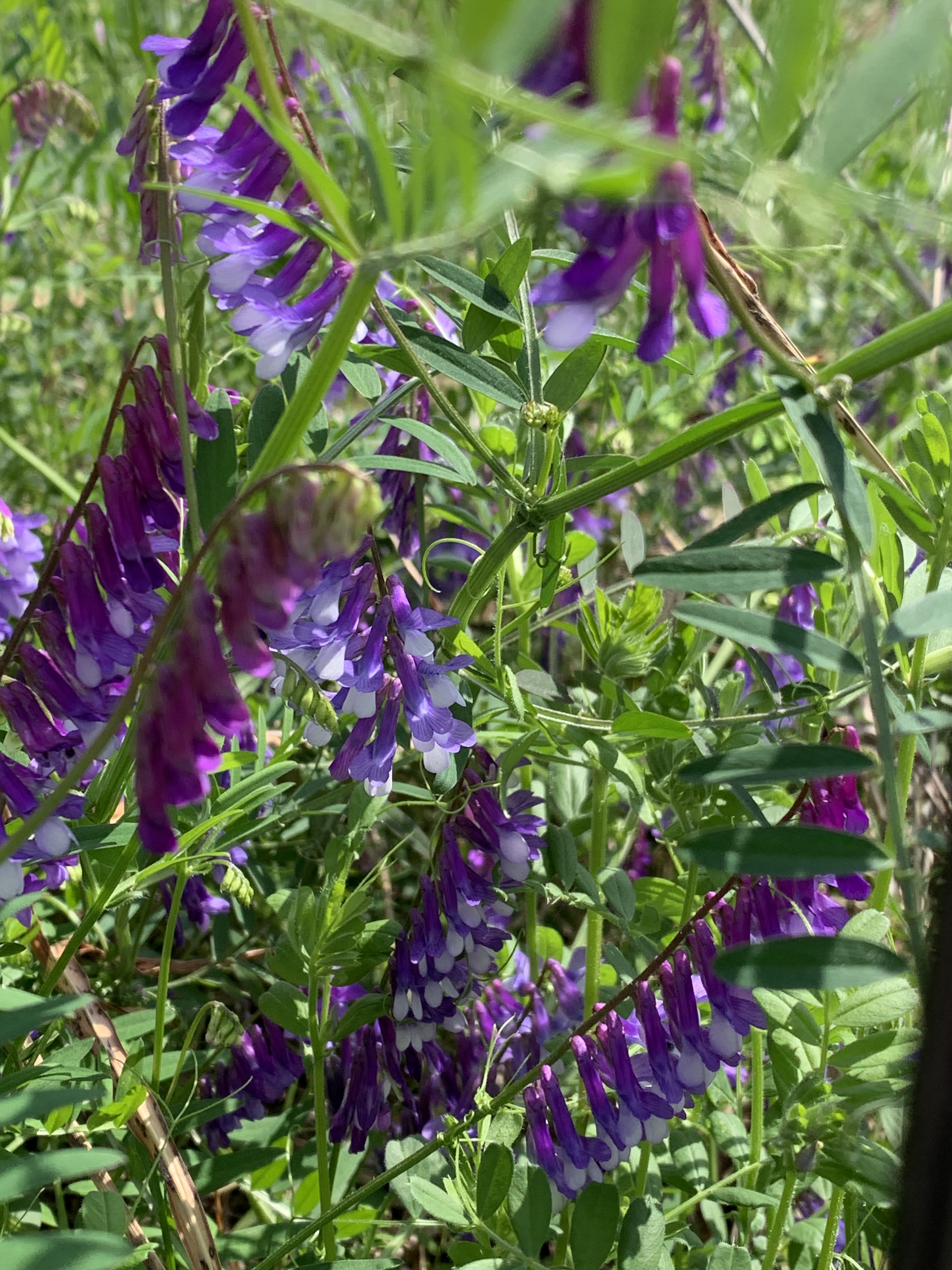
Photos: One butterfly and some (?) goya vines, plus many from a visit to an ex-brothel. Y and I went on a tour of this beautiful old building which is now a fancy restaurant; the neighborhood around it has been a red-light district for a century and is not friendly to passing strangers with no business there (not in the sense of dangerous as far as I know, but you’ll get glared at, and the tour guide warned us not to stare rudely or take photographs on the street). The building itself was restored a few years back and is now stunning inside; don’t miss the sleeping cat imitating the one at Nikko Toshogu, or the round flower inlays (with mother-of-pearl), which are on the ceiling, luckily it’s a tatami room so you can just lie down on the floor and gaze.


Be safe and well.
nnozomi: (Default)
Xi-laoshi, my Chinese conversation partner, recommended in passing that I get my reading practice from books designed for learners, like one she showed me called something like Beijing in Spring or The Four Seasons of Beijing, you can tell how seriously I was taking this genuinely thoughtful suggestion, I’m afraid. No! This kind of thing is why a lot of people don’t ever master languages! (Also an overgeneralization, I know—it works for some people—but still.) My f-list is full of people whose perfect English comes from TV shows and fic; I’ve just been reading Li Kotomi on learning her Japanese through anime and music. I got good at reading Japanese from a) middle-grade books aimed at Japanese preteens (I still fondly remember the first one I got all the way through, in which an eighth-grade girl daydreams about kissing her best friend, also a girl) and b) Japanese translations of novels I knew very well from having read them in English. I can’t imagine I’d have gotten even as far as I have in Chinese if I’d been dutifully reading graded readers, instead of watching dramas and the farming show and reading fics and the occasional article about Zhu Yilong. It only makes sense. Or am I biased? What do you think?

I finished my readthrough of the Joan Aiken Dido books, in general highly recommended. I think osprey_archer was talking about hesitating to read the later books because they get so dark, which is an interesting point. The two Is books--Is [Underground] and Cold Shoulder Road--are definitely dark in places, although not tonally so different from the rest of the series, and worth it for the characters and the wild plots and the language. The second-from-last book, Midwinter Nightingale, though, is the most bleak and depressing thing I’ve read in ages—most of the book is spent with various horrible people, and when we do see Dido and Simon they’re usually miserable and in trouble. It ends with a defeat for the villains, but I wouldn’t call it a happy ending in any sense. Not going back to reread that one. The very last one, The Witch of Clatteringshaws, which Aiken knew would be her last, also has its dark moments but is very funny here and there and ends genuinely happily. (I couldn’t resist the following selection, which is really not typically Aikeny at all but delightful.)
‘...perhaps, in a hundred years’ time, this day will be remembered by our grandchildren as the day when a not very large force of English beat off an attacking army of Wends who wanted to turn this island into a place where everybody spoke Wendish. Don’t you agree?’
’What’s Wendish like, then?’ one of the men enquired.
Rodney Firebrace spoke up. ‘Wendish is an awful language. It’s highly inflected — there are nine
declensions of nouns—
‘What’s inflected?’ somebody shouted.
‘When words have different endings to express different grammatical relations. And Wendish has thirty different kinds of verbs. You have to decline them as well as conjugate them.’
‘What’s verbs?’
‘I hit. You run.’
‘Who says we run? We ain’t a-going to run!’
‘No way!’
‘Hooray for English verbs!’
‘We don’t want no foreign verbs!’
‘Are you all with me, then?’ called Simon.
‘Sure we are!’
‘Let’s go!’
‘We'll show those Wends the way back to Wendland!’
‘Let ‘em wend their way!’
Also, anyone reading the Dido books should not miss lionpyh’s post-series fic Now, in the meanwhile, with hearts raised on high, which is one of the best fics I’ve ever read in any fandom ever as well as being an immensely satisfying conclusion.

Y brought home this hilarious winter song called 布団の中から出たくない, ie “don’t want to get out of bed.” Highly recommended to anyone studying Japanese, and accessible even without Japanese thanks to the funny animation (for the southern hemisphere, they also have a summer song along similar lines). Although COMPLETELY different in style, I feel like clearly the Chinese equivalent is Liu Chang’s 再睡五分钟.

Since it’s timely, have Cesar Camargo Mariano (best known to me as Elis Regina’s husband, but also a great musician in his own right) doing April Child.

There’s a fancy coffee shop chain in Japan which uses city airport codes for its shop names, like NGS Coffee in Nagasaki and so on; the problem is that they’re based in Fukuoka, and so the company overall is known as FUK Coffee.

Photos: Spring is doing its thing and I have too many photographs, here are some and the rest will have to wait until the next post.


Be safe and well.
nnozomi: (Default)
Along with the general global worry I have one particular, somewhat related personal worry at the moment which isn’t going anywhere and will just have to play itself out over the time required; I suppose it’s the least I deserve. Otherwise, it’s spring and there are cats and I have (non-work-related) projects I’m excited about, life should be enjoyed when it can be.

Small language stuff. Xi-laoshi taught me 谷子店 in Chinese. 谷子 literally means “valley” or “grain,” but here it’s used for its sound value of guzi, which is phonetic for グーズ gūzu in Japanese, which in turn is phonetic for “goods” in English and in this case refers to fannish-type goods or what I think would be called merch…
Ear in Japanese is 耳, mimi. Worm, as in our pink wiggly friends on the sidewalk after rain, is ミミズ, mimizu. Therefore by all rights an earworm, as in the song, should be a mimimimizu (or, more efficiently written, 耳ズ), but unfortunately it’s just the English word transcribed. (Chinese apparently does use 耳虫 or 耳朵虫!)
I never remembered to say thanks for votes in the what-should-I-translate-next poll, here (if you still have an opinion or a question, feel free to let me know now as well!); in accordance with the majority vote, I’m working on Li Kotomi’s essays, but I may branch out into a novel or similar as well for added fun, since we’re hitting the dead time of the fiscal year. In passing Li introduced me to Selinker’s idea of interlanguage, which you’d think I would have come across before; I guess I did, just didn’t know there was a word for it. Reminds me, among many other examples, of Japanese-speaking teenagers learning Korean and sticking Korean verb endings on Japanese words to get by when they didn’t know the vocabulary (similarly, my frequent joke that if I don’t know a word in Chinese I can just use the Japanese word and add 子, cf 妻子,筷子,栗子 and so on), or the farmboys’ preferred use in English of Chinese duplication (我来试试, let me try try).

Latest farmboy words: 不灵(了), it won’t work, a wish won’t come true; 望梅止渴, to comfort oneself with illusions (literally, to quench thirst by thinking of plums); 冰美式, an iced Americano, exactly what the characters say; 珐琅锅, a ceramic pot a la Le Creuset; 抬杠, to argue for the sake of arguing; 举一反三, to infer many things from one thing; 香饽饽, very popular, delicious, the belle of the ball.

Music: Gabriella Liandu singing Speak Low and Bach via Cuba.

Writing and translation: As noted above, I’m working on Li Kotomi’s essays, but they go quite slowly because there’s a real need to think about each word, as she does. Also, she’s often writing about Japanese in Japanese, which is hard in the technical sense to translate—her childhood misunderstanding of the word 召し上がる, for instance, which relies on the characters used. Likewise, she writes “「中間言語」という硬い漢語に飽きたら「真ん中の言葉」と和語に言い換えてもいい,” for which I tried “We could also dismiss the intimidating Romance-language sound of ‘interlanguage’ and replace it with ‘the words in the middle,’” substituting Romance-language for 漢語 or words written/pronounced entirely in Chinese characters…is that a legal move on my part? Also there’s a place where she writes “不可能だと思っていた。思い込んでいた”—which I rendered as “I thought—I misconceived—that I could not,” and I wonder a little if she’s just playing with the variations of 思う in Japanese or also has the Chinese 以为, to think something wrongly, in the back of her head.
Translating/attempting some Chinese stuff for fun, not for public consumption; very difficult but still a fantastic way to acquire more vocabulary and phrasing.
v e r y s l o w l y with my original thing, mostly because until today I had a lot of work and my brain wasn’t up to it; determined to get back to 500 words a day. My timeline suggests that, in accordance with my usual screwed-up pacing, now (roughly halfway through the book lol) is when things actually start HAPPENING, which should be fun. I have about a million plot strands of various thicknesses going on, and theoretically I almost sort of kind of know how they all fit together, and I think it COULD be very good, but that’s a very large subjunctive.

Photos: Capybaras from the zookeeper school, also…what are they called…maras? I always think of them as Zen rabbits, for their habit of sitting still and staring off at the day after tomorrow as if meditating. Green-eyed monster (politely taking time off from cuddling to be photographed). Also more plum blossoms, camellias (or sazanka?), and an alley with a flower curtain.
capybara maracapybara mara
greeneyes plums1g plums3g
plums2g tsubaki2 yellowcurtain


Be safe and well.
nnozomi: (Default)
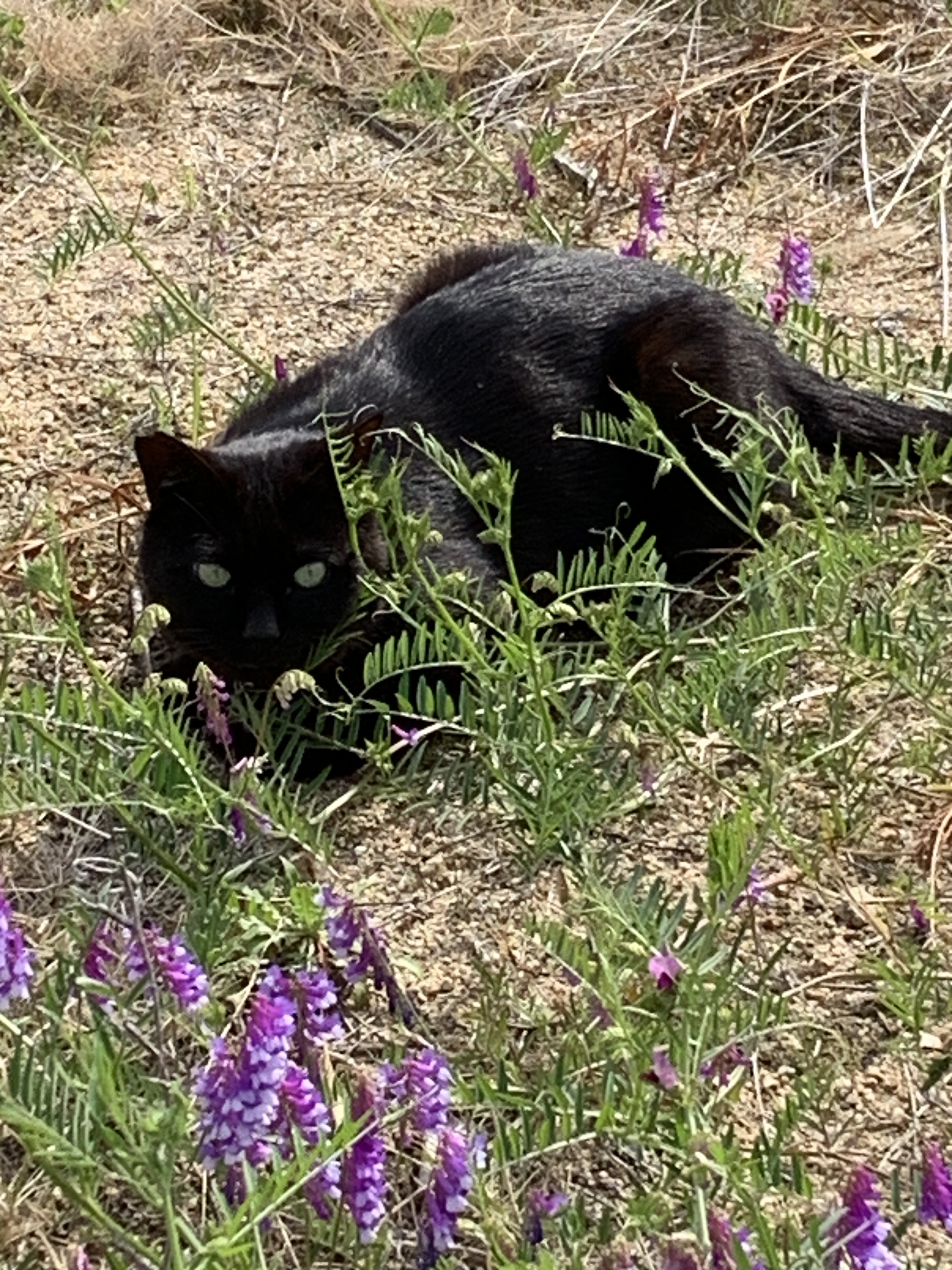
[So this morning when I was running I met the usual black cat and crouched down to pay my respects; the cat put a polite paw on my knee and then climbed up to settle comfortably in my lap and get thoroughly stroked. I figured I was just going to have to scrap my plans for the day and sit there for the duration.]

Weird Chinese-Japanese false friend of the day: 暧昧, which means “vague, fuzzy” in Japanese (it’s used for fuzzy matches in translation software, but I was taught never to call them 暧昧 but always ファジー, in order not to make the client think we were doing sloppy work), but as far as I can tell means something more like “ambiguous, dubious, obscure, subtle, it’s complicated [romantically in particular]” in Chinese—what I might call 妖しい in Japanese, in short.
(My other recent 中日 confusion: I keep trying to say 客气 kèqì for “stingy” when I should be saying 小气 or 吝啬, because my mind goes to けち kechi first…)

Latest farmboy Chinese vocabulary:
丝滑 smooth, either literally smooth to the touch or matters proceeding smoothly
日思夜想 to think of (or long for) something day and night
吃得消 to endure (and its opposite, 吃不消, to find something unendurable)
造孽 to commit a sin, to let yourself in for trouble, hard luck
骗你是小狗 cross my heart and hope to die (literally “I’m a puppy if I’m lying to you”)
扛不住 I can’t hold up my end any more (literally or figuratively)


Brief notes on brief trip to Korea! Also see various photos below.
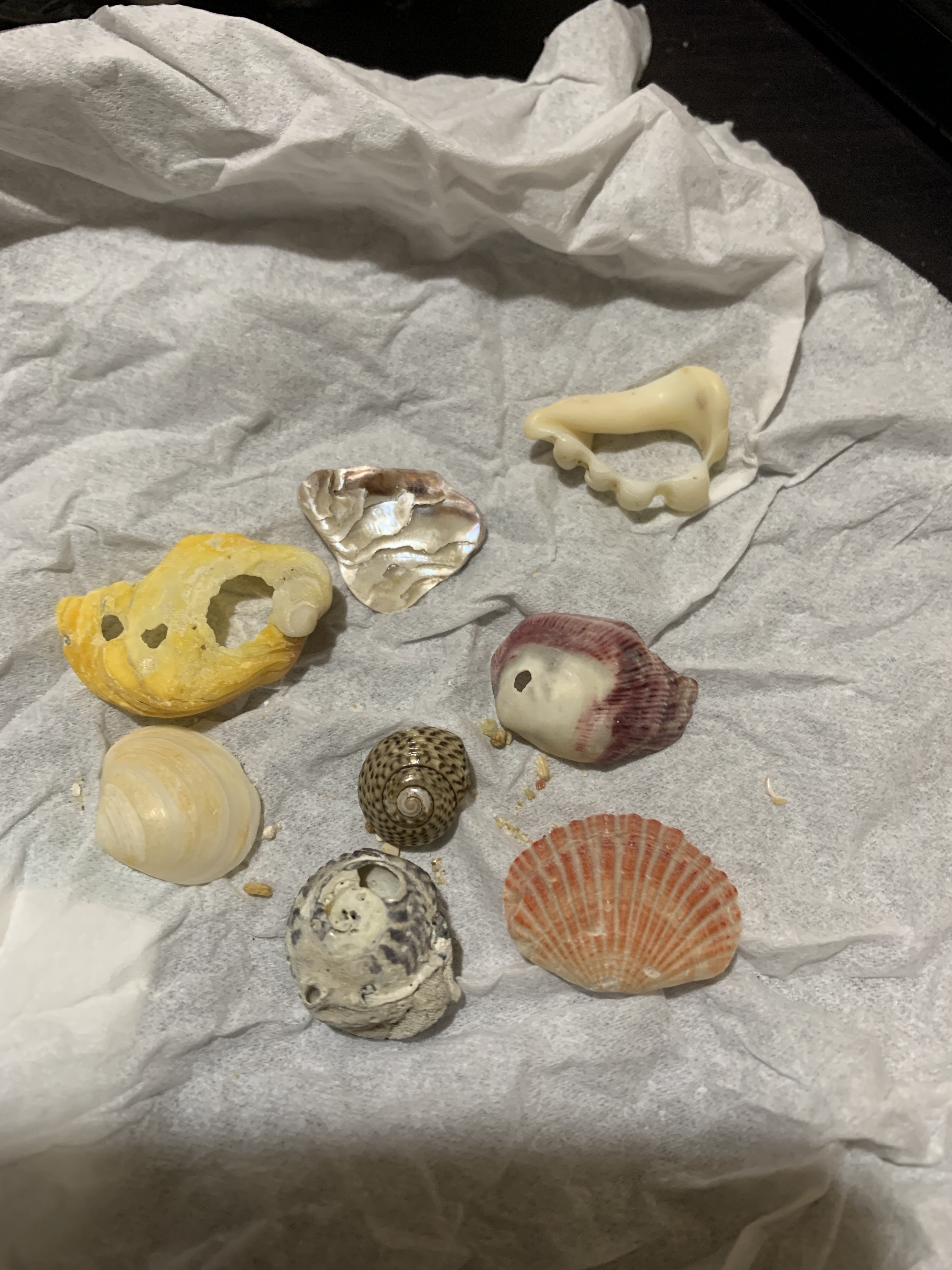
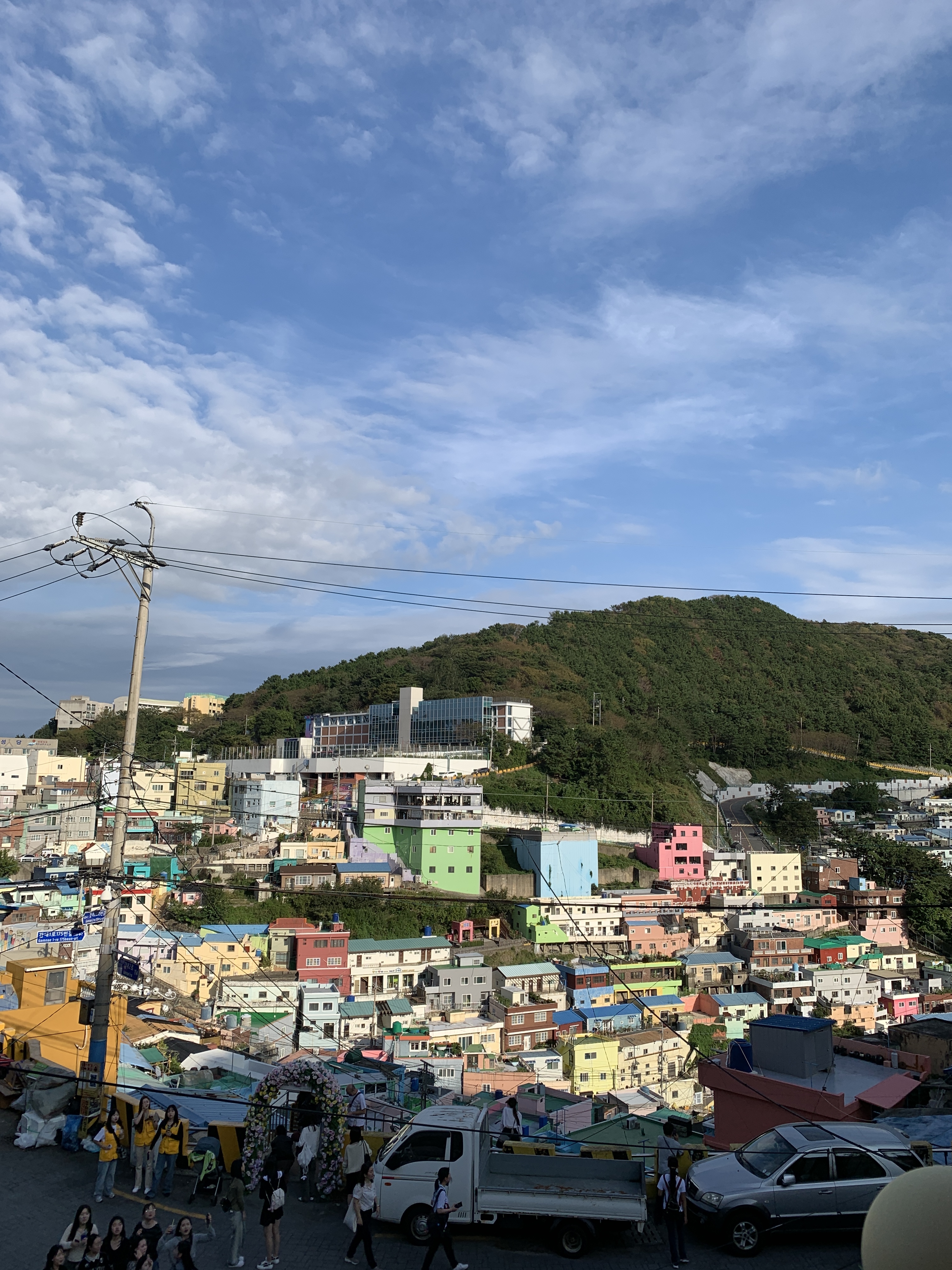
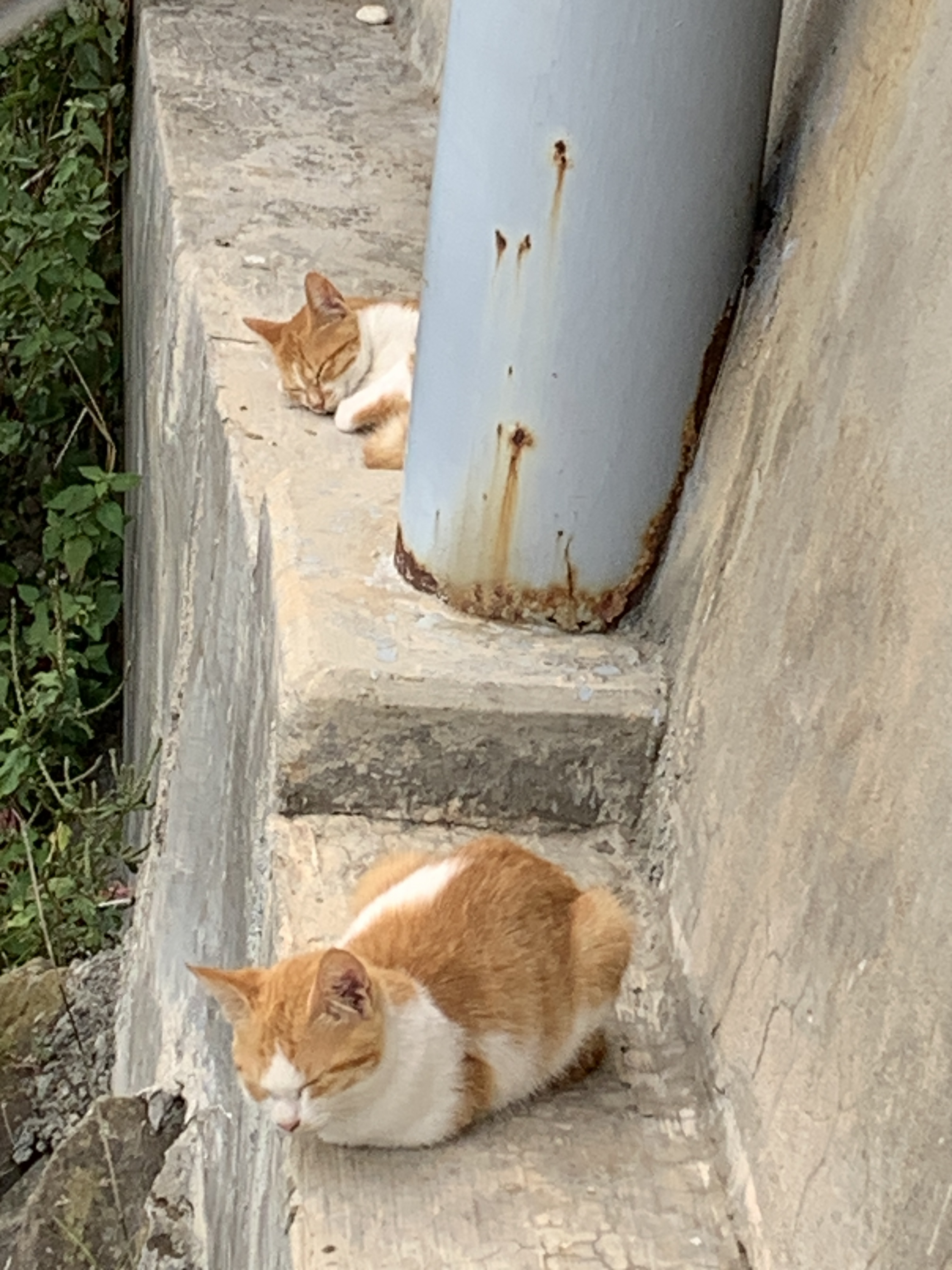
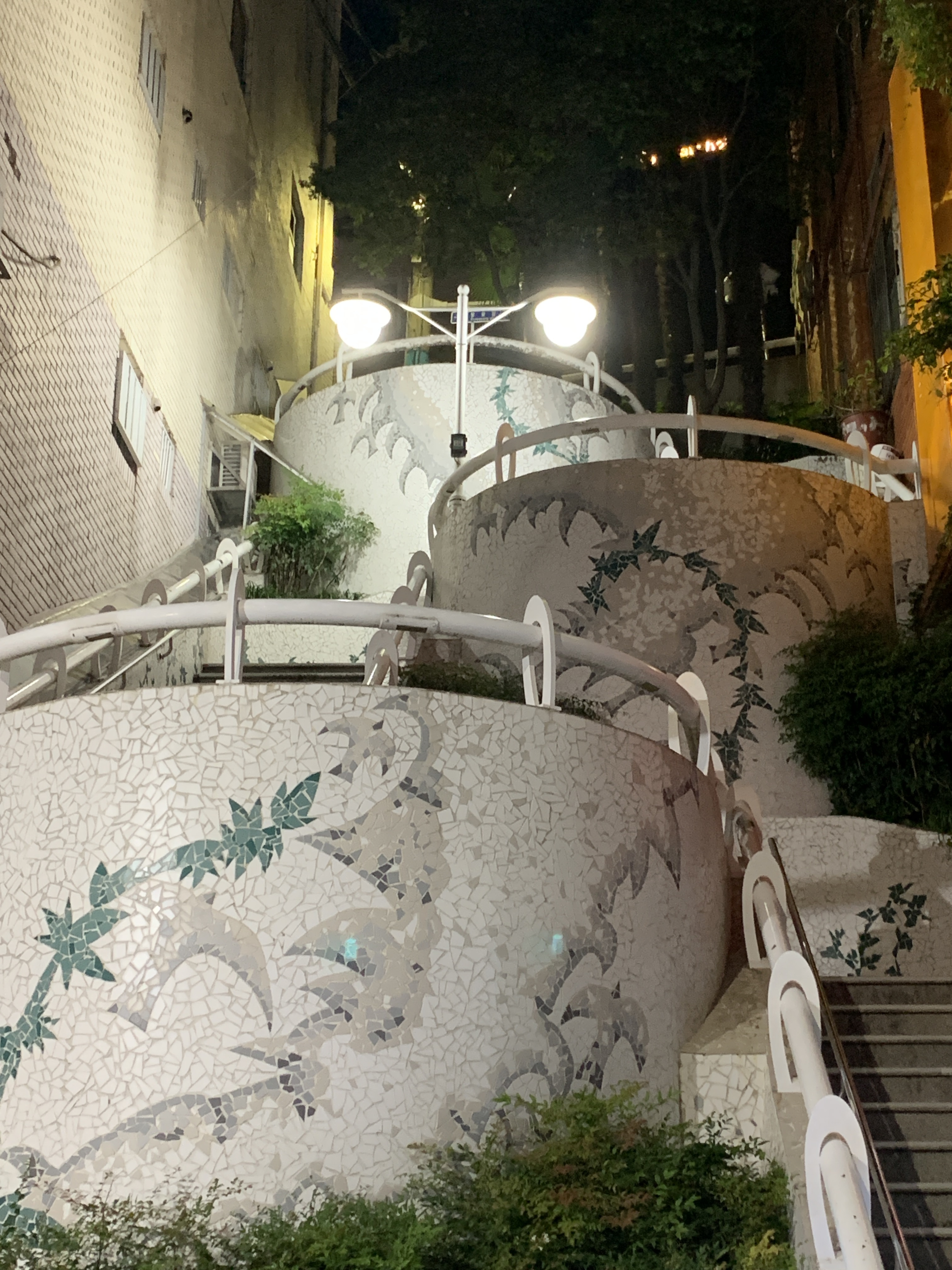
Y’s time off comes in such odd ways that he likes to make the most of it, so we took a few days and went to Pusan. I had been there before and liked it; it was fun this time too, although almost unrecognizable. We stayed a night in Haeundae near enough to the sea to go wading, and I couldn’t resist collecting shells; also a wander around a fishing village, passing a boat with my name on it (sort of). Also visited Gamcheon, up on the hill with its pastel houses, which was about five million times more touristy than I remembered, but nice when we went down a back stairway and everything went quiet, apart from an unreasonable number of cats; we emerged on an avenue that could have been the main street of any sleepy Korean provincial town.
Unsurprisingly lots of good food, including the special treat of abalone congee. Really the best meal was in one of the hole-in-the-wall cafeterias that are a dime a dozen everywhere in Korea, looking like a revamped living room and run by an ajumma more interested in the drama on TV than her customers; I ordered the most straightforward thing on the menu, tofu sprinkled with sesame seeds and served with a pile of piping hot stirfried kimchi and pork, rice on the side. I like my kimchi (the napa cabbage variety) sour as well as spicy, and this was perfect.
We walked around the edges of Yongdusan Park, which I did remember and which is still lovely, and visited the markets for Y to sample three different varieties of hotteok (all good) and me to give in to roast chestnuts; the rest of the time we just walked here and there, up and down more hills than I care to remember, and enjoyed the city-watching. Saying “wow, Korea is so much like Japan” is a fraught remark at best, but there are enough structural similarities that it feels very close to home, if unmistakably foreign as well.
I had a terrible time with the language—I was never anything like fluent in Korean but I used to have passable communication skills, but this time in order to say literally anything, up to and including yes and no, I had to consciously and forcibly set the switch in my brain to “Korean” or else everything would come out in Chinese. Frustrating! How do real polyglots do it? It was tantalizing to understand tiny bits of things, though; if I had nine lives I’d certainly spend one of them mastering Korean for real.
On the way back, instead of going straight home, we took the night ferry to Fukuoka. (The ferry was nice! It involves at least as much sit-around-and-wait as an airplane, but you get to lie down and sleep once you’re on it—we had a zakone room, just a carpeted space shared with half a dozen other people, but everyone was quiet and no one was sick, and it was just a very peaceful way to travel.) In Fukuoka we visited the shrine of poor exiled Tenjin-san and rode in the swan boats (pedal boats rented by the hour) in a local park, seeing hordes of napping ducks and a few meditating turtles. And then finally home.


Winifred Holtby in letters to Jean McWilliam from the 1920s, mostly about writing:
11/13/21: They say it is bad manners to type one’s letters, but I want to get this new wheel into running order, so perhaps you will excuse this temporary lapse of good behaviour. Personally, if any of my correspondents wrote as badly as I do, I should be only too pleased for them to adopt some method of communication which did not necessitate my struggles with their calligraphy. Did you know—but of course you would—that you can spell calligraphy with one L or two? I didn’t until I looked it up this minute. I have adopted the family dictionary, because I considered that my need of guidance was greater than that of my parents who continually say they can’t think why I spell so badly.
6/20/22: Now, my idea of a happy ending is where circumstances go right and wrong higgledy-piggledy, as they do in life, and at the end the hero or heroine is still undaunted, with plenty of hope and enjoyment of such fine things as are left, and a kind of promise of better luck next time—perhaps.
6/28/22: I am trying to write a novel that won’t write itself. It nearly drives me crazy. I can’t get the words, although I know what I want to say. I ought to let it alone a bit and can’t.
5/12/23: I am having the devil of a time with my book. First it was too short; now it’s miles too long, and back and back I have to go, wasting time over the beastly thing that will probably be no good in the end. The minor characters simply refuse to stay minor. The major ones insist on telling me everything about their perfectly ordinary pasts as well as their somewhat amorphous and uninteresting presents.
7/21/24: I did not interfere [with a confused public speaker], because I always pray myself that when I am confused in a speech an angel of the Lord shall confound the minds even of my brethren also.
5/19/25: But oh, my feet! I take the poor things all over London to find pretty shoes for them. Says the young lady, “Not in that size, moddam,” and my poor feet grow more and more depressed. I have to bring them home in a bus.
9/7/25: I am going to spend the morning at [Stella Benson’s] house to-morrow going through her new book with her and one or two of her friends. She has scrapped most of the book, she says, and feels too depressed to embark on it again alone without some one telling her that it is worth while. It is so very encouraging to hear of people who can write books like hers scrapping them.
10/1/25: Everybody dies in my present book, which is not really sad. After all, it simply means that I take the tale on rather further than most. We hardly ever any of us write about immortals, so I suppose that all heroines die one day. Mine, however, kills its heroine in the first quarter, and the hero is most of the time over fifty. But I can’t help that.
10/6/26: It is queer how one goes on making the better acquaintance with one’s characters, just as though they were people. I could no more make mine do what I want them to do, once I have created them, than I could make you do something. …When I am writing, I am so happy—no, not happy, but interested—that I don’t want to do anything, go anywhere, or see any one. Only one can’t go on all the time—and the real world keeps coming in.
1/10/27: I believe that there is little prose which can stir me in the same way as Sir Walter Raleigh’s. Isn’t the Discovery of Guiana an endless joy? He will keep appearing quite irrelevantly in my novels, because I am so much in love with him that I cannot keep him out. That is, I suppose, wrong, but I am coming to the conclusion that one must sometimes write in that sort of sublimated idiocy which comes from being in love—with a person, a place, or an idea. It doesn’t much matter.


Photos: Lots of photos, see above.
sea shells skybridge
boats huimang gamcheon
stairs2 nap ears
togarashi trees rainbow
temple stairs ducks


Be safe and well.
nnozomi: (Default)
This got quite long...

Random language questions:
・I found myself saying "a ways to go" elsewhere, and started wondering if that was a regionalism. Do other people use this phrase, and if so where is your English from?
・For metaphorical dizziness, people in China (I'm told) say 晕了, I'm dizzy. People in Taiwan say 昏倒, I'm out cold. People in Japan say 目が回っている, my eyes are spinning. What do other languages/dialects say?

Random in general:
・Today, as it happened, we hit 200 days' straight posting at the guardian_learning comm, and I'm feeling pleased with myself and everyone else there.
・I tried my hand at tzatziki the other day, on account of someone gave Y way too many cucumbers, and it turned out very well. Very easy, except that the grating is a pain. Greek yogurt, grated cucumber, grated garlic, chopped dill, chopped mint, lemon juice, olive oil, perfect summer snack/light meal.
・For the first time I can remember, my three favorite baseball teams (the Swallows, the Carp and the Tigers) are all in the top half of their (six-team) league. Let's see if they make it to the end.
・I remembered the city-guessing site; it's very restful, you just drift along a street in a random city and observe until a useful hint comes up.
・Still very slowly reading Omniscient Reader's Viewpoint, in the interstices of other things, I might be finished by autumn? “The pile of books was impossible to read in my lifetime and I involuntarily took a liking to the owner of the room. Anyone who liked books couldn't be a bad person.” I am growing increasingly fond of Kim Dokja himself, but otherwise I think my favorite character is Han Sooyoung, who unquestionably has all the best lines (and knows from transformative works).

what is this subgenre called anyway? this gets long )

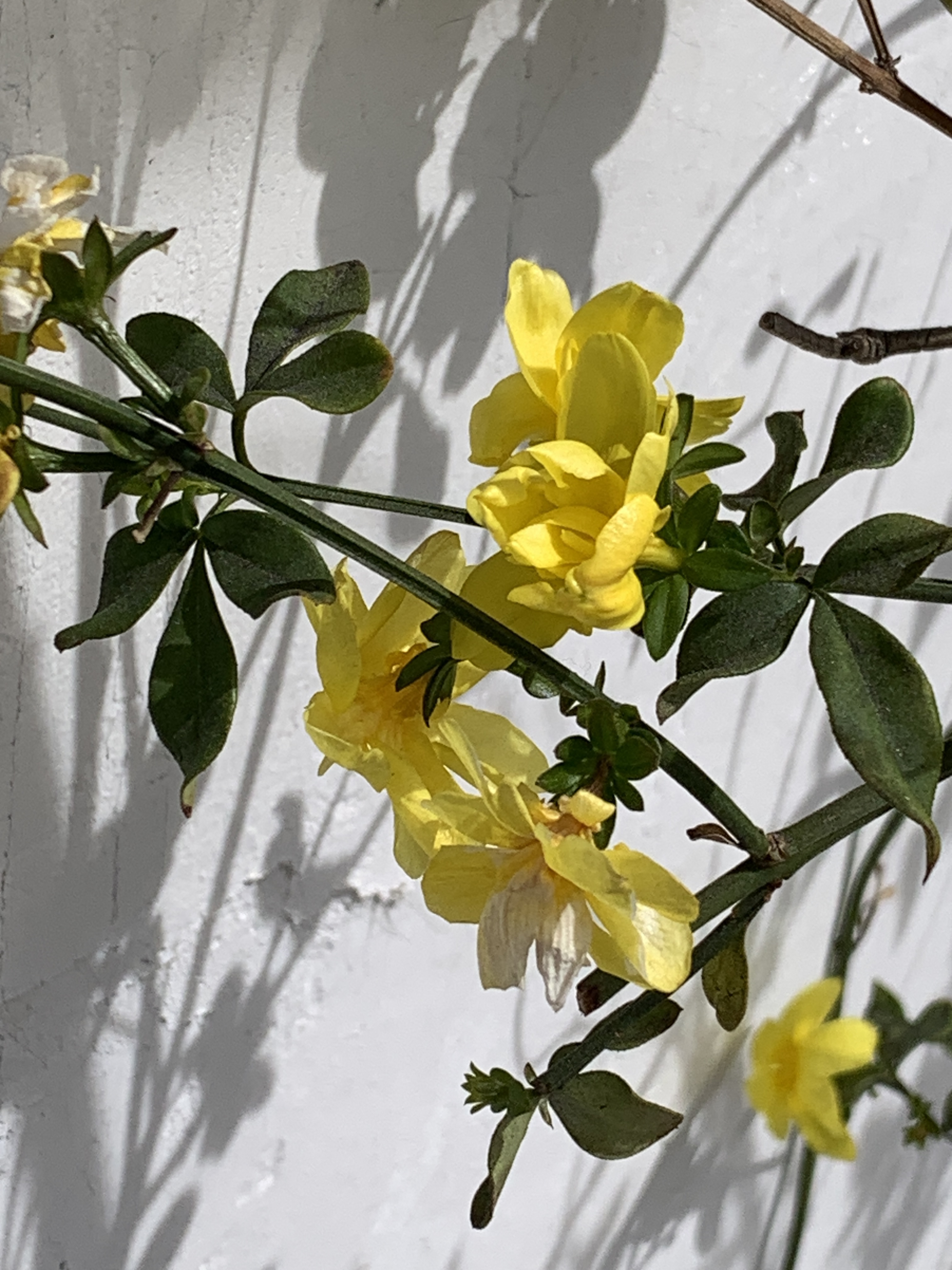
Photos: also way too many, they seemed to pile up all of a sudden. Notably, the two white-striped morning-glories are growing on the same plant (on my veranda), just taken at different times and in different weather.
Read more... )

Be safe and well.
nnozomi: (Default)
A...while earlier, what is time, both superborb and presumenothing posted very interesting and insightful discussions of translation; I’ve been meaning to post something on the subject myself, but it turns out I just have a collection of quotations and random comments, at great length, rather than any actual solid points to make. That said, in hopes of providing some interest and stimulating my own brain, please find what I got here below.
The translator, we should know, is a writer too. As a matter of fact, he could be called the ideal writer because all he has to do is write; plot, theme, characters, and all the other essentials have already been provided, so he can just sit down and write his ass off.
Languages... ) -- Gregory Rabassa (translator of Gabriel García Márquez and other Spanish- and Portuguese-language texts)

Waley once said to Ivan Morris, I think it was, that the translator, having taken so much away from his original, must add something by way of compensation. The principle is... ) -- Edward Seidensticker, translator of the Tale of Genji among other Japanese classics

To follow in Seiden-sama’s grumpy footsteps a little, some general points and some of my experience )

Things that make translation fun for me )

Sorry for this endless blather. Let me know if it brings anything to mind!
nnozomi: (Default)
I’m in the end-of-fiscal year lacuna which means I have next to no work (it’s okay, it will pick up again by mid-April judging by past experience), so I’m amusing myself on DW instead. Mostly-silly-language-stuff post here; the translation post I keep talking about in process also, plus I have a bunch of administrative stuff to play with on guardian_learning.

・Another baseball-player name, this one not baseball-related: first name 天真. Pronounced “Tenma” rather than Tenshin/Tianzhen, a big sturdy kid with no particular resemblance to any of the Wu Xies ;)

・I’ve been convinced for a while now that a good Chinese live-action adaptation of Nodame Cantabile would have cast Zhu Yilong as Chiaki, and I feel this photo proves me right.

・Y brought home some delicious roast sweet potatoes for dessert, and I ambitiously dipped them in chili powder and found that it actually worked! Only because they were VERY VERY SWEET, but if you like both sweet and spicy cf Zhao Yunlan I recommend it.

・I realized I’d had three Zoom engagements in three languages in three days: Chinese conversation with Yu-jie, academic reading group with old grad school colleagues in Japanese (mostly just listening, I never had much of a research brain), yaaurens’ Shakespeare reading in English A good line from Henry VIII: “’tis better...than to be perk’d up in a glistering grief, / And wear a golden sorrow,” which instantly brought to mind poor parentless Jin Ling for me. Now if only my Chinese would catch up to the others.

・For reasons that don’t need going into, a-Pei and I were talking about how to count mermaids in Chinese: 一个 like people?一条 like fish?(Also mermaids are 美人鱼 in Chinese and just 人魚 in Japanese; either Japanese mermaids are not beautiful (美) or it’s taken for granted that they are so the extra character isn’t needed.)

naraht brought the Cheshire Novel Prize to my attention and, with her kind help with the synopsis, I went ahead and submitted something for book 1 of my original thing. I will eat my hat if it succeeds, but it’s a good exercise at the worst. edited for correct pronoun

tinny and I were talking elsewhere about Esperanto, and about what a “universal language” which also contained non-European languages would/should look like. Her thoughts, kindly OK’d for quotation here, included ... to remove cases altogether and do it like in English (and Chinese most of the time) and define subject/object by word order within the sentence., ...showing plural through word endings.... Everything else, I would try and solve through particles. I'd remove tenses as well, and use the Chinese method of always putting the time particle first, so you know when something happens - and have particles for the cases where something happened "before" or "after" something else, as well as the "completed action." I’m not sure what my thoughts are, except that you would probably have to have a list of sounds which the largest possible group of people can pronounce, and draw your vocabulary mostly from words containing only those sounds (or else be willing to mutate sounds all over the place). Ideas?

・Still rereading the Mass Observation WWII diaries; I’m particularly charmed by Ernest van Someren, a research scientist, uxorious husband and involved father, cosmopolitan traveler of highbrow tastes in music and art, and jack-of-all-trades of a hundred hobbies—definitely what Japanese English calls “my pace,” someone who does his own thing happily regardless of what everyone else is doing. He must have been very much valued by his employers, because I went through and made a list of all the things he records doing at his workplace during work hours that are not work:
In his own words to the extent possible )

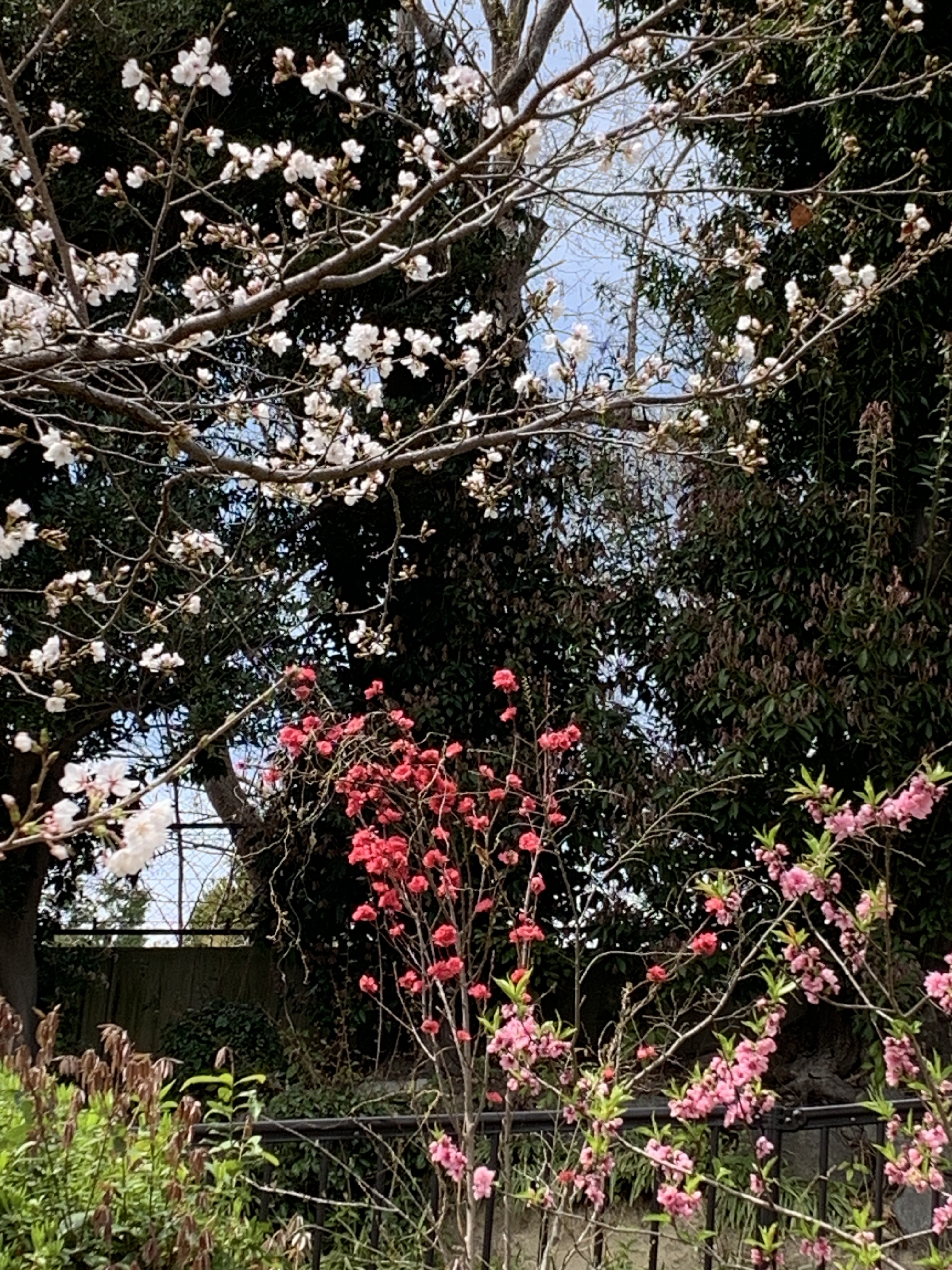
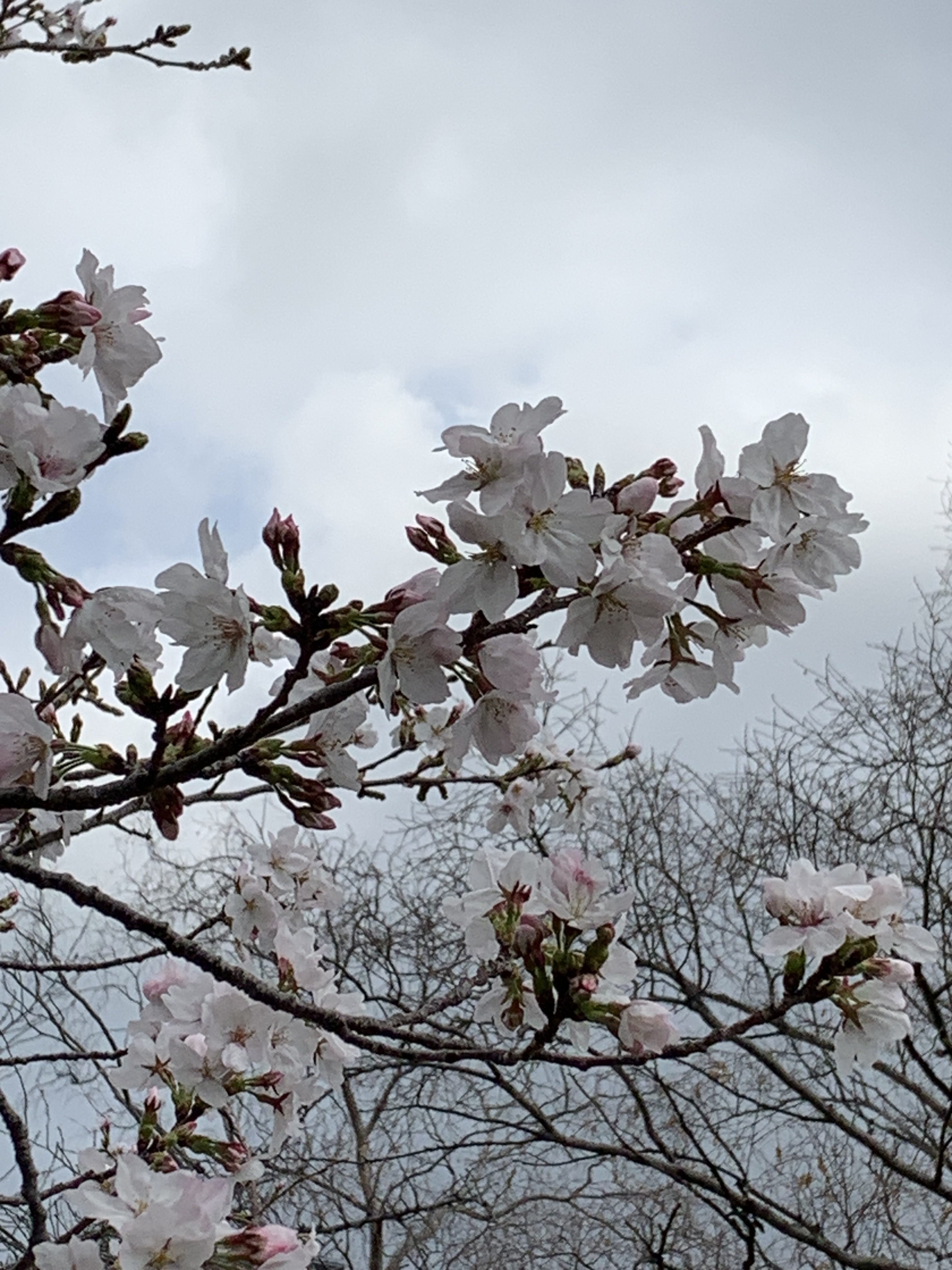
Photos: There are so many cherry blossoms right now. If they bore fruit, we would be swimming in cherries. Also a few remaining stray plum trees.
Read more... )

Be safe and well.
nnozomi: (Default)
・Looking at a translation text and wondering where the fuck ランス市 was (the most obvious transliterations would be “Lance” or “Ransu”), and finding it was Reims, brought me an instant memory of Susan Baker saying “...and can you tell me, Mrs. Dr. dear, if Reims is pronounced Rimes or Reems or Rames or Rems?” to which Anne demoralizes her by replying “I believe it’s more like ‘Rhangs,’ Susan.” “Oh those French names,” Susan groans. (Points to L.M. Montgomery for making Susan Baker hands down the most memorable character in Rilla of Ingleside, I still have a lot of her dialogue in my head years after the last time I read the book.)

・It's been my experience in my own and other people's language learning that skillful language learners are the ones who are good at making connections--between the new language and the one(s) they already know, within the new language, and so on. So that instead of endless confusing lists in your head, you have an ever-expanding network of connected nodes, as it were--spiderweb fashion, I guess, although I always picture it as a hexagonal pattern like those New York sidewalks. Do other people experience this? Would it actually be a feasible model in some sense for a foreign language course? (Not planning to create one, just curious.)

・Reading a collection of Tove Jansson's letters (expertly translated by Sarah Death from the Swedish). My usual habit of preferring letters/diaries to fiction; they're delightful, art and writing and family and life in Helsinki and a startling number of lovers both male and female, all written up with immense verve and flair.

・My Yuletide fic is getting itself written faster than I expected, with 5K so far in rough sketch form; I think it will end up in the neighborhood of 6K or so, but it needs rewriting like nobody's business and also some review of the canon for details and style. And it might be terrible anyway. Still, I have hopes of finishing it in a timely fashion and doing some treats as well.
(I've been pretty faithful about writing at least one sentence a day on my original thing as well, just so I don't completely drift away from it; we'll see where that goes.)

・Studying Chinese, I couldn't remember the word for mouse, as in the computer kind, so I just typed 小老鼠 (mouse, the whiskered kind). Half right, it’s 鼠标 (mouse indicator).

・Photos: three varieties of fruit (laire, I think I promised you a persimmon tree last year, here is one), some seasonal and peculiarly local images, and a cat-in-a-box.
Read more... )

Be safe and well.
nnozomi: (Default)
Hello everyone, please come and swear at me in your native/preferred language? I am interested in how people cuss when stubbing a toe, etc., and/or favorite curse-word expressions or euphemisms (including native English speakers please!).
My dad used to say “Judas Priest!” in the car when other drivers annoyed him. My mother’s language in the same situation was considerably more colorful. Japanese is actually not all that satisfying to swear in compared to English, but there is a whole verb conjugation which is basically equivalent to modifying the verb with “fuckin'...” or similar. Chinese has 我去 (hi, Zhao Yunlan, maybe a slightly politer version of 我操?) or 糟了 (hi, Shen Wei) or 给我你滚滚 (hi, Jiang Cheng, I kind of like this one for being something like “do me a favor and fuck off”) and its variations. And many others I don’t know about.
I think my own current go-to when stubbing a toe is along the lines of “いった〜いowww、fuck!” or something like that... .
nnozomi: (Default)
・Many thanks for useful and interesting dream-related comments on my last post; I really love it that I can post some idle linguistic curiosity and immediately get responses in TEN different languages. Results: “have dreams” in English, Swedish, Polish, and German, “see dreams” in Japanese, Russian and Finnish, “do/make dreams” in Chinese, French, and Italian, “dream dreams” in Icelandic and Korean, and other variations in Russian, Polish, and Spanish! Good grief. I’m fascinated by the variation within language families, which I wouldn’t have expected.

・Whining: Japan is such a fucking mess right now in corona terms, my city especially. If I see one more elderly person strolling around without a mask on, I might scream.
・I’ve had very little work this week, mostly because of the new fiscal/academic year, but it’s hard not to feel that I’ve somehow offended the work gods (yes, I can be kind of abrasive in my work personality from time to time, but I don’t think I said anything particularly obnoxious recently...?). I worked a lot in February and March, a week or three without much in April won’t matter, but it makes me feel extremely at loose ends. The smart thing would be to say “fuck work until it comes in” and do something boring but useful (sorting out papers, etc. etc.) or interesting and personal (Yuriko, or the rest of the books-I-want-to-translate stack). sigh

・Fannish: I was watching one of Liu Chang’s livestreams, this one dating from last summer when the Lost Tomb thing started showing; in honor of which he was wearing Liu Sang’s sharp suit and had invited most of the main cast to join in via a Zoom-type thing. Bonus unexpected Long-ge! Without C or E subtitles I could only follow bits, but the general sense from Zhu Yilong was “大家好,我是朱一龙,I play Wu Xie...um...what else should I say?”, on brand.
・The other day’s complaint about mismatched musical tastes aside, my brain seems to like coming up with songs for MDZS/CQL characters; one of the songs I listen to on my morning run is “Nightswimming,” which somehow brings to mind post-canon Jiang Cheng for me.

・Photos: June in April )

Be safe and well.
nnozomi: (Default)
・I noticed that in English we have dreams, in Japanese we see dreams (夢を見る), and in Chinese we do(/make) dreams (做梦). Where do other languages stand on this?

tinny made a wonderful set of Anki decks based on the HSK-in-Guardian vocabulary list! [業務連絡: Working on the single-character ones now, update to follow.]

・In a recent academic paper, I found myself unable to resist translating one innocuous phrase as “they felt that these were not the resources they were looking for.” I wonder if anyone reading it will get the joke. [See photo below!]

・AO3 is apparently phasing out tone markings on its character tags; I noticed that some versions of the “Shěn Wēi” tag retain their tones, and while I’m sure it’s just a temporary tagging thing, it’s hard not to feel that Shen Wei is very concerned with having the right tone shown for his name, because Wēi, not Wéi, is the name Kunlun gave him...

Question: is it possible to download (some) episodes of the Lost Tomb Reboot, and if so how would I, a person with no technical expertise, go about it? Or is this one of those questions that ought not to be asked in public? (Will screen responses/edit post if requested).

Photos: A tulip princess-to-be and so on )

Be safe and well.
nnozomi: (Default)
Because I am frustrated with the state of education in this country: tell me about characteristic mistakes in various languages!
For instance, native English speakers of Japanese tend to need a long time to get used to the practice of omitting pronouns all over the place. We also (at least judging by me and Seiden-sama) have trouble keeping straight transitive and intransitive verbs, and struggle with the fact that the お honorific prefix is sometimes used in humble, as opposed to respectful, language (I have a couple of college-era stories about this... .).
So what are the typical mistakes non-native speakers make in your language, and vice versa? Or what are the mistakes you tend to get stuck on in your second language?
Or if some more positivity is indicated, tell me about constructions or idioms or words or characters in one of your languages that just appeal to you specially. Anything!
Chinese/Japanese silliness )
Be safe and well.
nnozomi: (Default)
As a temporary antidote for a) standard 2020 blues and b) when yuletide, tell me about words that always recall a particular scene/image/context for you.

I will never encounter the word "altruism" without thinking of the Weyrleaders' duel in Dragonquest, where I first ran across it (I used to reread that scene kind of a lot, a good way to learn new words among other things). In Japanese, 選り取り見取り (a plethora to choose from) always brings to mind sweet shy freckled Morita-san the defense officer, enthusing over the spread of Japanese snacks people had brought back from business trips, way back when I was working for Japanese diplomats overseas. In Chinese, Duolingo was just having me review 丢 (to lose/misplace something), which makes me think of Shen Wei yelling at the Regent over the Dixing Register.

And so on and so forth. Give me some of yours.
nnozomi: (Default)
I’ve been meaning to put up something about translation, and lately I was talking with china_shop about titles in Guardian fic (titles for people, that is, not fics) and with nineveh_uk and azdak about weird subtitle translations, so I figure now is the time. Come and talk to me about problems (or solutions) with subtitles in C- or K- or J-dramas, and how you deal with, or prefer writers to deal with, similar issues in fic. (Not necessarily limited to Chinese/Korean/Japanese etc.! Anything goes.)
My rambling opinions )
Tell me how you think about all this! Any languages, any context.
nnozomi: (Default)
I’ve been talking about languages with trobadora, laireshi, tinny and others for a while, and decided it was time to make a post about language learning/use. On reflection, a lot of my f-list people use one language in RL and another online/for fandom, or otherwise regularly function in more than one language, or just have a thing about language study… . Talk to me about the hardest things for you in studying your second (third, fourth, nth) language; the things you’re especially pleased with yourself for having mastered; why it’s easier (or harder) to write fic in a second language; what languages you would like to study if given the chance…and so on and so forth.

Long ramble about my own language study stuff )

I also have a whole bunch of related things to say about translation, personal and professional; let’s make that another day’s post.

Be safe and well.

Profile

nnozomi: (Default)
nnozomi

December 2025

S M T W T F S
 123456
78910111213
1415 1617181920
212223242526 27
282930 31   

Syndicate

RSS Atom

Most Popular Tags

Style Credit

Expand Cut Tags

No cut tags
Page generated Jan. 6th, 2026 04:37 am
Powered by Dreamwidth Studios