![[personal profile]](https://www.dreamwidth.org/img/silk/identity/user.png) nnozomi
nnozomiToday is just assorted bits of Chinese-related things and photos.
Courtesy of A-Pei who likes to bake in her free time, I learned much to my disappointment that the Chinese word for “brownies” is 布朗尼 (bùlǎngní); I think it should be either 小褐蛋糕 (little brown cakes) or 巧克力正方形 (chocolate squares).
Also from A-Pei, the Taiwanese slang 麻吉 (májí), from English “match,” used to mean “close, getting along well” etc. (Not to be confused with Japanese slang マジ (maji), coming (I think) from 真面目 (majime) and used to mean “serious, for real.” There is a train station called 馬路 (Maji) where you can take pictures and caption them マジで, either “at Maji” or “for true.”)
And one more from A-Pei, the Taiwanese word for avocado, 酪梨 or “cheese pear”—I’m not sure which is weirder, that one or the mainland 牛油果, “lard/butter fruit.” On the other hand, when you think of the root word of avocado, English can’t talk either.
嘛 (ma) is a sentence-ending particle which just means something like “y’know,” “right” as far as I can tell; for phonetic reasons I’m always tempted to translate it as “man” (in the interjection rather than literal sense).
At the Saturday juku I was practicing English vocabulary with eighth-grade Yuki, who is bright and knows it and has no hesitation about arguing his corner when he thinks he’s right; it took me quite a while to convince him that the difference between “success” and “succeed” was grammatically significant. It occurred to me later on that while this is easy enough to explain in Japanese (成功 vs 成功する, with a verb ending on the latter), it would be much harder in Chinese, where 成功 alone does double duty.
逆苏 (nìsū, also written 泥塑) is a Chinese fanword I ran across which was new to me; originally from “reverse Mary Sue,” believe it or not (the sū part is phonetic), referring in general to “feminizing” your idol (I am not wild about this term but it’s the shortest explanation I can find). I’ve definitely seen comments on Weibo etc. along the lines of 爱你老婆 and so on, from female fans to male celebrities, which seem to count as an example.
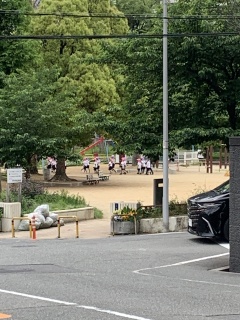
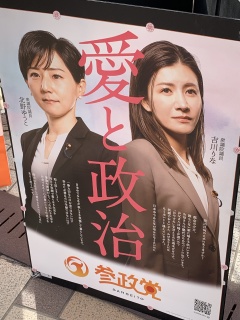
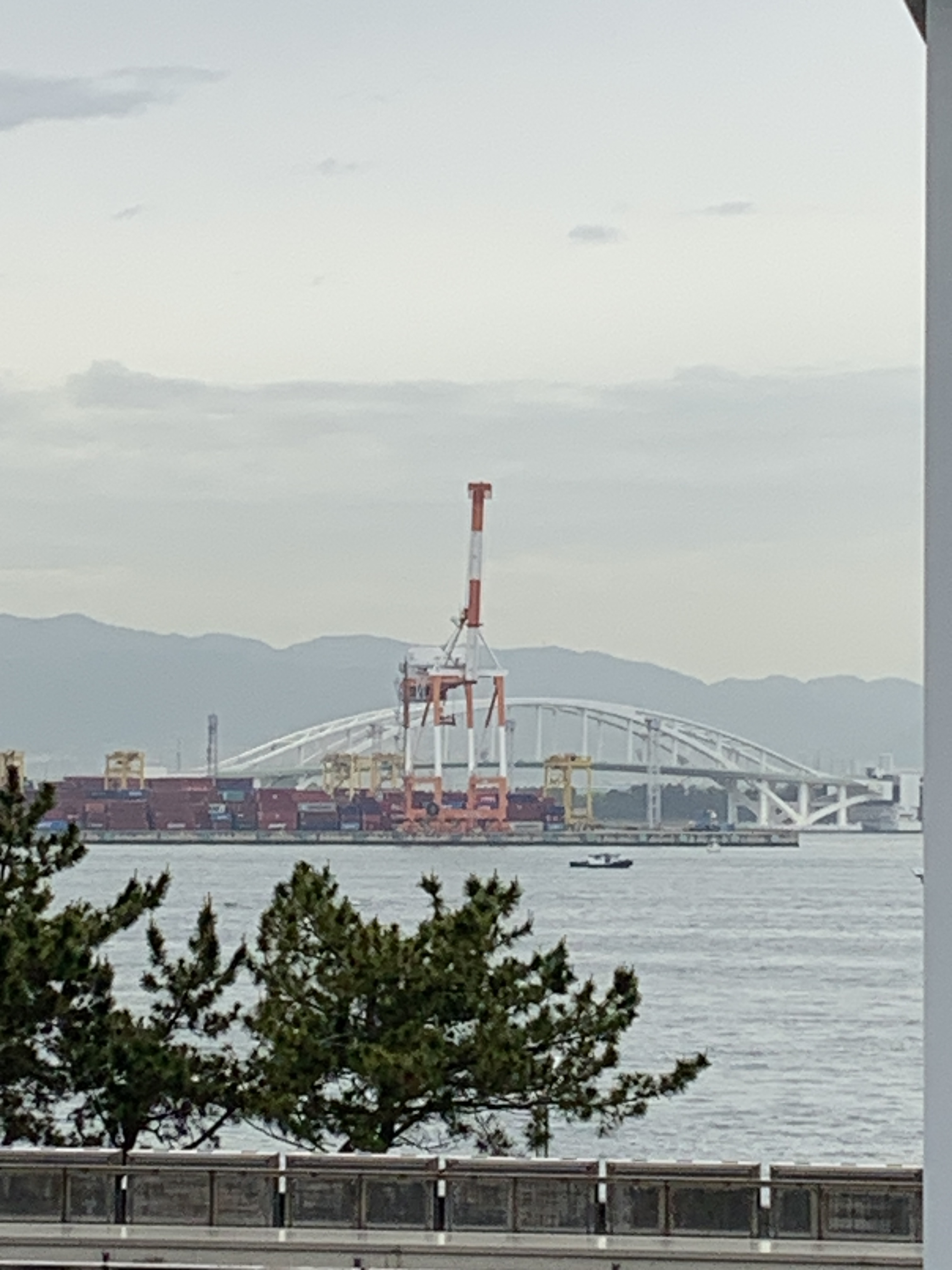
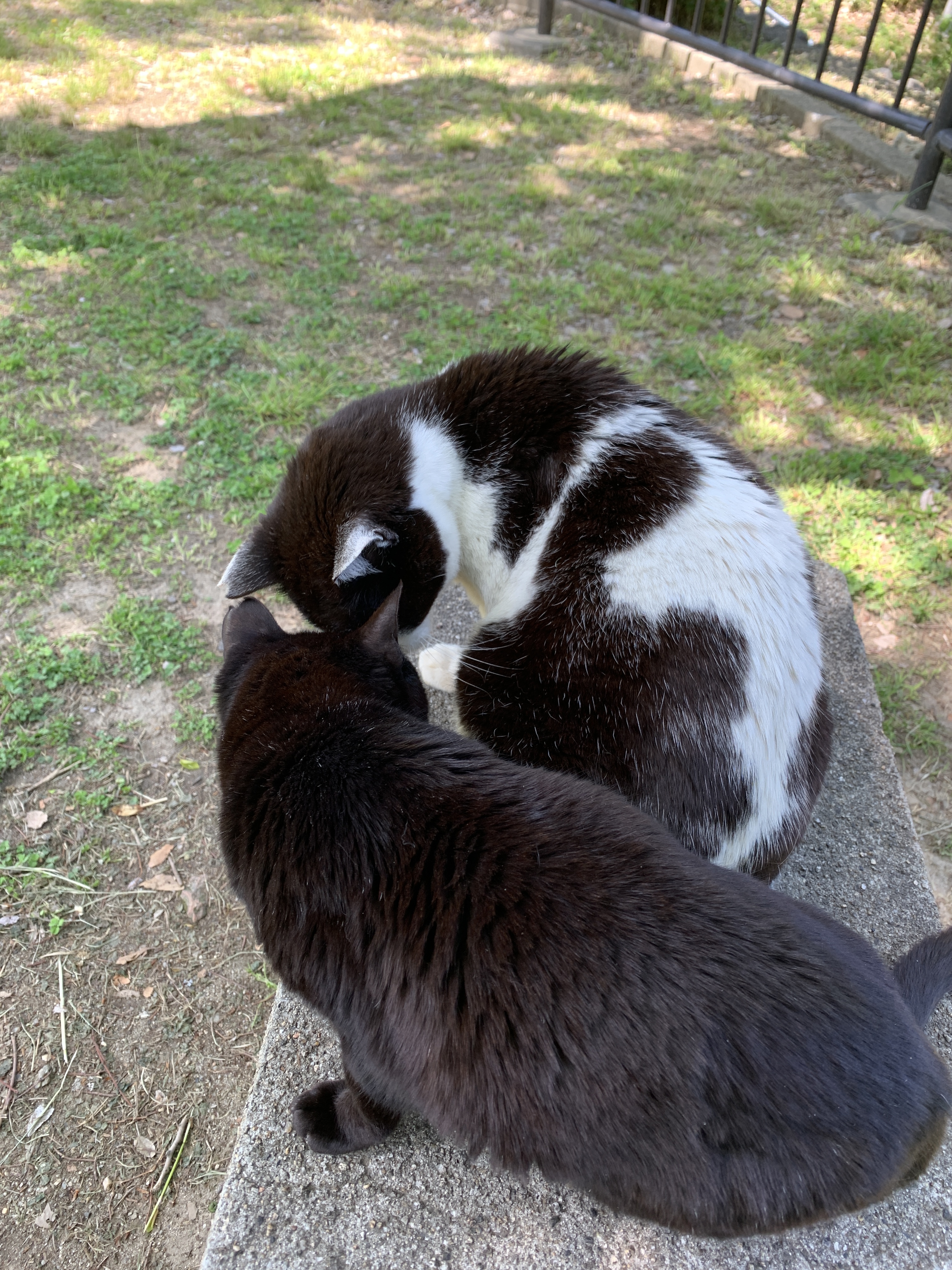
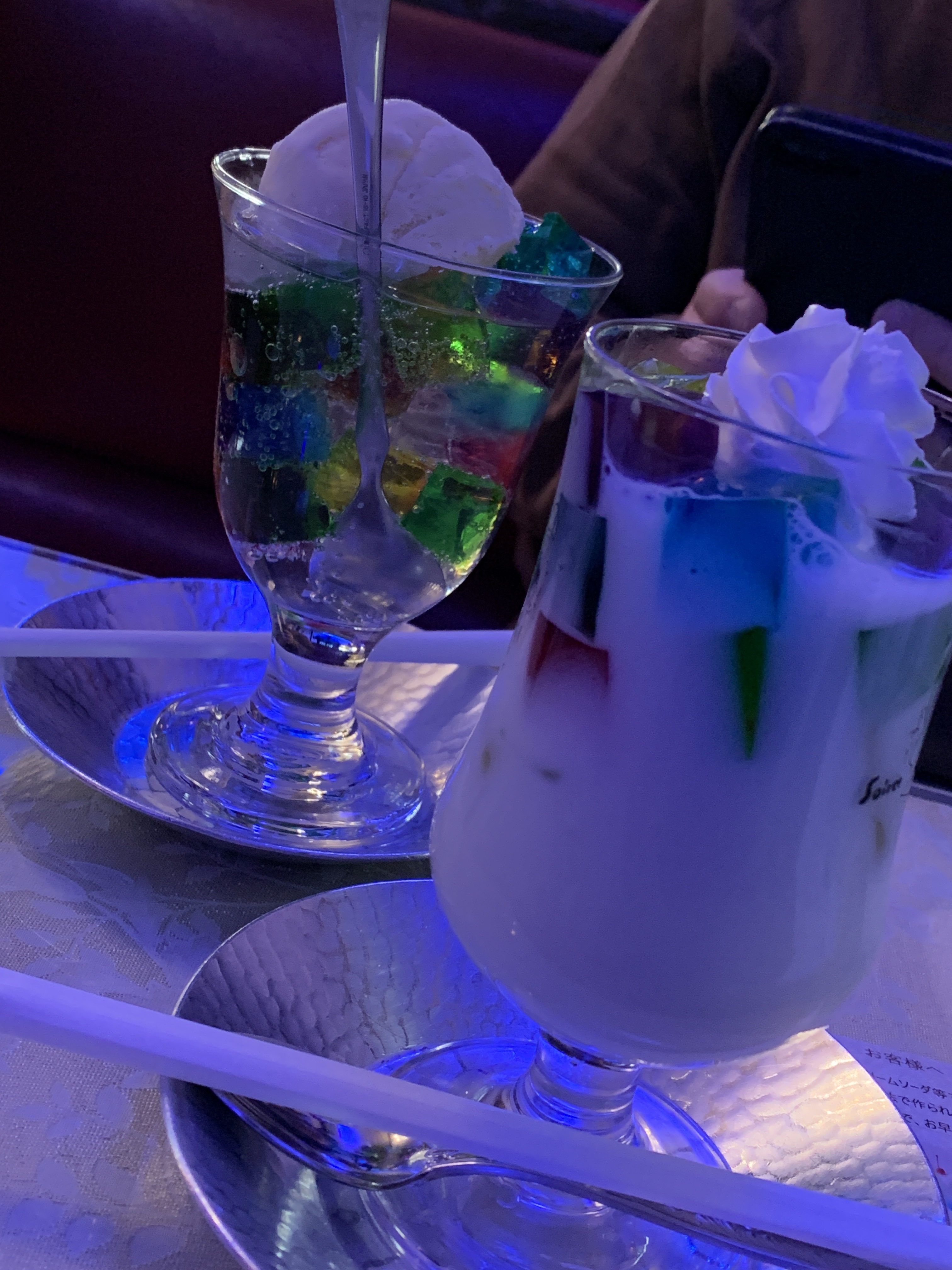
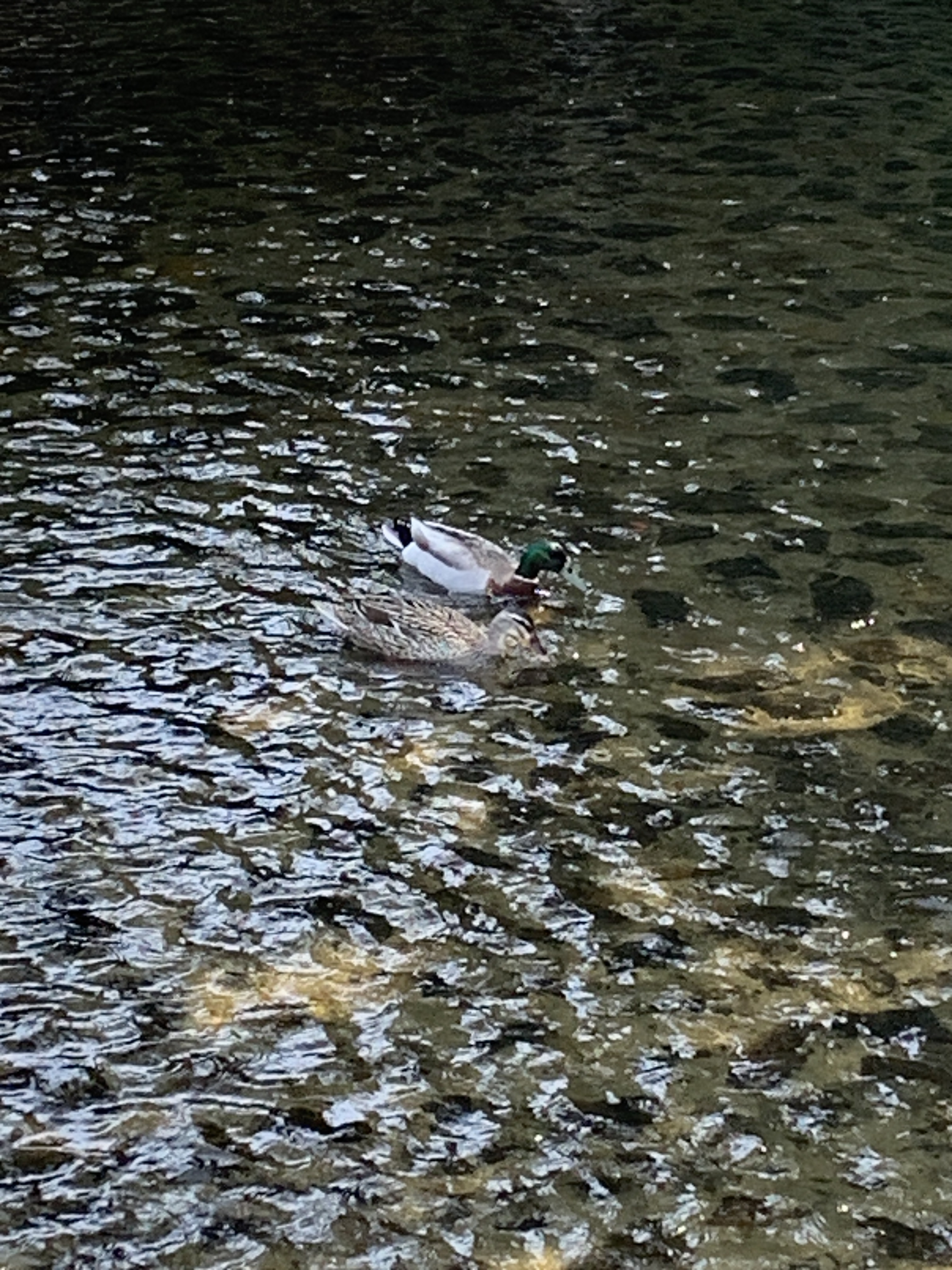
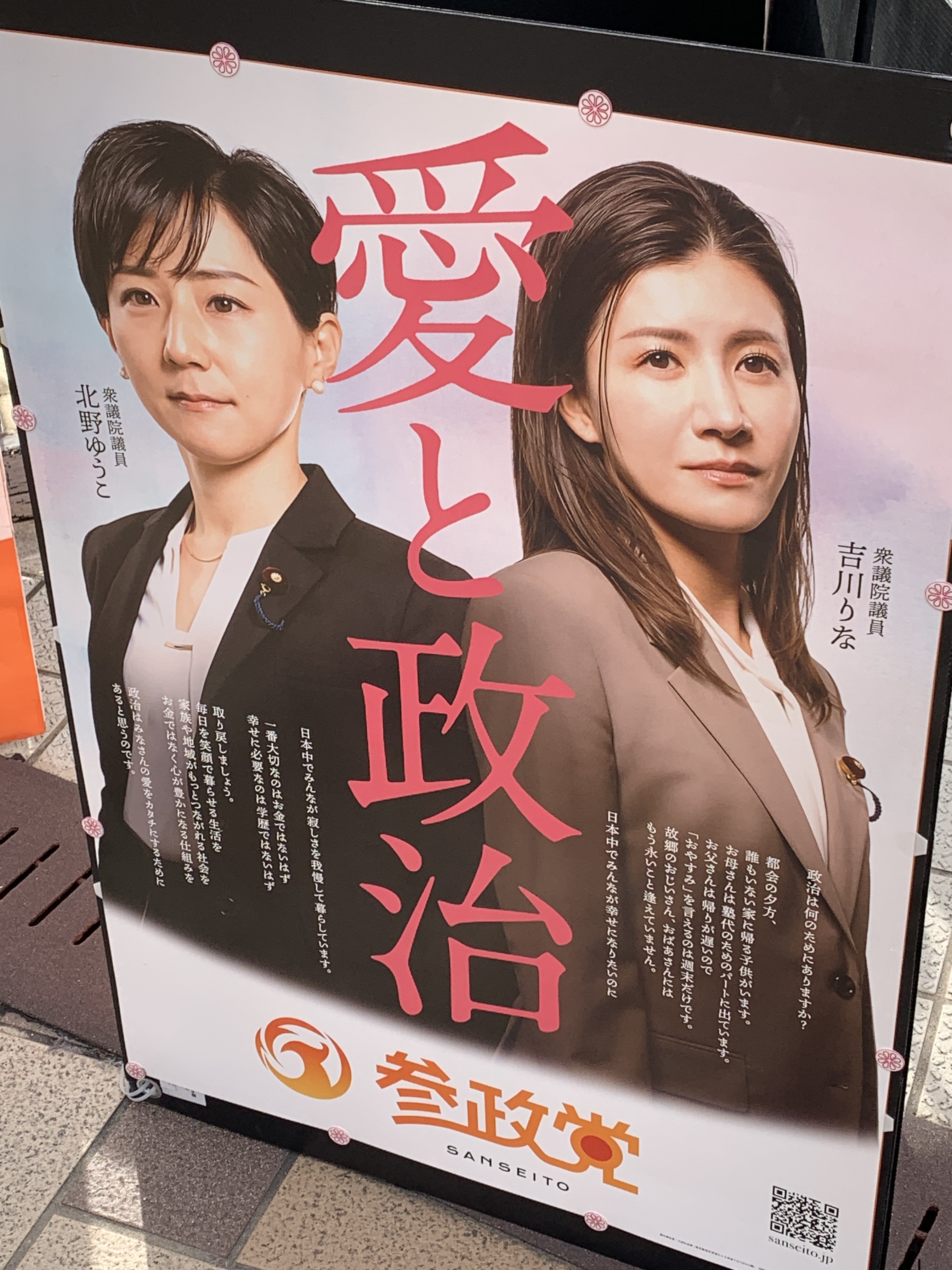
Photos: Assorted flowers, a container port with bonus mountains, chibi-chans on the march (you have to look closely to see them in their little pink hats, for obvious reasons I refrained from photographing unknown small children close up), Kuro-chan from the park and their friend Ushi-chan, fancy desserts in a fancy blue-lit café, a duck couple camouflaged by sunlight, a poster that cracked me up (it’s just a political poster for one of the rightwing asshole parties, but especially since the text down the middle reads “Love and Politics,” all I could think of was “this is an ad for a movie about two women politicians from opposing parties who fall in love during their campaigns”), and one of my farmboys who slipped in there somehow. 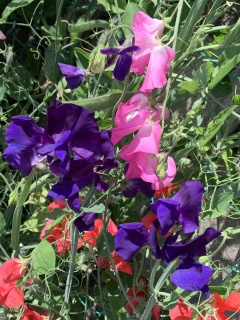





Be safe and well.
Courtesy of A-Pei who likes to bake in her free time, I learned much to my disappointment that the Chinese word for “brownies” is 布朗尼 (bùlǎngní); I think it should be either 小褐蛋糕 (little brown cakes) or 巧克力正方形 (chocolate squares).
Also from A-Pei, the Taiwanese slang 麻吉 (májí), from English “match,” used to mean “close, getting along well” etc. (Not to be confused with Japanese slang マジ (maji), coming (I think) from 真面目 (majime) and used to mean “serious, for real.” There is a train station called 馬路 (Maji) where you can take pictures and caption them マジで, either “at Maji” or “for true.”)
And one more from A-Pei, the Taiwanese word for avocado, 酪梨 or “cheese pear”—I’m not sure which is weirder, that one or the mainland 牛油果, “lard/butter fruit.” On the other hand, when you think of the root word of avocado, English can’t talk either.
嘛 (ma) is a sentence-ending particle which just means something like “y’know,” “right” as far as I can tell; for phonetic reasons I’m always tempted to translate it as “man” (in the interjection rather than literal sense).
At the Saturday juku I was practicing English vocabulary with eighth-grade Yuki, who is bright and knows it and has no hesitation about arguing his corner when he thinks he’s right; it took me quite a while to convince him that the difference between “success” and “succeed” was grammatically significant. It occurred to me later on that while this is easy enough to explain in Japanese (成功 vs 成功する, with a verb ending on the latter), it would be much harder in Chinese, where 成功 alone does double duty.
逆苏 (nìsū, also written 泥塑) is a Chinese fanword I ran across which was new to me; originally from “reverse Mary Sue,” believe it or not (the sū part is phonetic), referring in general to “feminizing” your idol (I am not wild about this term but it’s the shortest explanation I can find). I’ve definitely seen comments on Weibo etc. along the lines of 爱你老婆 and so on, from female fans to male celebrities, which seem to count as an example.
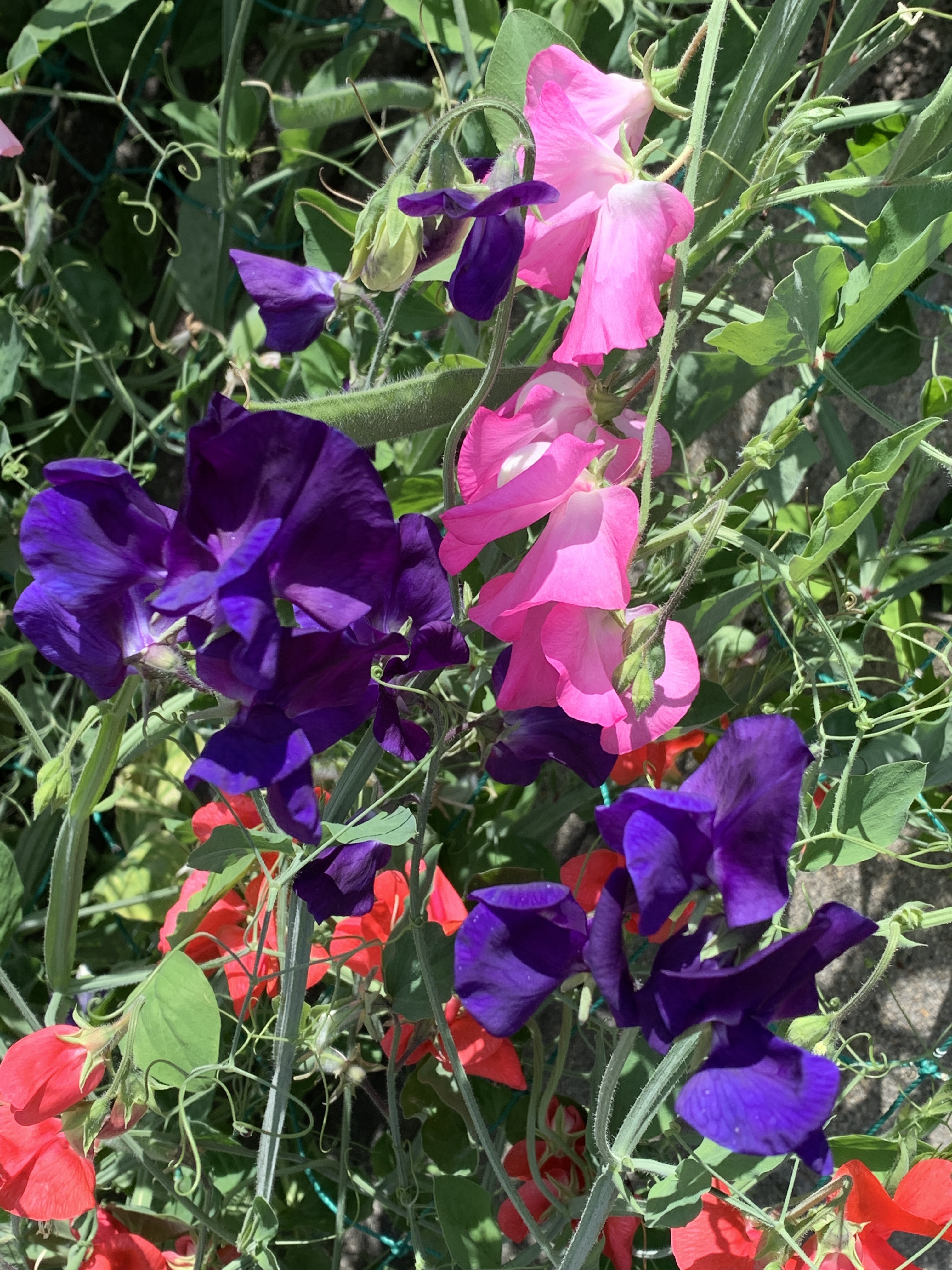
Photos: Assorted flowers, a container port with bonus mountains, chibi-chans on the march (you have to look closely to see them in their little pink hats, for obvious reasons I refrained from photographing unknown small children close up), Kuro-chan from the park and their friend Ushi-chan, fancy desserts in a fancy blue-lit café, a duck couple camouflaged by sunlight, a poster that cracked me up (it’s just a political poster for one of the rightwing asshole parties, but especially since the text down the middle reads “Love and Politics,” all I could think of was “this is an ad for a movie about two women politicians from opposing parties who fall in love during their campaigns”), and one of my farmboys who slipped in there somehow.




Be safe and well.


no subject
Date: 2025-05-18 11:04 am (UTC)no subject
Date: 2025-05-22 02:21 am (UTC)no subject
Date: 2025-05-18 11:31 am (UTC)Re: the mainland word for avocado - I looked this up a while back and IIRC it's also called "butter fruit" in other countries (eg. India?) which is also interesting.
I... also thought the poster was for a GL drama...
no subject
Date: 2025-05-22 02:22 am (UTC)Yes, true!
it's also called "butter fruit" in other countries (eg. India?) which is also interesting.
Oh, neat! I guess everyone is in agreement on the texture.
I... also thought the poster was for a GL drama...
Seriously, how did they come up with that.
no subject
Date: 2025-05-18 04:38 pm (UTC)Another avocado linguistic fact: it's "palta" from the Quechua in a lot of South America, and to "dar palta" or "paltearse" is to create, basically, secondhand embarrassment -- that mix of fear and shame when you or someone else has made a fool of your/themself. To avocado yourself is a horrible feeling!
no subject
Date: 2025-05-22 02:22 am (UTC)I love this phrase! I think remembering it will be some slight comfort the next time I paltearme.
no subject
Date: 2025-05-18 05:52 pm (UTC)I can't believe how much the rightwing politics poster looks like a GL movie too. accidental f/f? ftw??
no subject
Date: 2025-05-22 02:23 am (UTC)I know! I think it's the combination of the text and the soft butch/femme styling...
no subject
Date: 2025-05-19 02:25 am (UTC)嘛 (ma) is a sentence-ending particle which just means something like “y’know,” “right” as far as I can tell; for phonetic reasons I’m always tempted to translate it as “man” (in the interjection rather than literal sense).
XDDD How much is this used in Mandarin? It's extremely common in Cantonese so I'm cracking up at the idea of adding "man" at the end of every sentence that uses it. (Like, the Cantonese equivalent of 你沒事吧? is 你冇事丫嘛?, basically "Nothing is the matter, right?") But I do feel like it gives a bit of that "right, man?" vibe. XD
no subject
Date: 2025-05-22 02:26 am (UTC)I don't think it's _as_ common (it sounds like Cantonese uses 嘛 where Mandarin would more frequently use 吧?), but you hear it fairly often in casual speech. There are a couple CGW pages, https://resources.allsetlearning.com/chinese/grammar/Expressing_the_self-evident_with_%22ma%22 and https://resources.allsetlearning.com/chinese/grammar/Marking_a_topic_with_%22ma%22 ; the second one is the usage I'm tempted to stick in "man" for ;)
no subject
Date: 2025-05-20 05:58 am (UTC)Interesting!
Love the photos! Beautiful flowers. Awwww, the cats and the duck couple. And that's a lovely picture of Jiang Dunhao looking so happy. <3
no subject
Date: 2025-05-22 02:27 am (UTC)no subject
Date: 2025-05-20 06:01 pm (UTC)That is fascinating, I love hearing about fannish terminology elsewhere! (I'm familiar with the 老婆 thing, but I hadn't thought of it in that way before.)
no subject
Date: 2025-05-22 02:28 am (UTC)Same on both counts! As well as the content I was fascinated by the word coming in part from English fanslang...
no subject
Date: 2025-05-22 08:11 pm (UTC)no subject
Date: 2025-05-26 01:56 am (UTC)Seriously! Are people researching all this fannish cross-fertilization somewhere, I wonder...
no subject
Date: 2025-05-25 11:01 am (UTC)LOLOLOL I am just enjoying the multilingual inadequacy here. <3
Beautiful pics as always, I'm cackling at the GL poster (and thinking of Fyra Ar Till :)), and grabbing all the roses.
no subject
Date: 2025-05-26 01:56 am (UTC)Isn't it fun? ;)
and glad you liked the photos! <3
no subject
Date: 2025-08-19 11:10 pm (UTC)it’s just a political poster for one of the rightwing asshole parties, but especially since the text down the middle reads “Love and Politics,” all I could think of was “this is an ad for a movie about two women politicians from opposing parties who fall in love during their campaigns”
Hee! <3
(Very happy to have stumbled over your pics today, especially the flowers. <3)
no subject
Date: 2025-08-24 01:04 pm (UTC)