台湾漫游录 | Taiwan Travelogue | 台湾漫遊鉄道のふたり
Jan. 19th, 2025 10:54 pm![[personal profile]](https://www.dreamwidth.org/img/silk/identity/user.png) nnozomi
nnozomiI posted a while back about reading Yang Shuangzi’s 台湾漫游录, in the Japanese translation by Miura Yuko; since then I’ve discovered there’s an English translation (by Lin King) and read it, along with getting my hands on the Chinese-language original (courtesy of A-Pei who’s visiting from Taiwan). Happy to report that the English edition, like the Japanese translation an award-winner, is very good also; it’s very readable, the regional and period settings are easy to follow without piling on too much explanation, and the two main characters come off as delightful, without losing the bittersweet edge. I want to ramble a little about a few translation-related points that caught my attention, with reference to all three versions. (Confession, I have not read the Chinese version through, just looked up bits in it; that’s going to have to wait for my offline reading to get more fluent, especially since reading in traditional characters confuses my brain.)
- The Chinese and English versions begin with a “scholarly introduction” by a fictional scholar, a Japanese woman raised in colonial Taiwan, the symbolically named 新日嵯峨子 (Shin’nichi Sagako, mistranscribed as “Hiyoshi Sagako” in the English text, whose family name is a sound-alike for 親日 or “pro-Japanese”); this was omitted in the Japanese text, which I think is a shame, if only for its reference to 湾生, Taiwan-born Japanese, as a rootless in-between class in both Taiwan and Japan (also hinted at later in the main text).
- 王千鶴 (Oh Chizuru|Wang Chien-ho|Wang Qianhe|Ong Tshian-hoh), one of the two main characters, is called 小千 by the narrator through most of the book in the Chinese original; the English text makes this into “Chi-chan,” the Japanese diminutive, which seems right to me (since the narrator, Aoyama Chizuko, is thinking in Japanese and knows 千鶴 by her Japanese name of Chizuru). The Japanese text uses “Chizuru-chan” when Aoyama is speaking directly to her and “Chizuru” in the base text, omitting the diminutive.
- “哎咿呀哎咿呀” is transliterated as “aiya aiya” in the Japanese text (including when Aoyama says it), but translated as “oh dear oh dear” in the English.
- (this is just nitpicking) Although the English translator thanks the Japanese translator in her afterword for transliteration help, there are some minor errors in her transliteration of Japanese words, apart from the one above: En Park instead of Maru Park, Chikumoto instead of Kikumoto, etc.
- The English translation is careful to use “the Mainland” for Japan and “the Island” for Taiwan, as well as “the national language” for Japanese, reflecting the colonial terms of the time (which the Chinese text also deliberately uses), 内地 and 本島 and 国語 (still used today, if not in a colonial context); also “Shina” for China, based on 支那, now considered derogatory, and the awkwardly word-for-word “Han-language” for classical written Chinese.
- (more nitpicking) There’s one line that drives me crazy because it’s a typical translationism which I find almost universally awkward: “What could I do about such a person?” when both the original Chinese and the Japanese read “this person,” which is much more natural to me.
- The English text, as the translator mentions, is tasked with figuring out which transliteration of 王千鶴’s various possible names to use, and plays with it a little in ways not done in the original. Where the Chinese says 那并不是真正的王千鹤,并不是我本人哦, and the Japanese says それは本当の王千鶴ではない、本当の私ではないのです, the English has “that person is not the real Oh Chizuru—not the real Ong Tshian-hoh—not the real me!” , using first the Japanese name and then the Taiwanese one, while the Chinese and Japanese versions use only one version of her name and do not specify how she’s pronouncing it. It’s an interesting choice in reflection of her feelings, and a good one in terms simply of the rhythm of the sentence. Similarly, the Chinese has 妾室之女的小千鹤变成长为了您所见的公学校教师王千鹤, the Japanese 妾室の娘だった小さな千鶴は、青山さんにお会いした時の、公学校教師の王千鶴に成長したのですよ、while the English says “the concubine’s daughter Ong Tshian-hoh grew to become the public school teacher Oh Chizuru that you know,” differentiating in ways the Chinese and Japanese, which only use “little 千鶴” for the first name reference, don’t.[More or less unrelatedly, I have omitted the long-tone marks on Japanese words and tone markings on Chinese/Taiwanese ones which the English translator puts in, because we don’t agree on this point.]
Anyway, I recommend all three versions according to which language(s) you read. Also, as in the photos below, all three books are absolutely gorgeous to look at, although the Taiwanese edition outdoes the others a little, I think (and also features faithfully rendered interior illustrations of all the delicious foods appearing in the text).
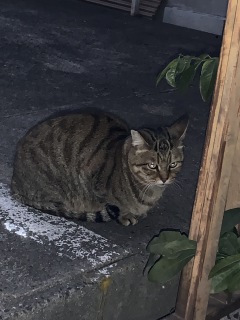
Photos: Three editions of the book above, as well as some oranges, a tree decorated for Ebessan (January 10th festival of Ebisu, when you pray for good business for the year, a highly practical religious occasion), a nearby park with yearly more elaborate winter decorations, and a cat justifiably annoyed with me for not knowing how to turn off my flash.


Be safe and well.
- The Chinese and English versions begin with a “scholarly introduction” by a fictional scholar, a Japanese woman raised in colonial Taiwan, the symbolically named 新日嵯峨子 (Shin’nichi Sagako, mistranscribed as “Hiyoshi Sagako” in the English text, whose family name is a sound-alike for 親日 or “pro-Japanese”); this was omitted in the Japanese text, which I think is a shame, if only for its reference to 湾生, Taiwan-born Japanese, as a rootless in-between class in both Taiwan and Japan (also hinted at later in the main text).
- 王千鶴 (Oh Chizuru|Wang Chien-ho|Wang Qianhe|Ong Tshian-hoh), one of the two main characters, is called 小千 by the narrator through most of the book in the Chinese original; the English text makes this into “Chi-chan,” the Japanese diminutive, which seems right to me (since the narrator, Aoyama Chizuko, is thinking in Japanese and knows 千鶴 by her Japanese name of Chizuru). The Japanese text uses “Chizuru-chan” when Aoyama is speaking directly to her and “Chizuru” in the base text, omitting the diminutive.
- “哎咿呀哎咿呀” is transliterated as “aiya aiya” in the Japanese text (including when Aoyama says it), but translated as “oh dear oh dear” in the English.
- (this is just nitpicking) Although the English translator thanks the Japanese translator in her afterword for transliteration help, there are some minor errors in her transliteration of Japanese words, apart from the one above: En Park instead of Maru Park, Chikumoto instead of Kikumoto, etc.
- The English translation is careful to use “the Mainland” for Japan and “the Island” for Taiwan, as well as “the national language” for Japanese, reflecting the colonial terms of the time (which the Chinese text also deliberately uses), 内地 and 本島 and 国語 (still used today, if not in a colonial context); also “Shina” for China, based on 支那, now considered derogatory, and the awkwardly word-for-word “Han-language” for classical written Chinese.
- (more nitpicking) There’s one line that drives me crazy because it’s a typical translationism which I find almost universally awkward: “What could I do about such a person?” when both the original Chinese and the Japanese read “this person,” which is much more natural to me.
- The English text, as the translator mentions, is tasked with figuring out which transliteration of 王千鶴’s various possible names to use, and plays with it a little in ways not done in the original. Where the Chinese says 那并不是真正的王千鹤,并不是我本人哦, and the Japanese says それは本当の王千鶴ではない、本当の私ではないのです, the English has “that person is not the real Oh Chizuru—not the real Ong Tshian-hoh—not the real me!” , using first the Japanese name and then the Taiwanese one, while the Chinese and Japanese versions use only one version of her name and do not specify how she’s pronouncing it. It’s an interesting choice in reflection of her feelings, and a good one in terms simply of the rhythm of the sentence. Similarly, the Chinese has 妾室之女的小千鹤变成长为了您所见的公学校教师王千鹤, the Japanese 妾室の娘だった小さな千鶴は、青山さんにお会いした時の、公学校教師の王千鶴に成長したのですよ、while the English says “the concubine’s daughter Ong Tshian-hoh grew to become the public school teacher Oh Chizuru that you know,” differentiating in ways the Chinese and Japanese, which only use “little 千鶴” for the first name reference, don’t.[More or less unrelatedly, I have omitted the long-tone marks on Japanese words and tone markings on Chinese/Taiwanese ones which the English translator puts in, because we don’t agree on this point.]
Anyway, I recommend all three versions according to which language(s) you read. Also, as in the photos below, all three books are absolutely gorgeous to look at, although the Taiwanese edition outdoes the others a little, I think (and also features faithfully rendered interior illustrations of all the delicious foods appearing in the text).
Photos: Three editions of the book above, as well as some oranges, a tree decorated for Ebessan (January 10th festival of Ebisu, when you pray for good business for the year, a highly practical religious occasion), a nearby park with yearly more elaborate winter decorations, and a cat justifiably annoyed with me for not knowing how to turn off my flash.


Be safe and well.


no subject
Date: 2025-01-19 02:43 pm (UTC)I got your latest postcard, which was lovely as always! Thank you. : )
no subject
Date: 2025-01-20 02:26 pm (UTC)no subject
Date: 2025-01-19 02:58 pm (UTC)And aww, that grumpy kitty... Still very cute, though. :)
no subject
Date: 2025-01-20 02:27 pm (UTC)and yup, very cute grumpy kitty ;)
no subject
Date: 2025-01-19 05:28 pm (UTC)Btw, I got your postcard, thank you so much! ♥
no subject
Date: 2025-01-20 02:28 pm (UTC)Yes! I'd have wanted to consult with the original author, I think, it's such a loaded issue.
and so glad the postcard arrived safely <3
no subject
Date: 2025-01-19 05:57 pm (UTC)Look at those beautiful citrus fruits :). That's a favorite part of a CA winter too.
no subject
Date: 2025-01-20 02:29 pm (UTC)no subject
Date: 2025-01-19 07:23 pm (UTC)I love grumpy kitty.
no subject
Date: 2025-01-20 02:29 pm (UTC)and yeah, that cat does grumpy very well ;)
no subject
Date: 2025-01-19 08:43 pm (UTC)Lovely pictures! The orange tree in particular looks 'staged', like a painter would have placed those oranges to make a coherent composition. Awesome. I also really like the lights.
no subject
Date: 2025-01-20 02:30 pm (UTC)and yeah, the orange tree does look too good to be true, but as far as I know it just grew like that! So glad you like the photos <3
no subject
Date: 2025-01-20 12:16 am (UTC)Love the oranges! They look like they're escaping over the wall. Those are some very spectacular winter decorations. And that's one grumpy looking cat. (I still want to pet it.)
no subject
Date: 2025-01-20 02:31 pm (UTC)no subject
Date: 2025-01-20 01:51 am (UTC)I enjoyed reading your thoughts on the English and Japanese version of this book! Stuff like En Park instead of Maru Park, is unfortunate, but I'm glad to hear that the translation is for the most part, very good.
no subject
Date: 2025-01-20 02:32 pm (UTC)yeah, pointing out the little mistransliterations is just me being unable to turn my proofreader brain off; on the whole I think the translation is a great success.
no subject
Date: 2025-01-20 03:47 am (UTC)And thank you so much for the postcard!! <3
no subject
Date: 2025-01-20 02:33 pm (UTC)and very glad the postcard arrived safely <3
no subject
Date: 2025-01-20 12:48 pm (UTC)no subject
Date: 2025-01-20 02:34 pm (UTC)(the setting for the next novel I want to write is vaguely inspired by Republican China)
oooh!
no subject
Date: 2025-01-22 10:51 pm (UTC)no subject
Date: 2025-01-23 01:16 pm (UTC)no subject
Date: 2025-01-23 10:58 pm (UTC)no subject
Date: 2025-01-25 11:18 am (UTC)...you know I can't remember? It wasn't that long ago, four or five years. I thought it was in a footnote from Simon Winchester's The Man Who Loved China (which is also a fascinating book, although mostly not relevant here), but I've looked through it and can't find anything of the kind, even though I can picture the damn footnote. I'll let you know when (if) I ever figure it out! (As in the pun he particularly enjoyed, more Chaos in our lives...)
no subject
Date: 2025-01-25 10:47 pm (UTC)no subject
Date: 2025-01-26 12:05 pm (UTC)no subject
Date: 2025-01-21 07:33 pm (UTC)no subject
Date: 2025-01-21 11:22 pm (UTC)